Survey before we price
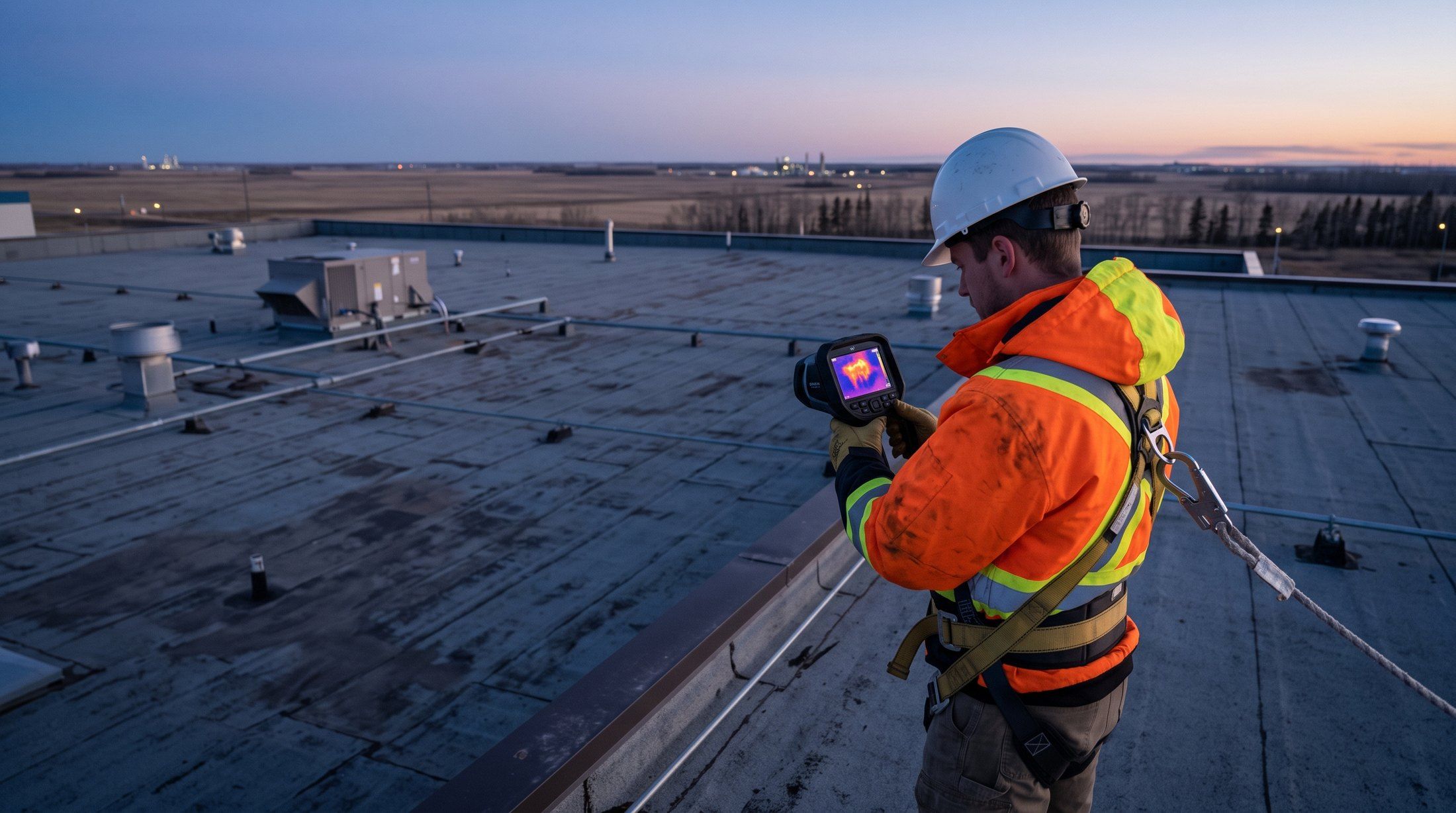
Infrared or moisture testing and core cuts show what is wet, what is dry and how many roofs are already on the building.
Service
Before we price a re-roof, we find out what is under your membrane. Then you get a clear recommendation, a schedule built around your operations and a written warranty.
Overview
Commercial roof replacement in Edmonton is one of the largest capital costs a building owner faces, and the biggest decision in it is often made with the least information: tear the old roof off, or install a new one over it. We make that decision with a moisture survey and core cuts, not a guess from the ground.
Whichever way the evidence points, we plan the work so your building stays dry and running, install the new system to manufacturer and ARCA standards, and hand over a closeout package with warranties, drawings and photos.
Infrared or moisture testing and core cuts show what is wet, what is dry and how many roofs are already on the building.
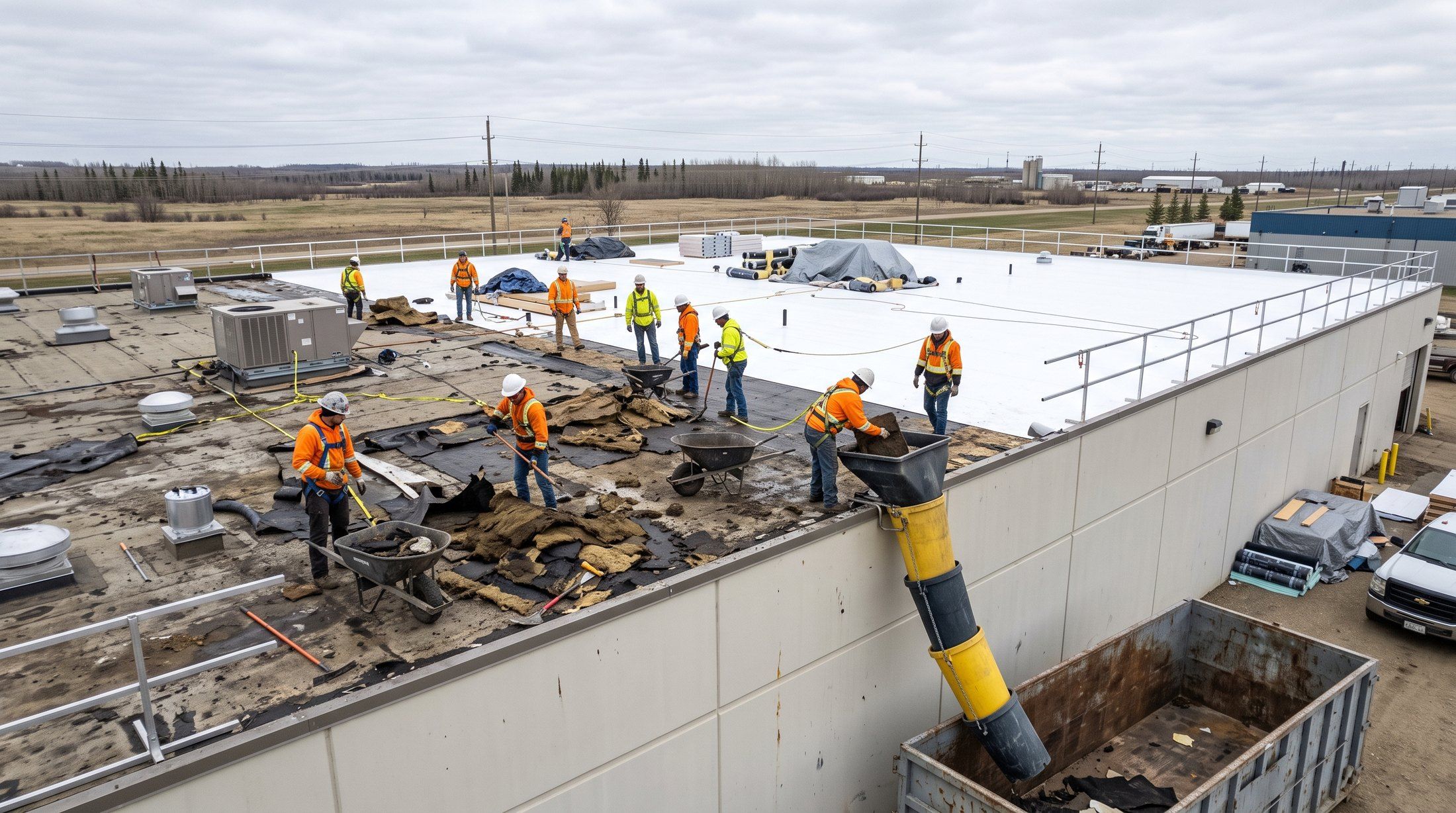
We only open what we can close the same day. No section is left exposed overnight.
A replacement is the cheapest time to correct ponding with tapered insulation, crickets and new drains.
Manufacturer coverage where the system qualifies, plus our 10-year workmanship warranty, in writing.
A recover installs new insulation or cover board and a new membrane over the existing roof. It avoids removal and disposal costs and keeps the building closed throughout. A tear-off removes everything down to the deck and starts over. It costs more, but it lets us inspect the deck, fix drainage properly and remove wet material.
The deciding factor is moisture. A recover is only appropriate where the existing deck and insulation are dry. Wet insulation has little insulating value, adds weight and can rot or corrode the deck beneath it. Sealing it under a new membrane traps that water for the life of the new roof.
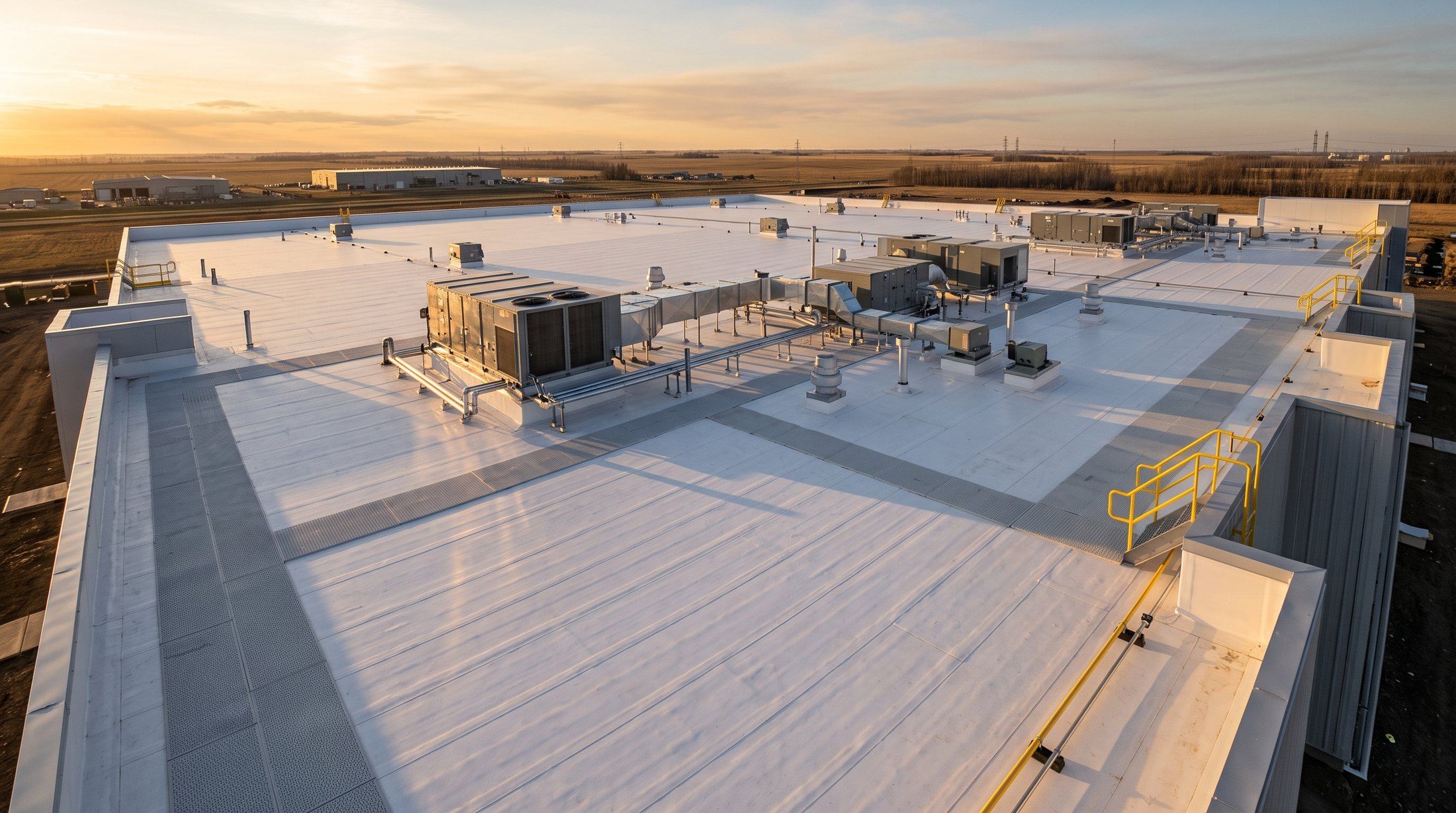
Most Edmonton re-roofs go back as 2-ply SBS, which handles cold, foot traffic and hail well. TPO, EPDM and PVC each suit particular buildings, such as large warehouses where a light-coloured single-ply membrane suits the building, or plants with chemical or grease exhaust on the roof. We recommend a system for your building and explain the trade-offs in cost, service life and warranty, rather than defaulting to one product.
Your tenants, production lines and stock stay underneath us for the whole job. We sequence the work so each section is watertight by the end of the shift, coordinate with your mechanical contractor on rooftop units, keep fumes away from air intakes and protect anything sensitive below the work area. A site lead is your single contact each day.
A commercial roof replacement should leave you with more than a new membrane. At closeout you receive the executed manufacturer warranty where the system qualifies, our written workmanship warranty, an ARCA Warranty Certificate where specified, an as-built roof plan showing drains, slopes and equipment, product data for every layer and a photo record of the concealed work. We keep a copy in your building's history file, so the first spring inspection and every one after it starts with a complete record of what is up there.
The difference
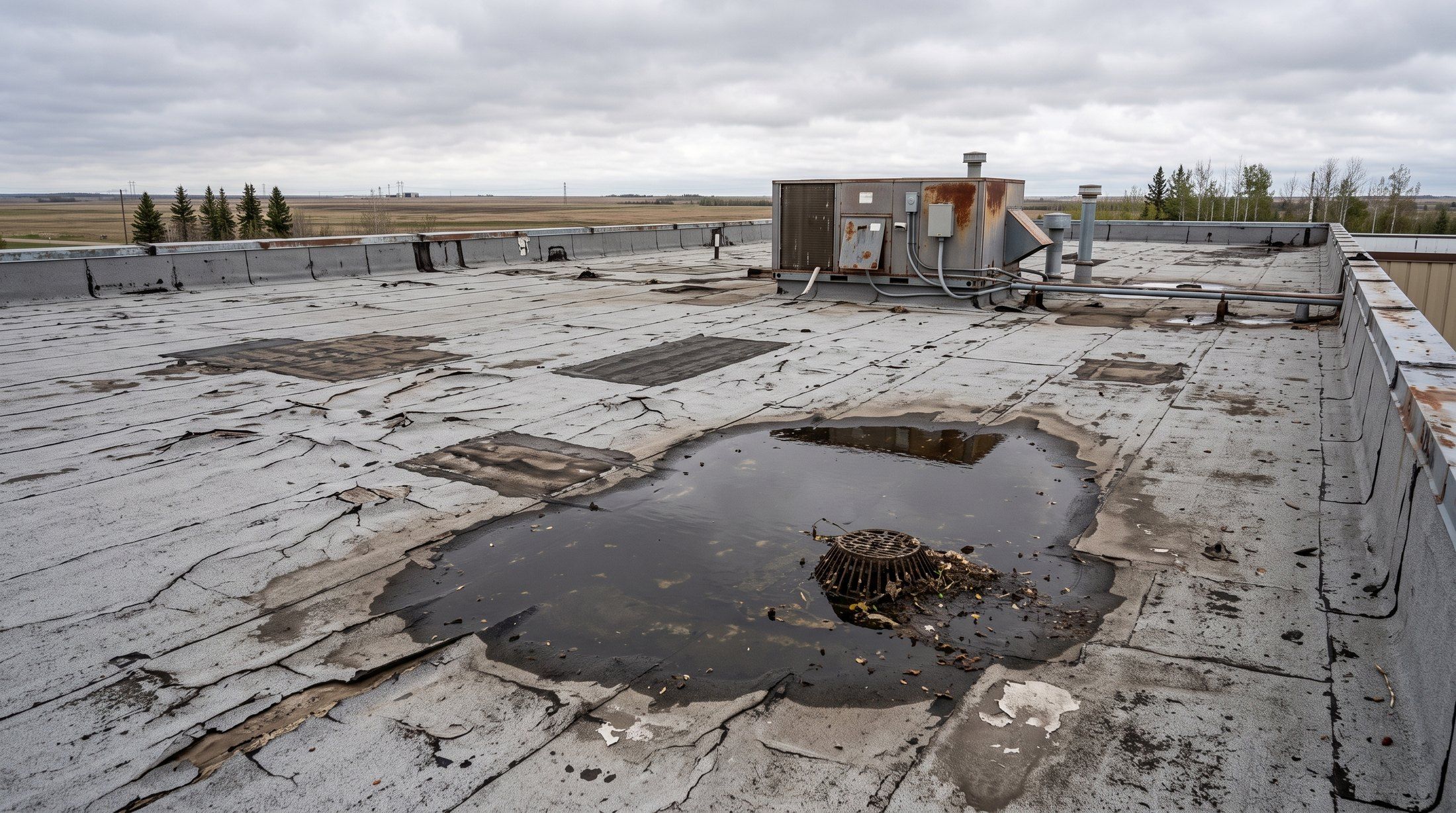
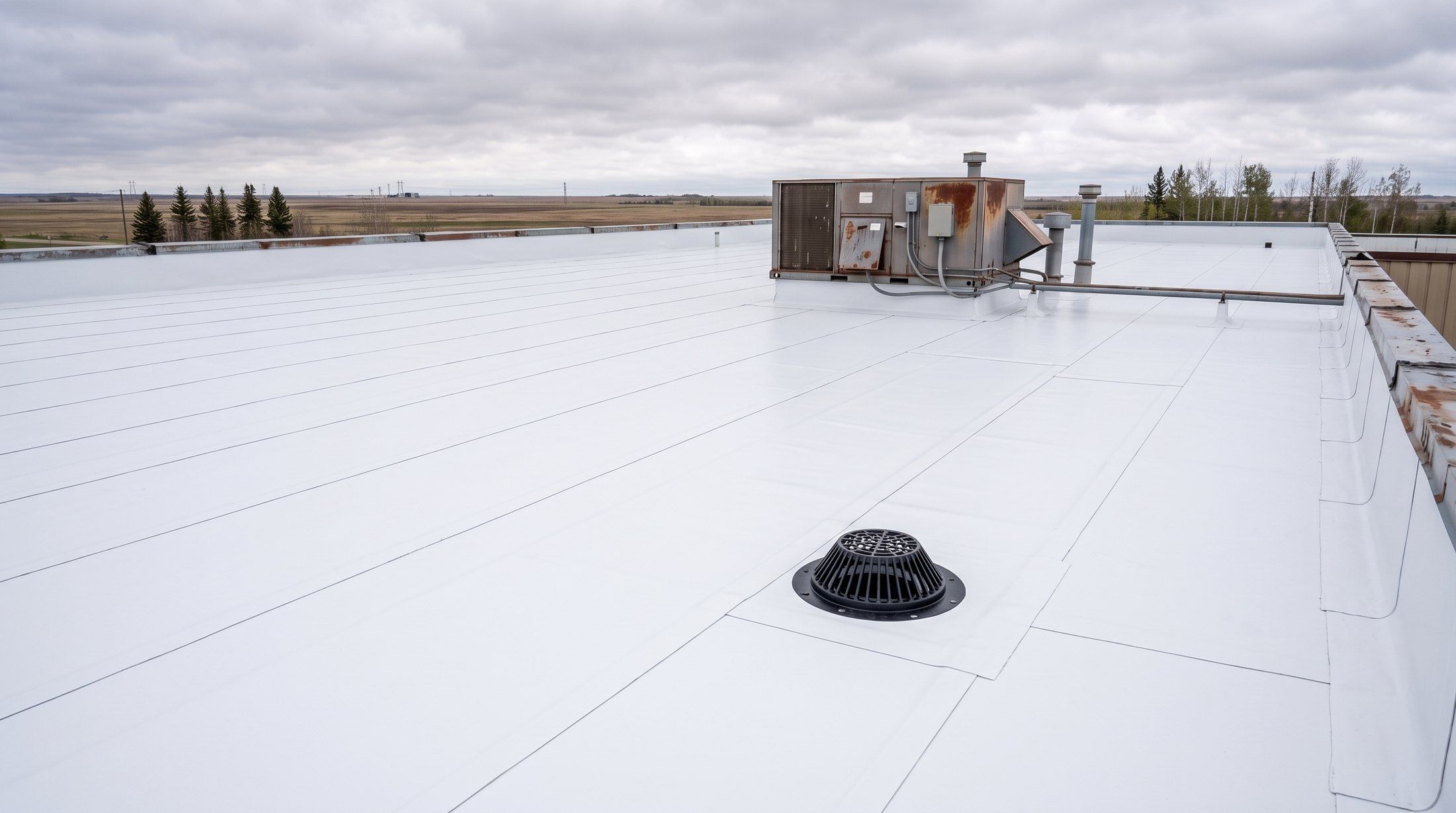
Blisters, open seams and a pond around a blocked drain, replaced with a sloped, sealed, warrantied roof.
Process
We map wet areas, take core cuts to see each layer, check the deck where we can and measure drainage.
You get a written recommendation for tear-off or recover, the system we propose, the reasons and a fixed price for each option you want to compare.
We agree on crane days, staging areas, noise and odour windows, roof access and any shutdown of rooftop units in advance.
Each day's tear-off is dried in by the end of the day. Interiors below are protected and checked each morning.
We walk the finished roof with you and, where applicable, the manufacturer or ARCA inspector, then deliver the warranty and closeout package.
Warranty
Three separate warranties, each backed by a different party, kept valid by regular inspections.
Questions
Look at the extent of wet insulation, the condition of the seams and flashings across the whole roof, and its age. A moisture survey answers the first question objectively. If the wet area is small and the membrane is sound, repairs and maintenance may be the better spend.
Usually, because there is less removal and disposal. It is only a saving if the existing roof is dry. A recover over wet insulation tends to fail early and can lead to a full tear-off sooner than planned.
Yes. Almost all of our replacements happen over occupied buildings. We plan around your hours, deliveries and any sensitive areas, and we never leave a section open overnight.
Late spring through early fall gives the widest choice of systems and the best working conditions. Some systems can be installed in colder weather with the right materials and precautions. Booking over the winter secures a spot in the busy season.
Re-roofing is often the most practical time to add insulation. Requirements depend on the scope of the project and the municipality, so we confirm them with you and, where needed, your consultant before we finalize the design.
Keep reading
Service
Infrared and moisture surveys that show where a roof is wet, so you repair or replace only what needs it.
Service
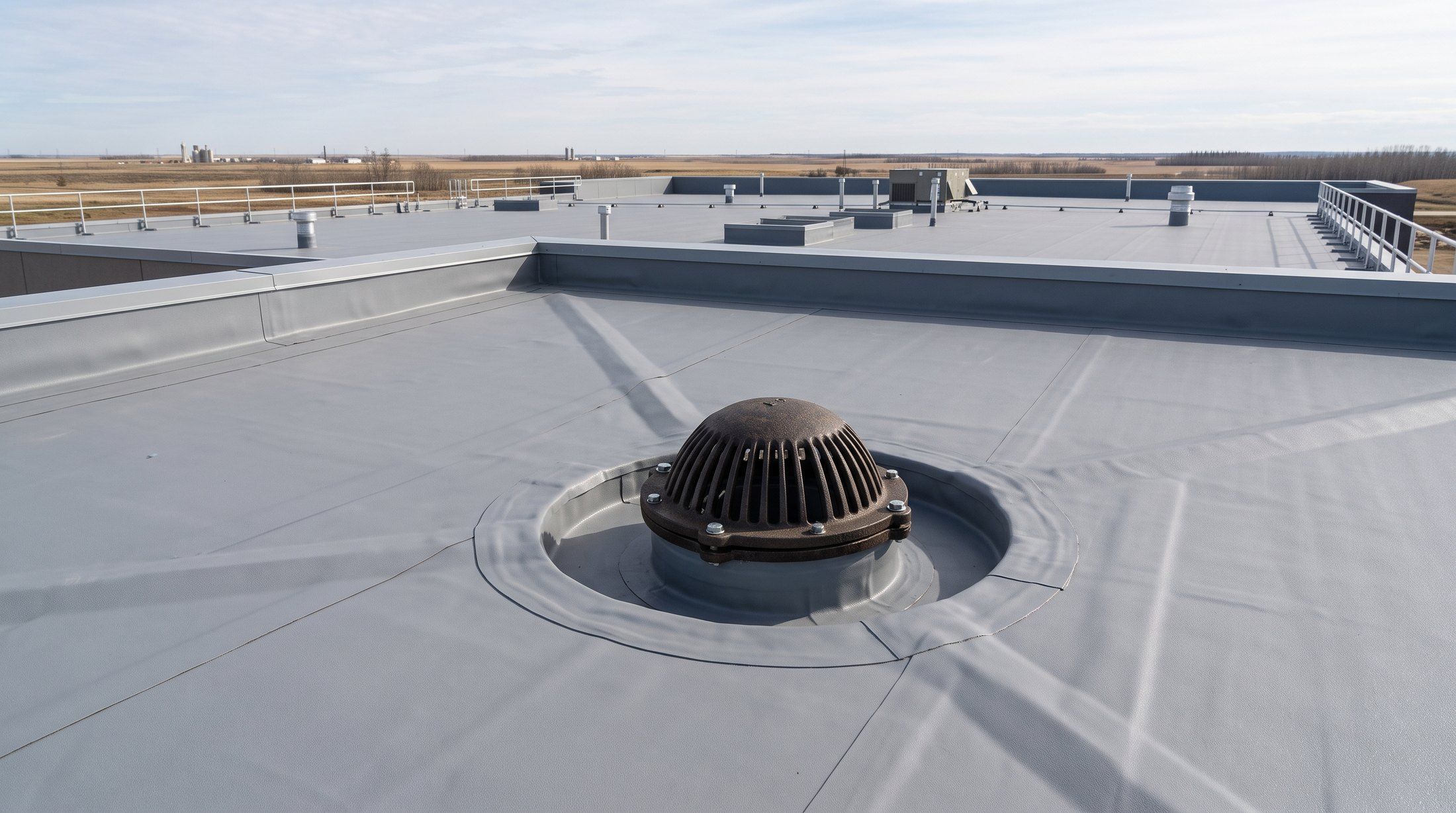
Ponding corrected with drains, scuppers, tapered insulation and crickets, built for Edmonton's freeze-thaw.
Flat roof systems
Compare every commercial flat roof system and see which one suits your building.
Send us drawings, a spec or just an address. You get a clear scope, a written warranty and a roofer who answers the phone in a storm.