Source, not symptom
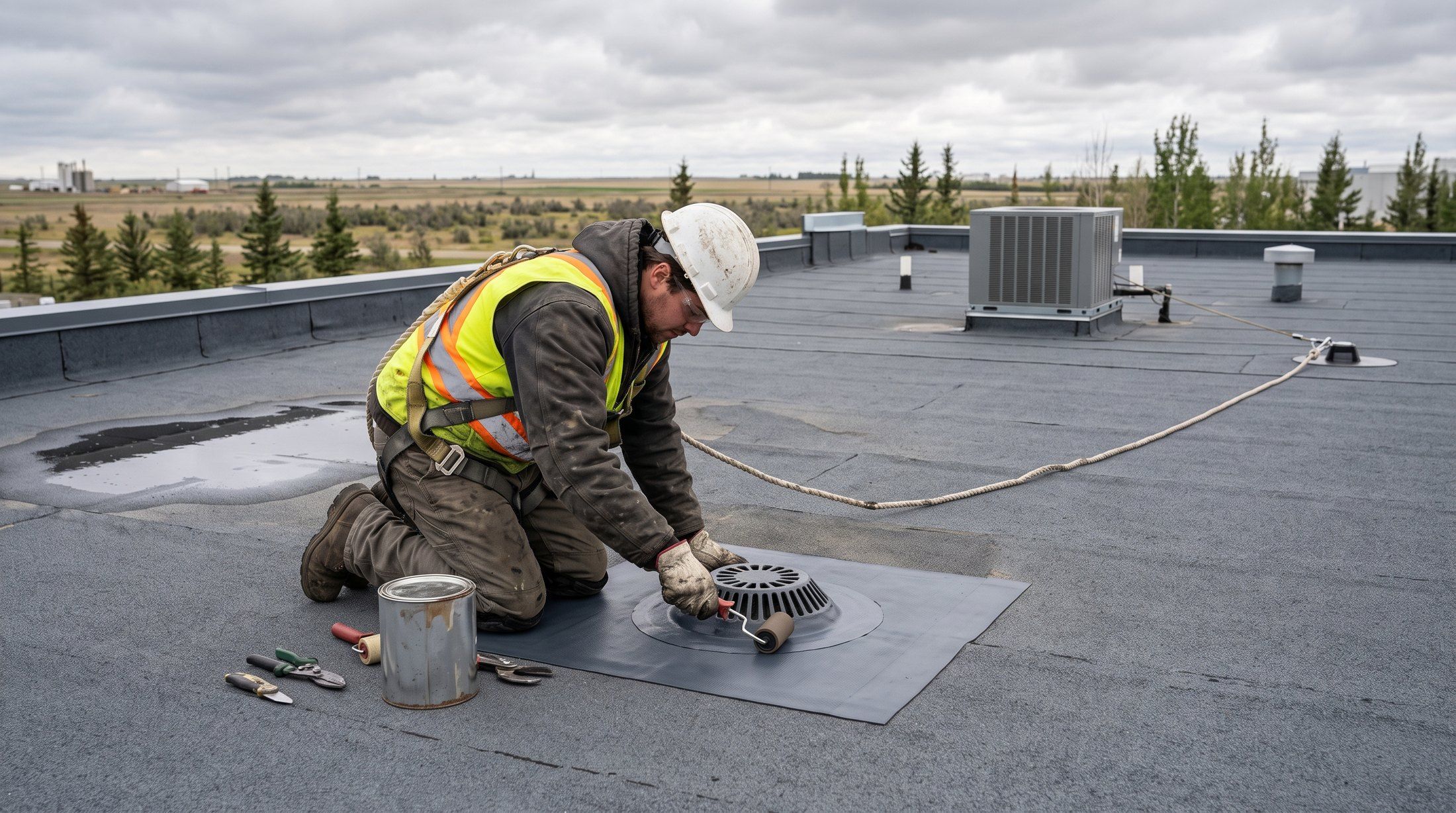
We follow the water back from the interior stain to the actual opening in the membrane, flashing or penetration.
Service
We find where the water is really getting in, repair it with materials that match your membrane and send you a photo report so you know exactly what was done.
Overview
Flat roof repair in Edmonton is mostly a matter of finding the right spot. Water on a low-slope roof travels along the deck, through insulation joints and down fasteners before it shows up on a ceiling tile, often several metres from where it entered. A patch over the stain is the most common reason a leak comes back.
Our crews repair SBS modified bitumen, TPO, EPDM, PVC and built-up roofs. We trace each leak to its source, repair it with compatible materials, check the surrounding area for the next problem and send you a report with photos before and after.
We follow the water back from the interior stain to the actual opening in the membrane, flashing or penetration.
Repairs use membrane and adhesives compatible with your existing system, so they bond properly and do not void the manufacturer warranty.
You get before and after photos, a marked roof plan and notes on anything else we saw while we were up there.
Our permanent repairs carry a written 1-year workmanship warranty.
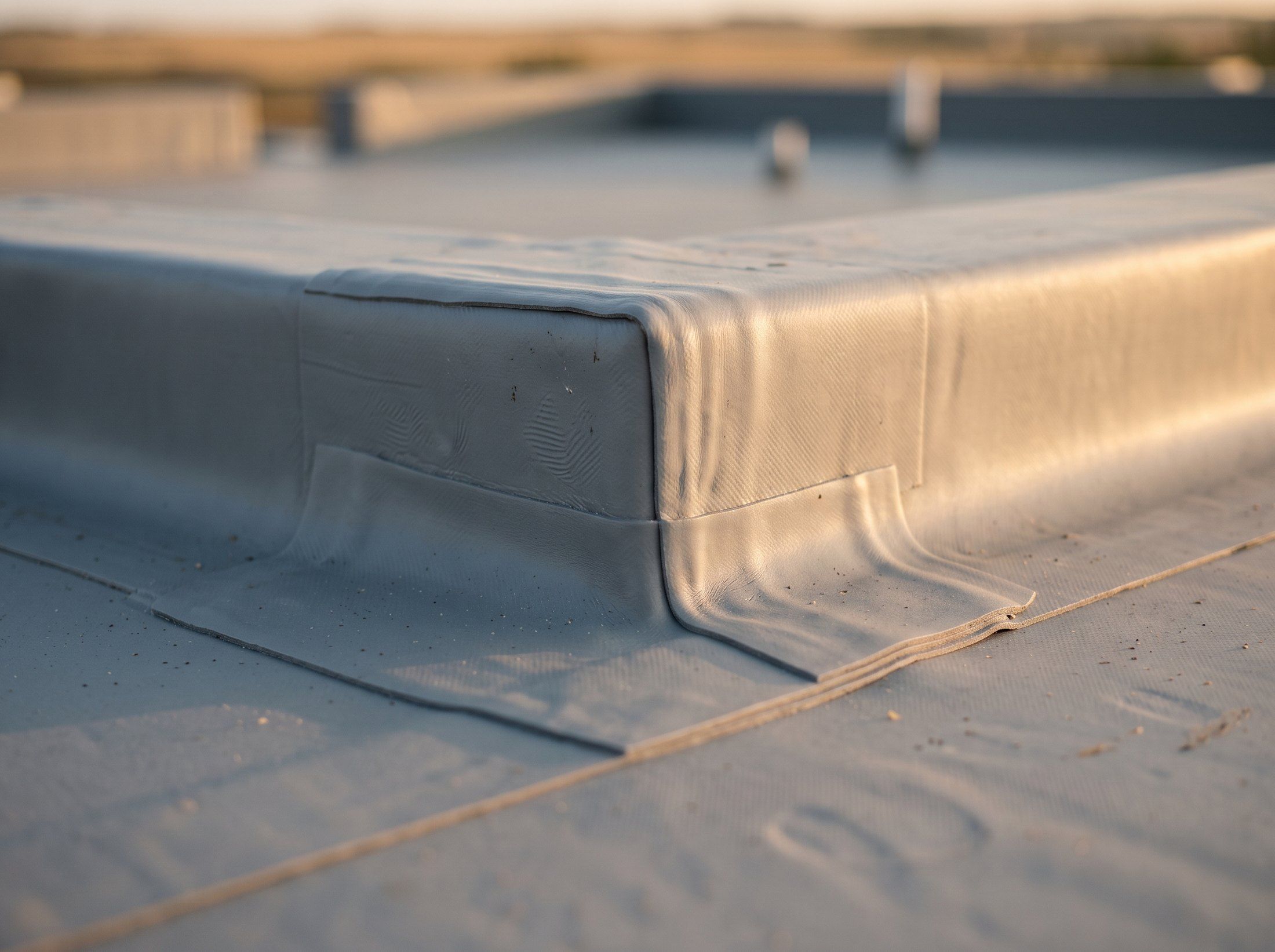
Field membrane rarely fails first. Most leaks start at transitions and openings, and freeze-thaw cycles make them worse each winter as water gets in, freezes, expands and opens the gap a little wider.
A repair only lasts if it bonds to the roof around it, and every membrane bonds differently. We match the method to the system rather than reaching for a tube of sealant.
Sealant and mastic have a place, mostly as a temporary measure or as a top seal on metal and pitch pockets. On their own they crack after a few Edmonton winters, which is why we use them as part of a repair and not as the repair.
A repair makes sense when the problem is local and the rest of the roof is sound. If we find widespread seam failure, large areas of wet insulation or a roof that is past its expected service life, we will tell you, and we will show you the photos that support it.
We also tell you when a roof has years left in it. A well-placed repair and a maintenance visit often buy several more seasons, which gives you time to budget for replacement instead of reacting to it.
If your roof is still under a manufacturer warranty, the wrong repair can put it at risk. Manufacturers generally expect repairs to use compatible materials and approved methods, and some require that they be notified. We check your warranty documents before we start and use repair methods the manufacturer accepts. If the roof is ours, the repair is handled under our workmanship warranty.
The difference
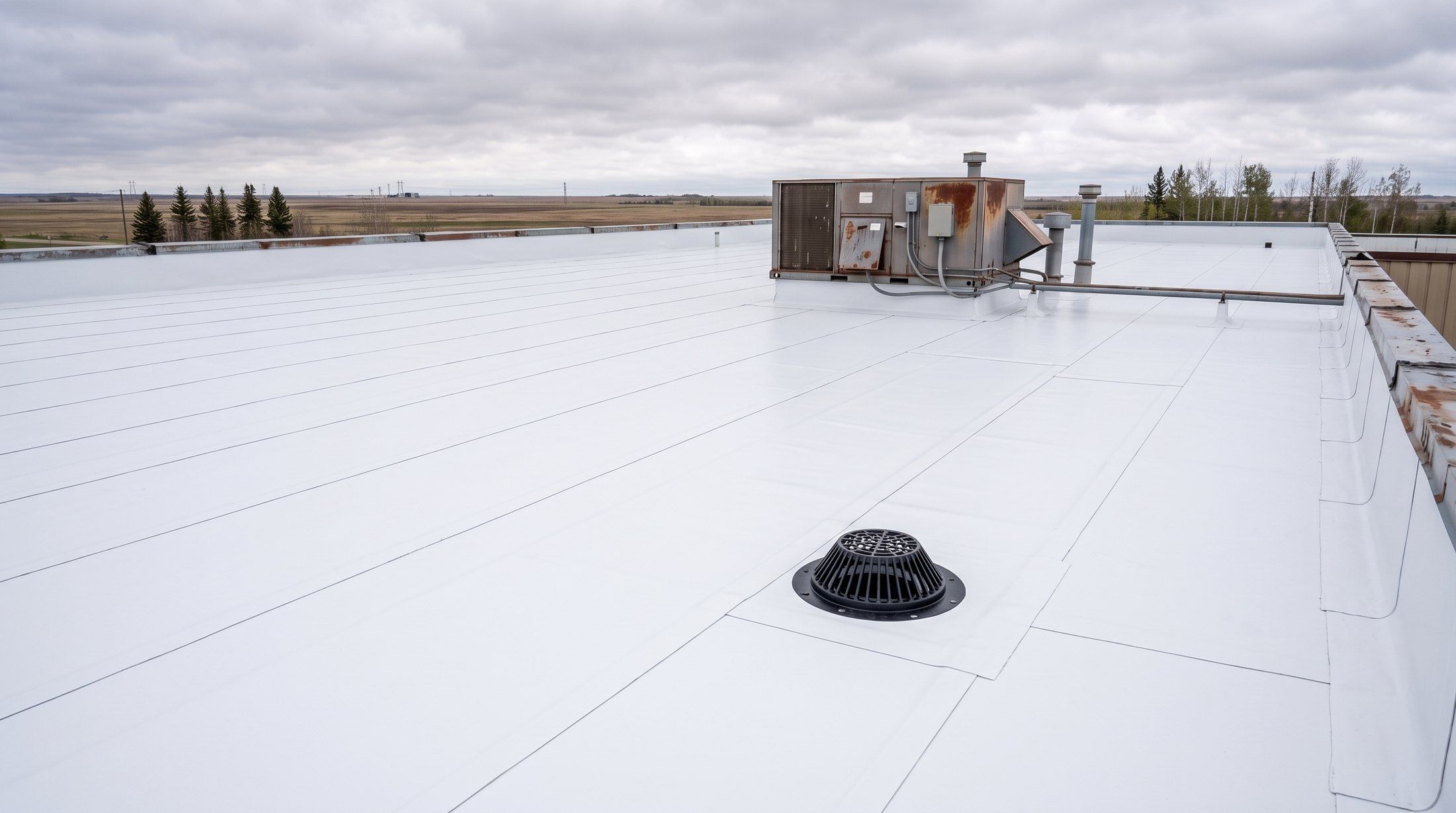
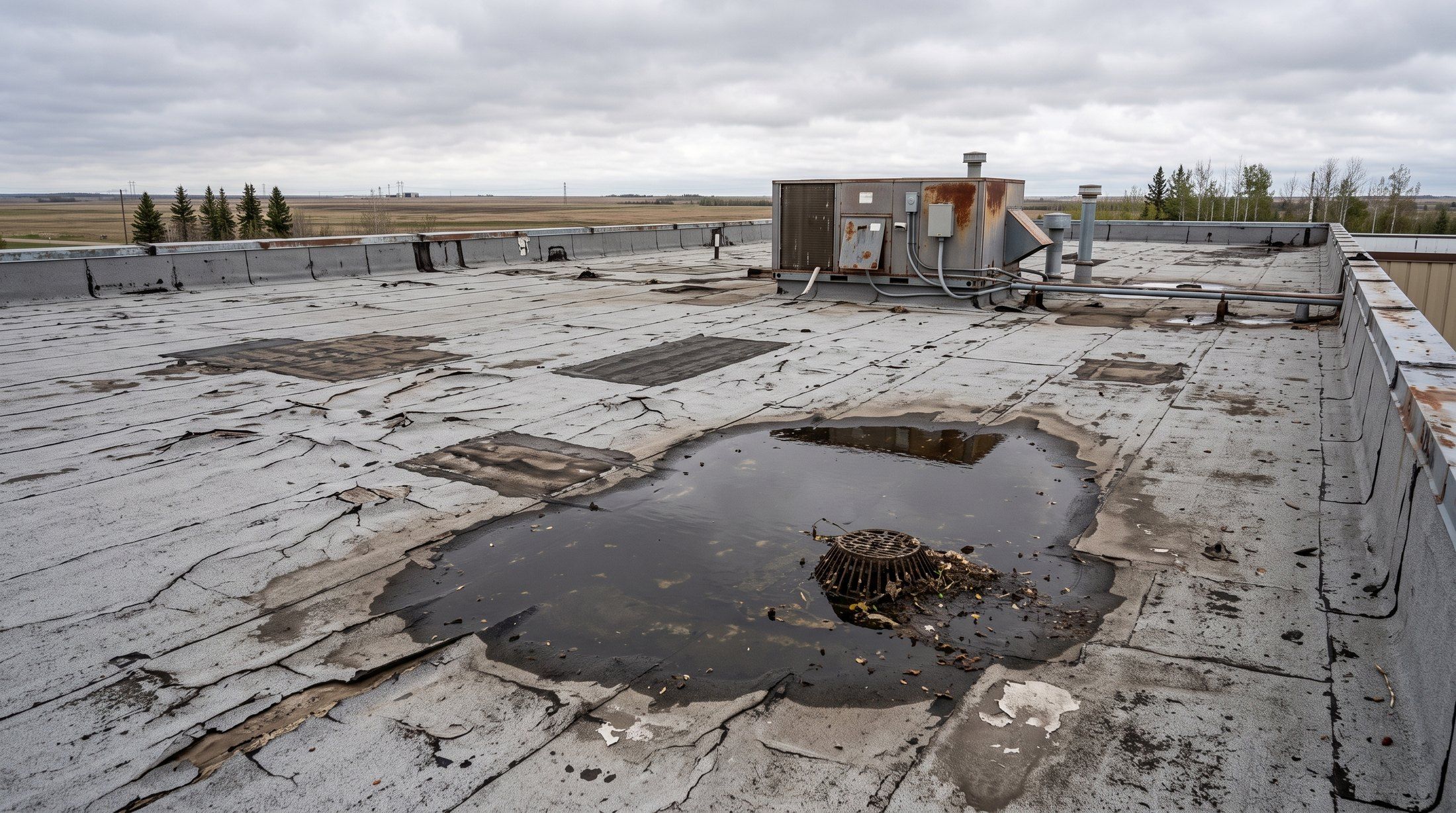
Blisters, open seams and a pond around a blocked drain, replaced with a sloped, sealed, warrantied roof.
Process
We ask where the water appears, when it shows up (rain, melt or wind) and what has been repaired before. That narrows the search.
We inspect seams, flashings, penetrations, drains and curbs upslope of the interior location, and use moisture testing where the source is not obvious.
Torch-applied SBS for SBS roofs, heat-welded membrane for TPO and PVC, and primed, taped seams for EPDM. Wet insulation under the repair is cut out and replaced.
We look over the surrounding area for the next weak point, such as an open lap or a cracked pitch pocket, and note it rather than leave it for the next storm.
You receive photos, a marked roof plan and our recommendations. The repair is added to the history file for your building.
Questions
Yes. Most of our repair calls are on roofs we did not install. If the roof is under warranty with another contractor or a manufacturer, send us the documents and we will make sure our repair does not affect your coverage.
It depends on access, the membrane type and how far water has spread into the insulation. A simple flashing or seam repair costs far less than one that needs wet insulation removed. We give you a price before starting any work beyond the initial investigation.
Often, yes. Many repairs can be made in cold weather with the right materials and preparation, though adhesives and sealants have minimum temperatures. When conditions do not allow a proper repair, we make the roof watertight with a temporary repair and come back to finish it.
Usually because the patch went where the water showed up, not where it got in. We trace the path from the interior back up the slope and check flashings, penetrations and seams upslope of the stain before we repair anything.
Yes, with photos and reasons. We will also tell you when it does not. Our report separates what needs attention now from what can wait, so you can plan.
Keep reading
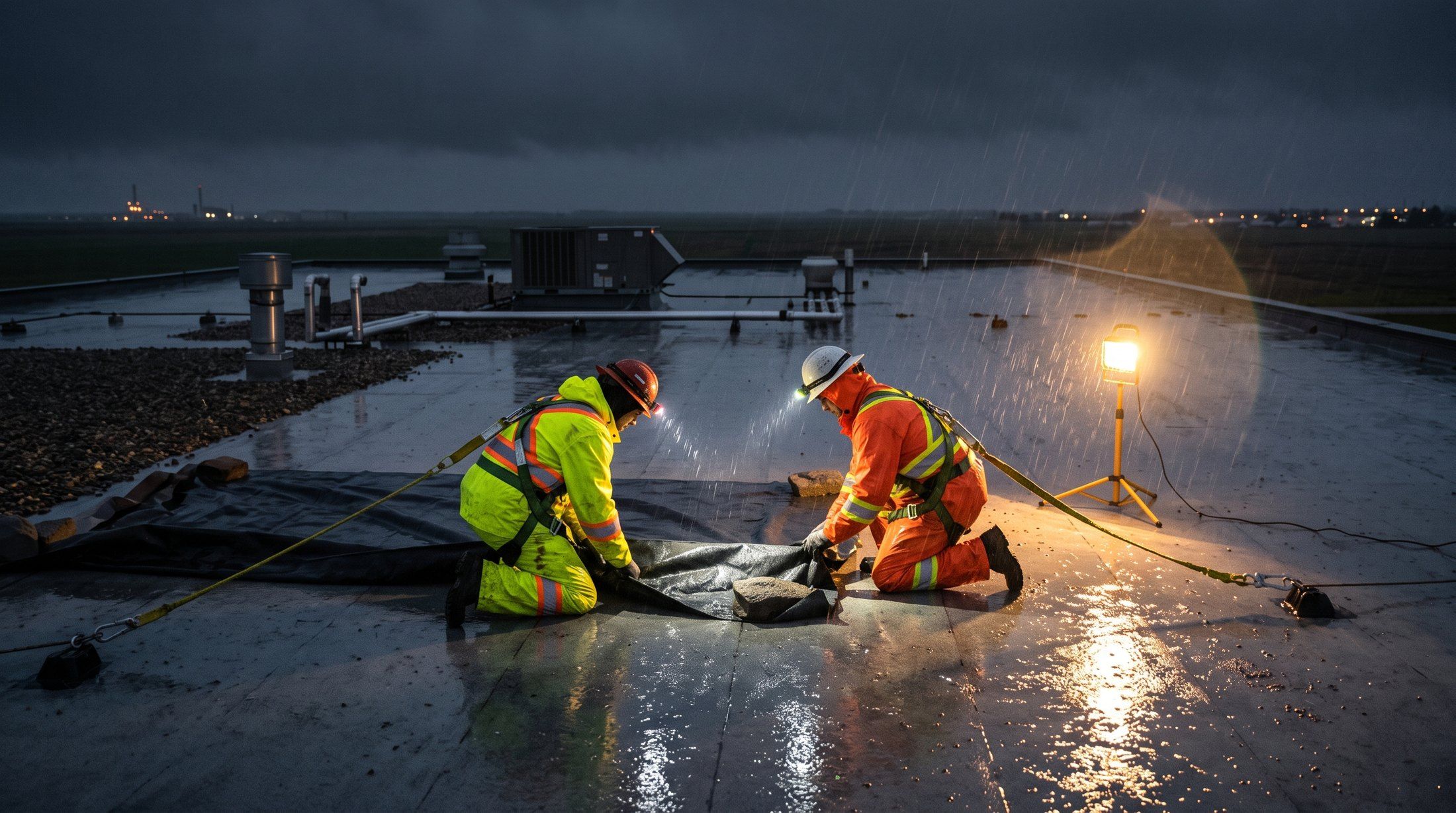
Service
A 24/7 emergency line, a crew on site within 4 hours and a permanent repair that follows.
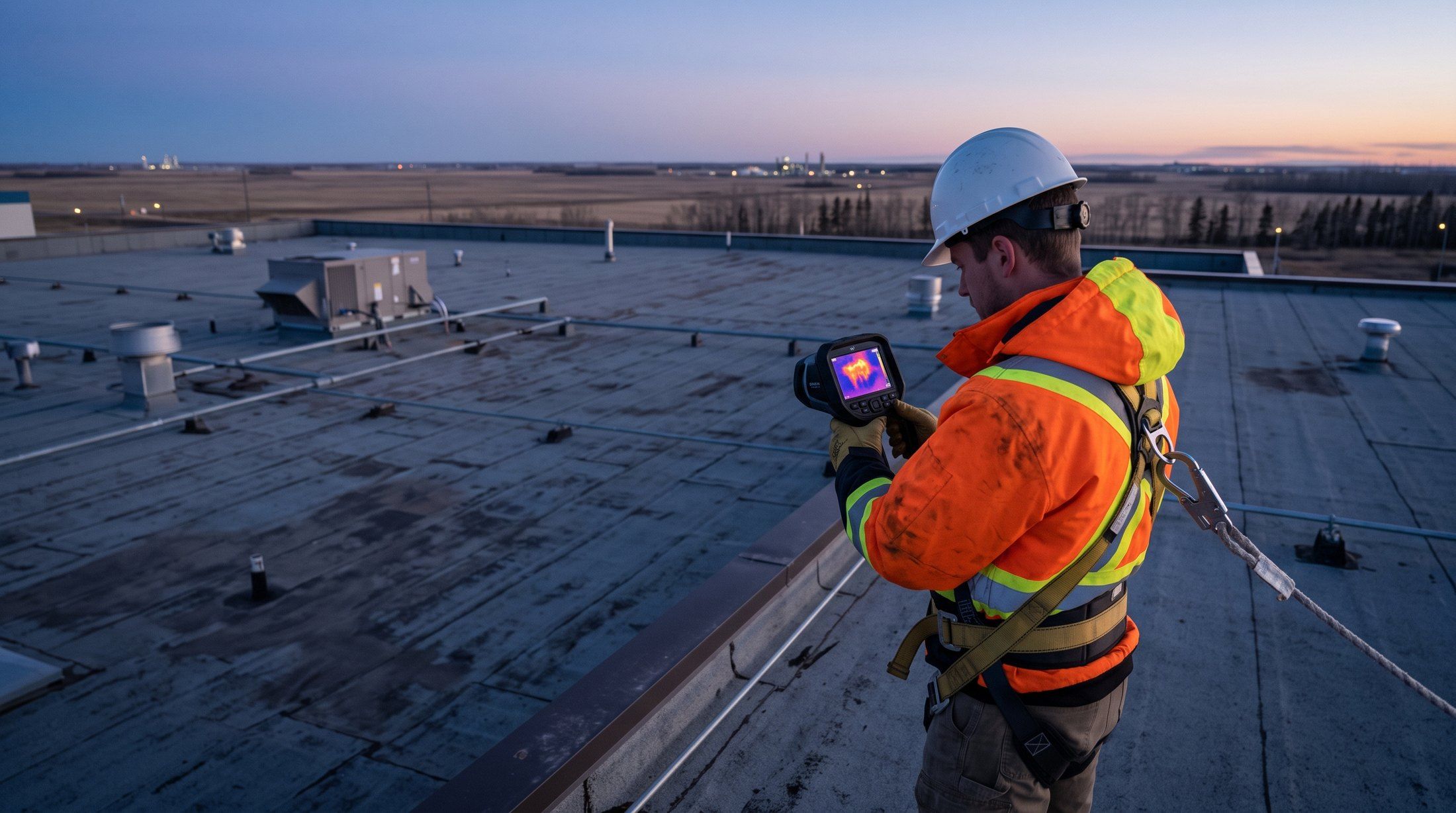
Service
Infrared and moisture surveys that show where a roof is wet, so you repair or replace only what needs it.
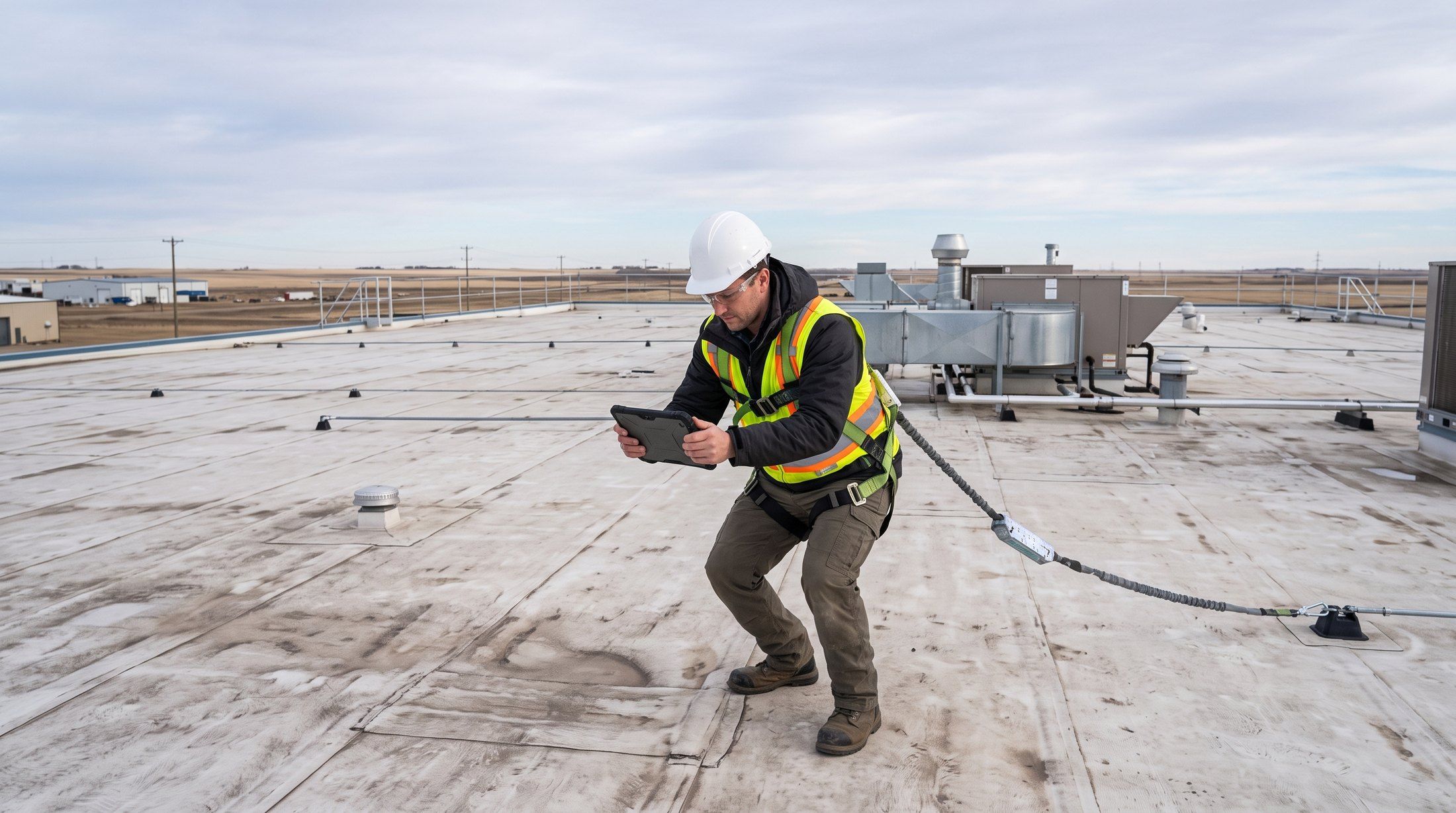
Service
Spring and fall inspections, minor repairs on the spot and a photo report for every visit.
Send us drawings, a spec or just an address. You get a clear scope, a written warranty and a roofer who answers the phone in a storm.