Two layers of protection
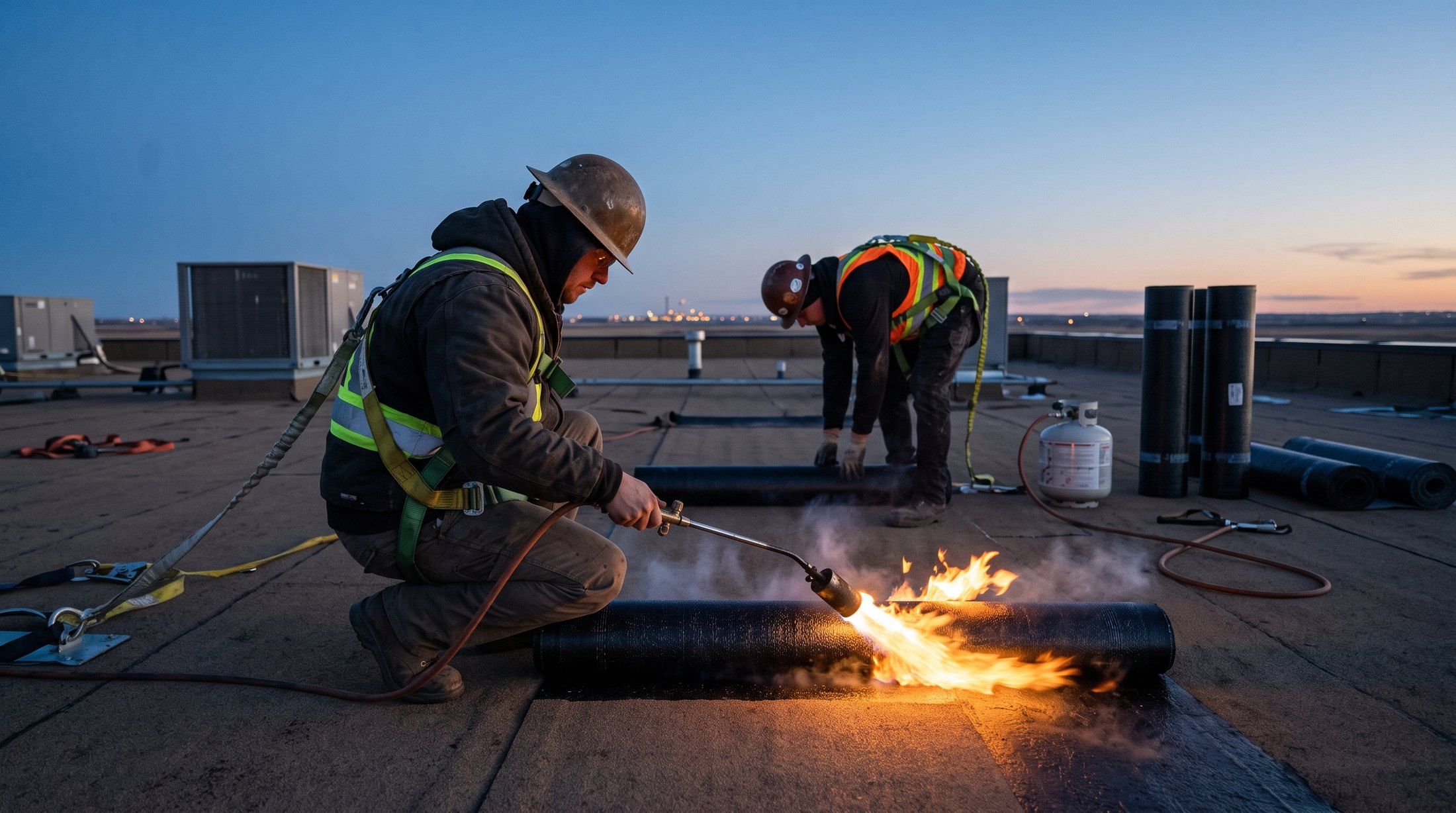
If the cap sheet is damaged, the base ply is still there. Single-ply systems do not have that backup.
Flat roof system
Two plies of modified bitumen, fused to each other and to the roof. It is the most common commercial system in Alberta for good reasons.
Overview
SBS torch-on roofing is the system you will find on more Edmonton commercial and industrial roofs than any other. SBS (styrene-butadiene-styrene) is a rubber polymer blended into asphalt so the membrane stays flexible at temperatures that crack plain asphalt. Two plies go down: a base sheet and a granulated cap sheet, each fused with a propane torch so the layers bond into one thick, redundant waterproofing layer.
It is not the newest system, and it is not the cheapest per square foot. It is the one Alberta roofers and manufacturers have the longest local record with, and it forgives the punishment an Edmonton roof takes: hail, trades walking to rooftop units, and decades of freeze-thaw. Rain Roofing installs 2-ply SBS systems from Soprema and IKO.
If the cap sheet is damaged, the base ply is still there. Single-ply systems do not have that backup.
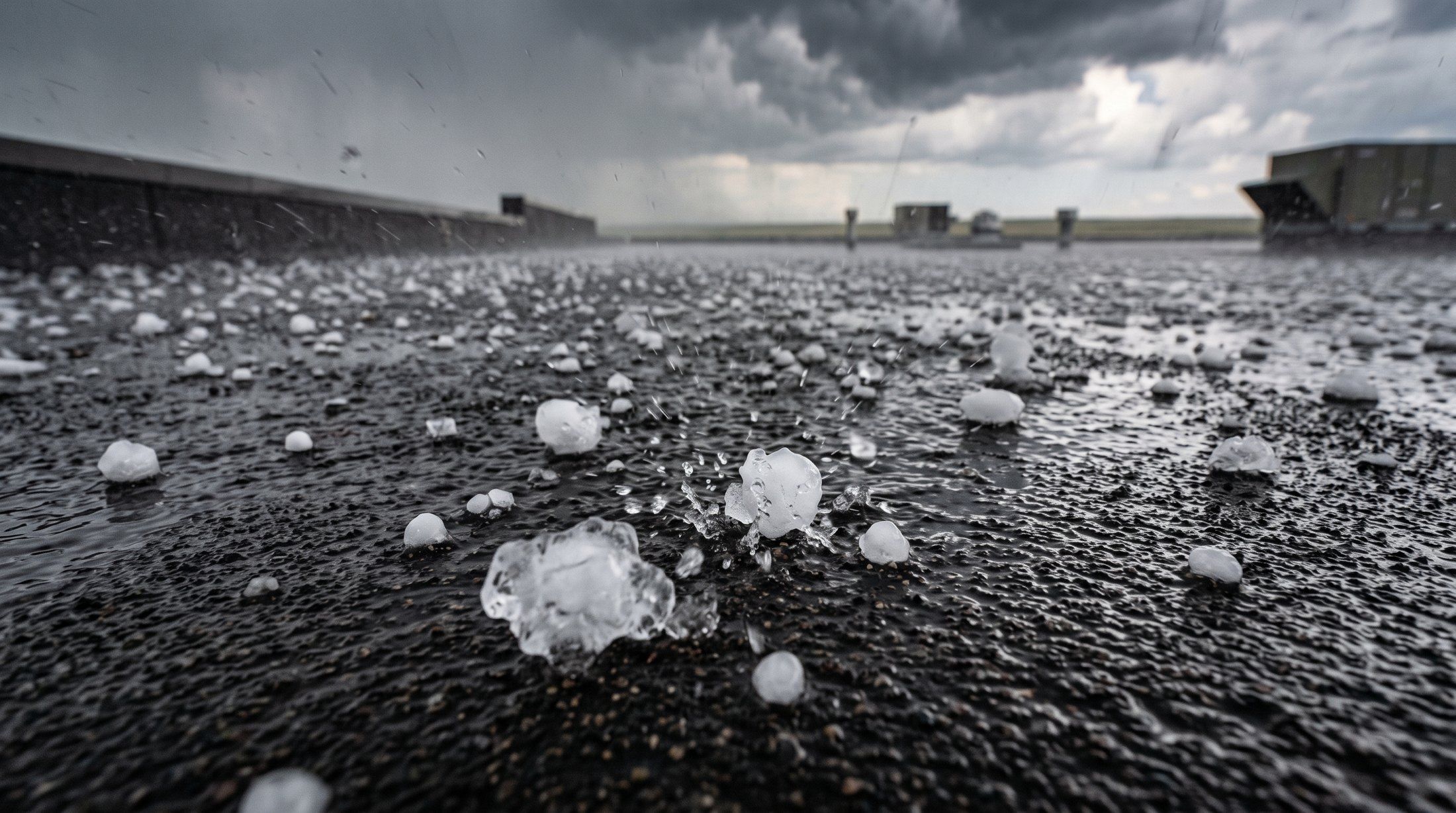
A thick, granulated surface over a cover board absorbs impact that can split thinner membranes.
Service trades can work around rooftop units without the roof becoming a liability.
Decades of local performance data, and the system most ARCA warranties are written around.
Each layer has a job. The vapour retarder stops warm, moist indoor air from condensing in the insulation through a long winter. The cover board spreads hail impact and gives the torch a stable surface. The base sheet is the first waterproofing layer, and the cap sheet is the second. Its mineral granules shield the bitumen from UV, which is what breaks asphalt down over time.
Cold is the first test. SBS polymers keep the membrane pliable well below freezing, so it moves with the building instead of cracking at laps and flashings. Two fused plies give a combined thickness several times that of a typical single-ply sheet, which matters when freeze-thaw works water into every weak spot.
Hail is the second test. The August 2019 storm caused about $90 million in insured damage across west Edmonton, Spruce Grove and Stony Plain. A granulated 2-ply system over a cover board is one of the most hail-resistant low-slope assemblies you can buy.
SBS is our default recommendation for steel-deck warehouses, manufacturing plants and retail plazas with lots of rooftop units and regular trade traffic. It is also a strong fit when an owner wants an ARCA warranty.
It is not always the answer. Some hospitals, labs and Industrial Heartland sites restrict open flame; there we look at self-adhered or cold-applied SBS, or a single-ply system. Restaurant and food plant exhaust carries fats that soften bitumen, so PVC is the better membrane there. On a very large, simple roof with little traffic, TPO can cost less to install.
Most SBS problems are small for years before they become leaks. A spring and fall inspection catches them: blocked drains, debris, open laps, blisters, cracked flashings at curbs and parapets, and bare patches where granules have worn away. Pitch pockets and sealants at penetrations need resealing every few years. Keeping drains clear before freeze-up prevents the ice dams that back water under laps.
Manufacturers offer SBS material and system warranties of roughly 10 to 20 years depending on the assembly; IKO lists 10, 12, 15 and 20-year terms, and a Soprema 15-year warranty is commonly specified. On top of that sits the contractor's workmanship warranty, 10 years on every Rain Roofing SBS install. Where Rain is an ARCA member, an ARCA warranty of 5, 10 or 15 years adds third-party backing and an independent inspection during application.
A sound SBS roof with a few problem details is usually worth repairing. Replacement makes sense when the trouble is spread across the field of the roof.
Inside the assembly
Every layer has a job. Skip one, or install it carelessly, and the roof fails early. This is the assembly we build and warranty.
Process
We check the deck, take cores to find wet insulation, and confirm drains, curbs and parapet heights before pricing.
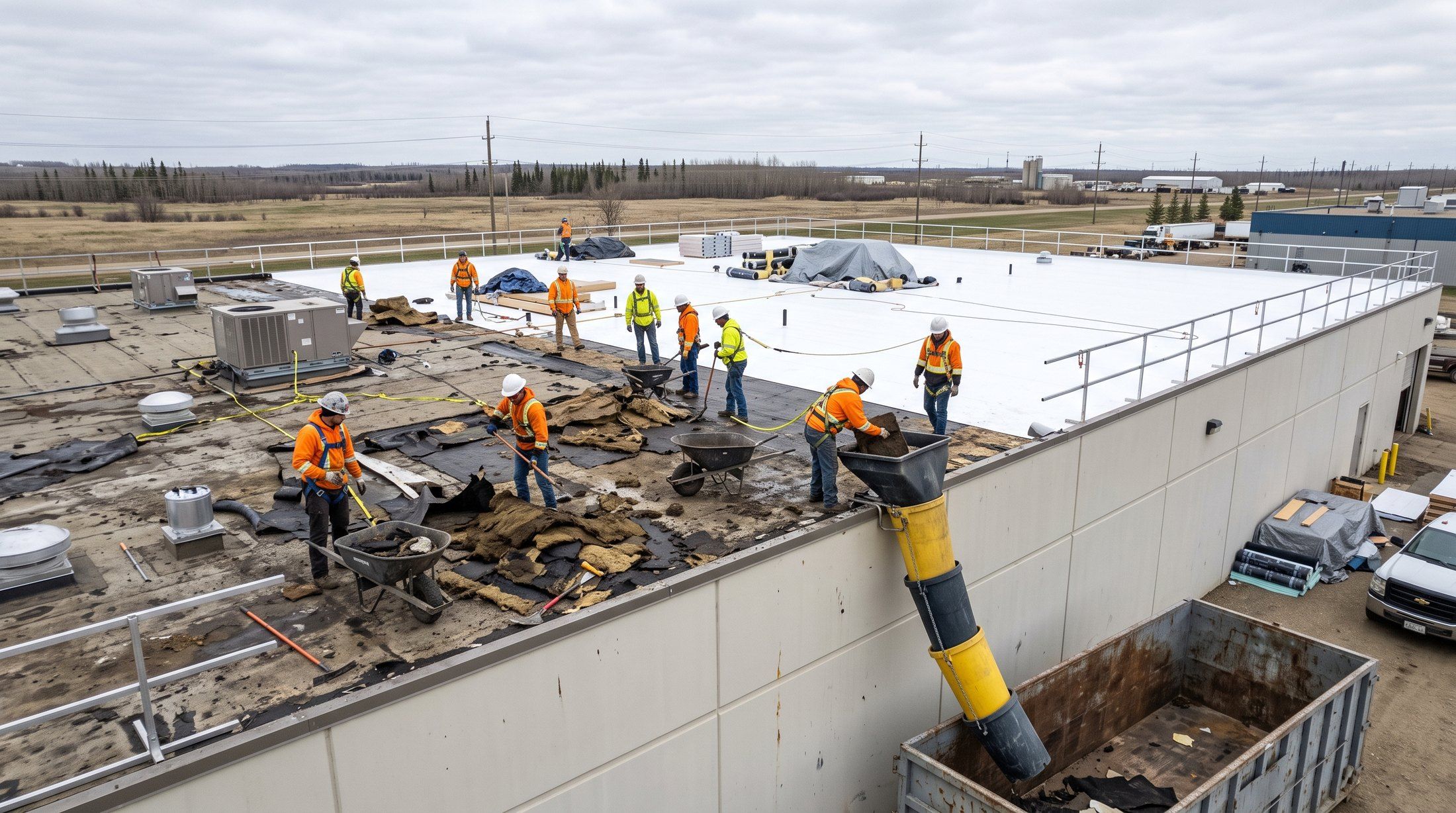
Old roofing comes off in sections that can be closed in the same day. Damaged deck is flagged, photographed and replaced.
A vapour retarder goes down first, then insulation (often tapered to push water to drains) and a cover board to give the membrane a firm base.
The base ply is torched or self-adhered to the cover board, with side and end laps offset so no two seams line up.
Curbs, parapets, drains and penetrations get reinforced membrane flashings. These details are where most leaks start, so they get the most time.
The granulated cap is torched over the base with staggered laps. A fire watch stays on the roof for at least one hour after torching stops, then every lap is probed.
Warranty
Our workmanship, an independent ARCA certificate, and the manufacturer's system warranty, each backed by a different party.
Questions
Yes, with proper hot-work controls: trained crews, extinguishers at every torch, no torching directly at combustible gaps, and a fire watch after work stops. Our liability insurance carries a hot-work endorsement, and we can provide certificates for your file.
Typically 20 to 30 years. Good drainage, a cover board and twice-yearly inspections push it toward the top of that range. Neglected drains and unrepaired flashings pull it down.
Limited work is possible in cold weather with rolls stored warm and extra care at laps, and emergency repairs happen year-round. Full re-roofs are best scheduled from spring to late fall, so plan replacements a season ahead.
If the existing roof and insulation are dry and the deck is sound, a recover can save cost and disruption. We confirm it with cores or a moisture survey. Wet insulation has to come off.
More material and more labour: two full plies plus torched flashings. You get redundancy, hail resistance and better tolerance for foot traffic in return, which usually pays back on busy roofs.
Keep reading
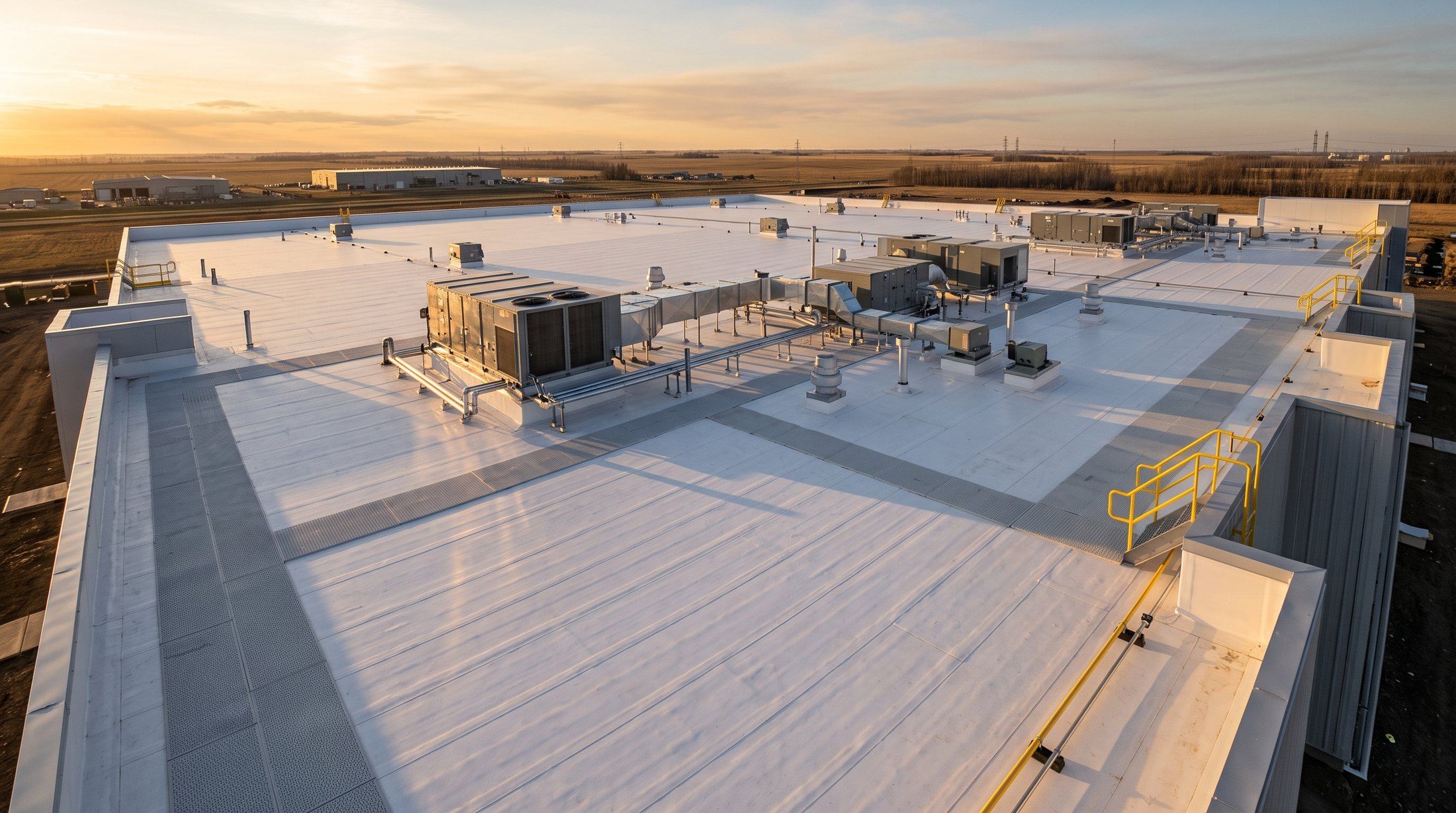
Flat roof systems
Compare every commercial flat roof system and see which one suits your building.
Service
Full tear-off or recover over a dry roof, chosen on survey evidence and scheduled around your operations.
Service
Post-storm assessment, insurance documentation and repair for hail-damaged flat roofs.
Send us drawings, a spec or just an address. You get a clear scope, a written warranty and a roofer who answers the phone in a storm.