Chemical and grease resistance
Handles the fats, oils and many chemicals that soften EPDM and asphalt.
Flat roof system
A heat-welded single-ply membrane that stands up to grease, oil and chemicals. It costs more, and on the right roof it is worth it.
Overview
PVC roofing is the membrane of choice when something on your roof would attack other materials. PVC (polyvinyl chloride) is a thermoplastic sheet with hot-air welded seams, like TPO, but it resists animal fats, oils and many industrial chemicals far better. For Edmonton food plants, restaurants, and process buildings with chemical exhaust, that resistance decides the roof.
It is not the default for a plain warehouse. PVC costs more than TPO or EPDM, it needs separation from asphalt and polystyrene, and it slowly loses flexibility as it ages. Where grease or chemicals are present, those trade-offs are worth it. Rain Roofing installs Sika Sarnafil PVC systems.
Handles the fats, oils and many chemicals that soften EPDM and asphalt.
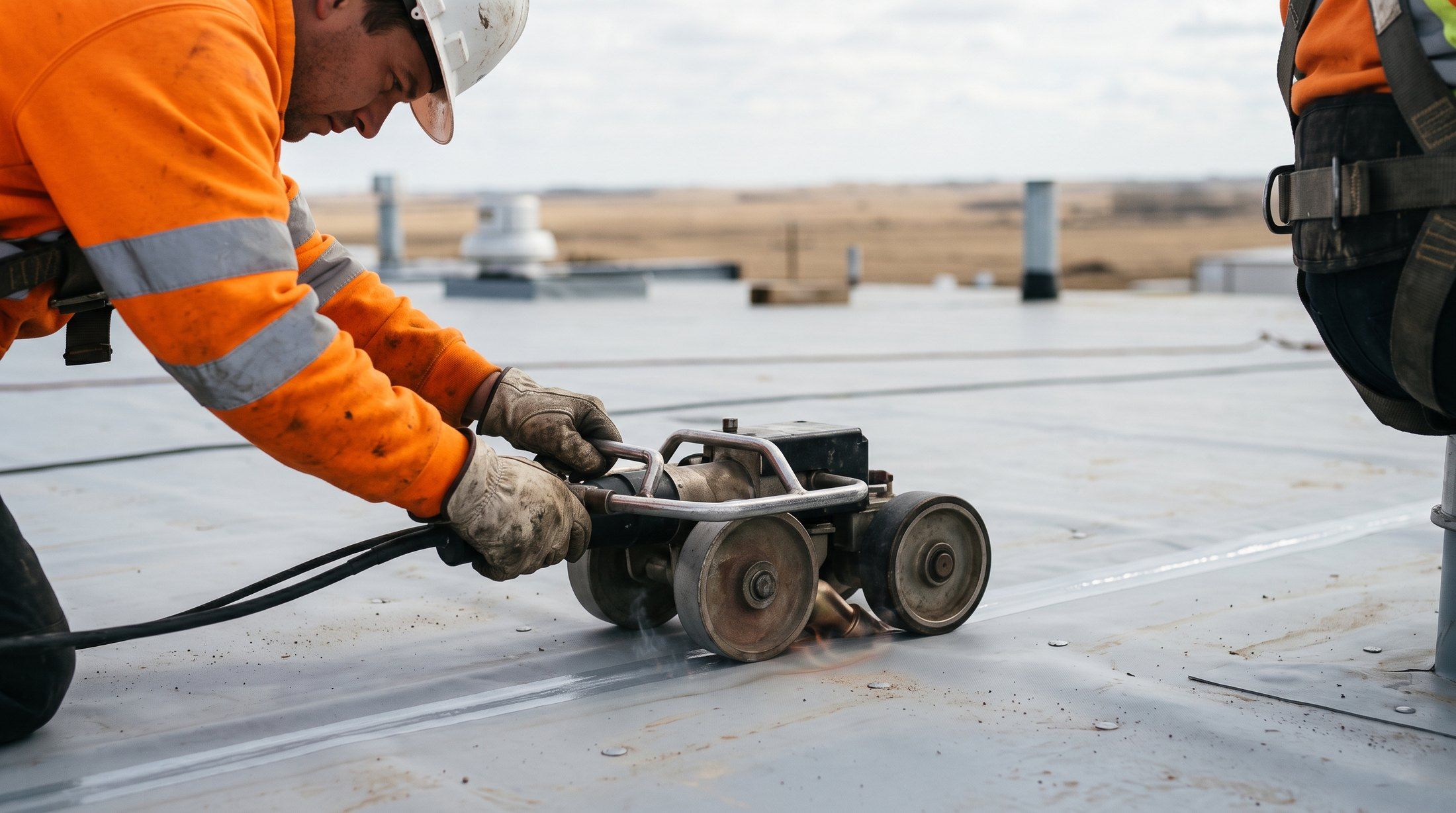
Hot-air welds fuse overlaps into one sheet, with no tape or adhesive at the laps.
System warranties up to 30 years are available on qualifying assemblies.
PVC membranes contain plasticizers that keep the sheet flexible, and a polyester or glass reinforcement that holds it dimensionally stable. Most commercial sheets are 50 to 80 mil. Because the seams are welded, a good PVC roof behaves like one continuous sheet.
Compatibility shapes the whole assembly. Asphalt and polystyrene both draw plasticizer out of PVC, so the membrane can never sit directly on an old bitumen roof or on EPS or XPS insulation. A separator sheet or the right cover board solves it, and getting that layer right is one of the details we check first on any PVC recover.
Welding helps here, as it does with TPO: seams can be made in cool spring and fall weather that would stall adhesive-based systems. New PVC handles cold and hail reasonably well, especially over a cover board.
The long-term concern is plasticizer loss. Over many years, PVC slowly gives up the additives that keep it flexible, and an old PVC roof can become brittle enough to crack under hail or a dropped tool in deep cold. Good membranes, proper thickness and regular inspections manage that risk.
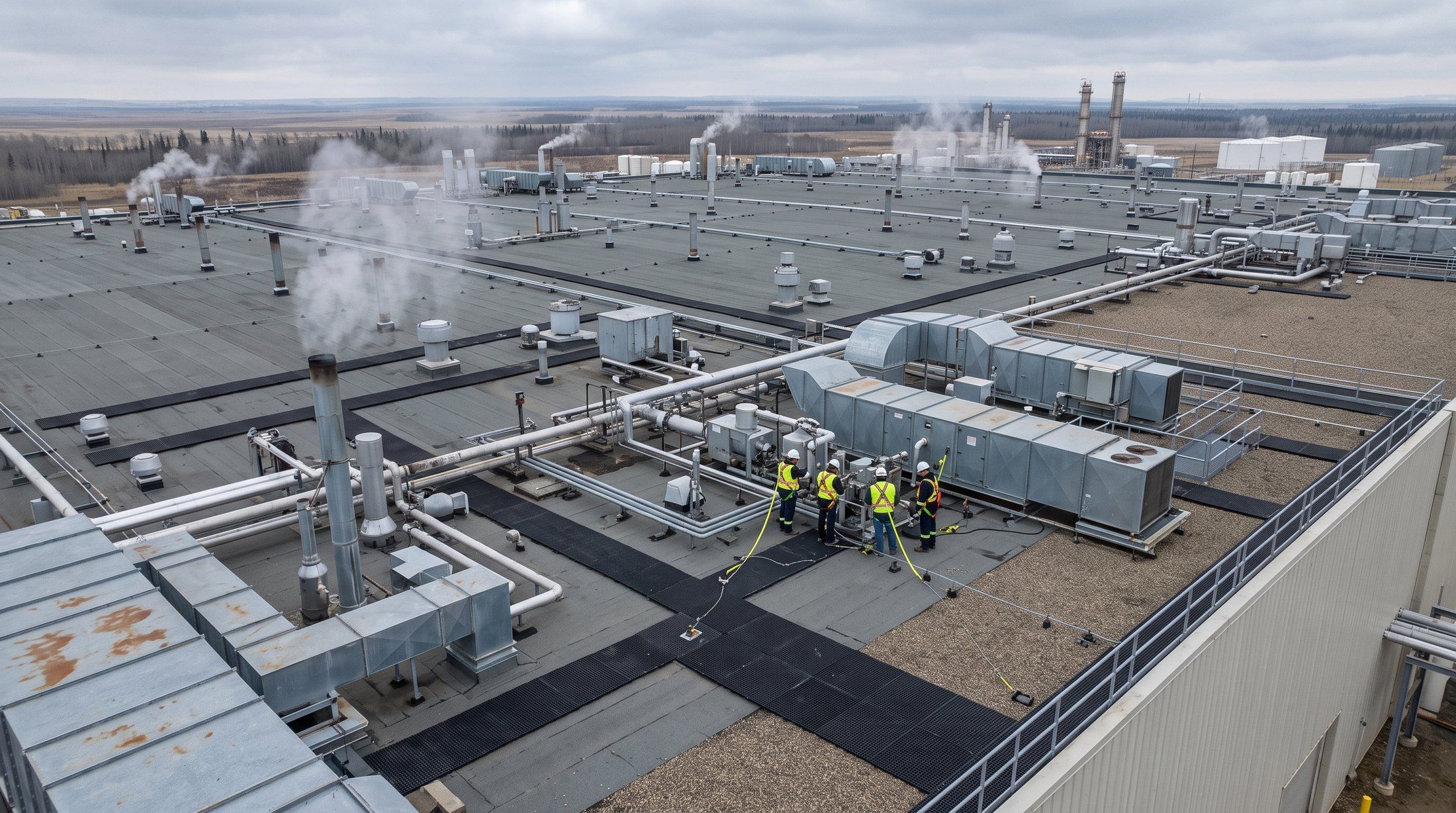
Choose PVC when grease, oil or chemicals reach the roof: restaurants and food courts in retail plazas, meat and food processing plants, labs, and process buildings in the Industrial Heartland and Nisku. It is also a good fit where fire performance is a priority.
On a plain warehouse with clean exhaust, the extra cost does not buy much. TPO or SBS will serve as well for less. PVC also cannot touch asphalt directly, so recovering an old tar and gravel or SBS roof with PVC always needs a separator layer.
Grease is the main maintenance item on restaurant and food plant roofs. Even PVC lasts longer when grease traps around exhaust fans are cleaned and replaced on schedule. Spring and fall inspections should also check seams, flashings and the membrane around rooftop units, and note any stiffening or surface cracking on older sheets.
Sika Sarnafil offers PVC system warranties up to 30 years on qualifying assemblies, with terms tied to membrane thickness and attachment. Some PVC warranties exclude damage from unmaintained grease build-up, so we explain those terms before you sign. Rain Roofing adds a 10-year workmanship warranty on every PVC install.
PVC welds well for most of its life, so repairs are clean and permanent. Replacement comes into view when the membrane itself has aged.
Inside the assembly
Every layer has a job. Skip one, or install it carelessly, and the roof fails early. This is the assembly we build and warranty.
Process
We identify every exhaust fan and process vent, what it discharges, and where it lands, so the membrane and flashings match the exposure.
Insulation and a cover board go down. Where the old roof is asphalt or the insulation is polystyrene, a separator sheet keeps them away from the PVC.
PVC sheets are mechanically fastened, adhered or attached with induction-welded plates to meet the wind and warranty spec.
Seams are fused by robotic and hand welders, with settings adjusted to the day's temperature and checked with test welds.
PVC-coated metal and membrane flashings finish curbs and edges; grease containment goes in around kitchen exhaust fans.
Every seam is probed and the roof is inspected for the manufacturer warranty before handover.
Warranty
Our workmanship, an independent ARCA certificate, and the manufacturer's system warranty, each backed by a different party.
Questions
Where grease, oil or chemicals reach the roof, yes. Other membranes can fail early under that exposure. On a roof with clean exhaust, TPO or SBS usually gives better value.
Both are white, heat-welded single-ply sheets. PVC resists grease and chemicals better and has a longer history; TPO costs less and does not rely on plasticizers. The exposure on your roof usually decides it.
Yes, with a separator sheet or cover board between them, because asphalt and PVC are not compatible. The gravel and loose material come off first, and the insulation has to be dry.
New PVC handles Edmonton winters well. Over many years it slowly loses plasticizer and becomes less flexible, which is why older PVC roofs need careful inspection after hail.
Start with grease containment at the fan and a repair of the damaged area. If the existing membrane is EPDM or asphalt, replacing that section with PVC stops the problem from returning.
Typically 25 to 30 years or more. Membrane thickness, grease control at exhaust fans and regular inspections make the biggest difference. Thicker sheets hold their plasticizer longer and stay flexible into later years.
Keep reading
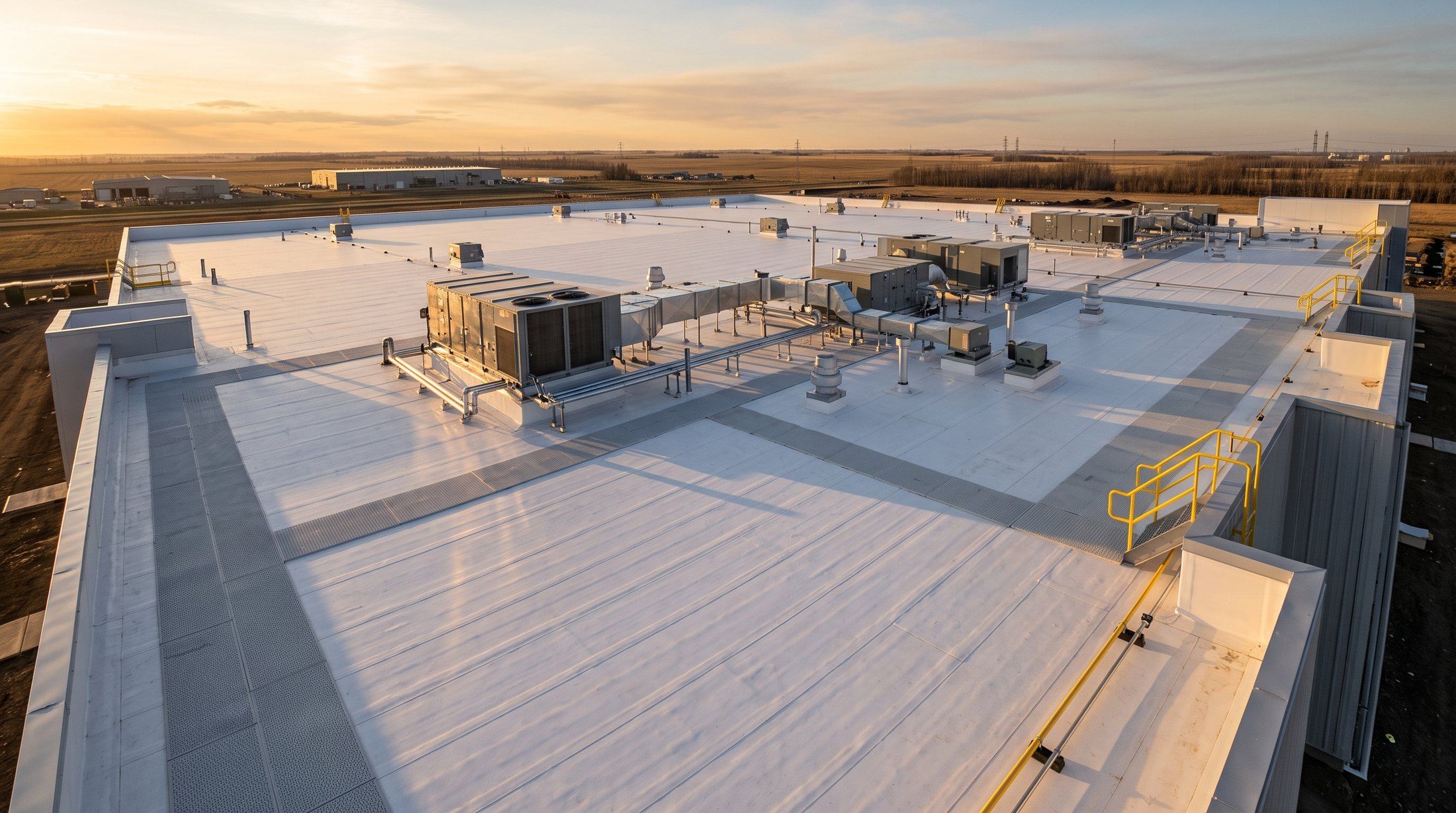
Flat roof systems
Compare every commercial flat roof system and see which one suits your building.
Industry: manufacturing
Plant roofs built for exhaust, chemical exposure and daily maintenance traffic, scheduled around production.
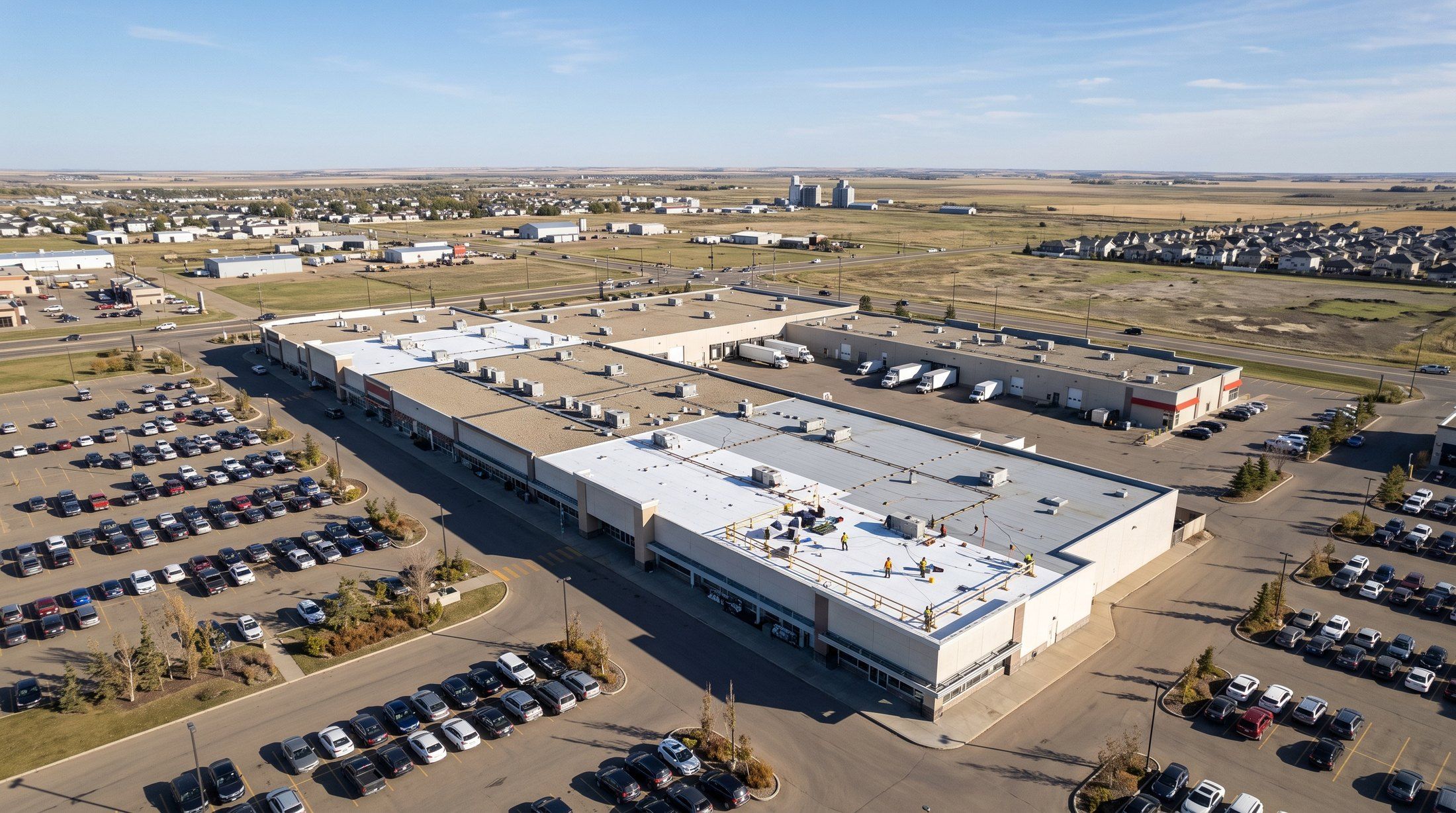
Industry: retail and commercial
Plaza, office and multi-tenant roofing, scheduled around tenants and store hours.
Send us drawings, a spec or just an address. You get a clear scope, a written warranty and a roofer who answers the phone in a storm.