Infrared surveys
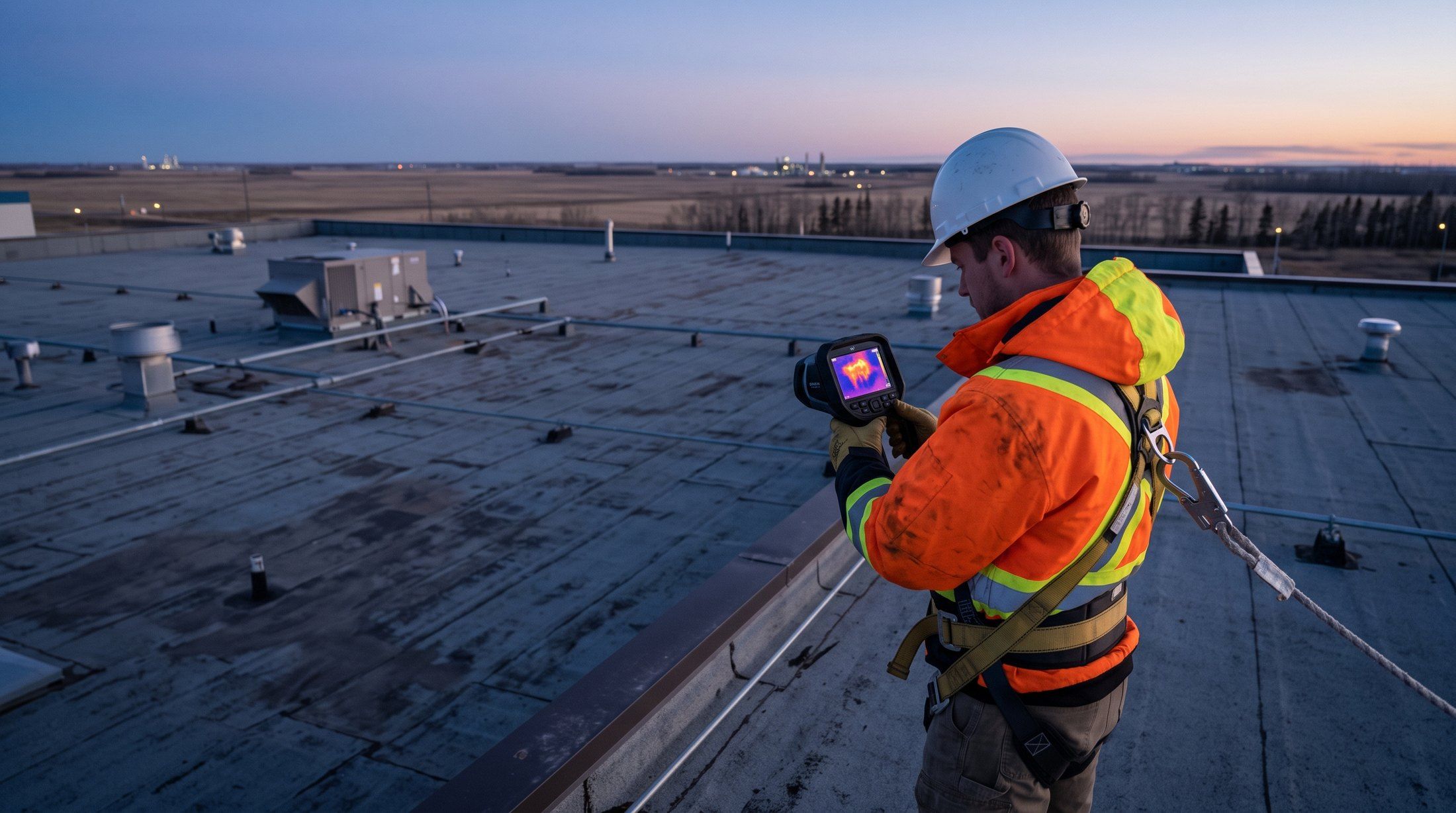
Thermal imaging after a sunny day shows wet insulation, which holds heat longer than dry insulation as the roof cools.
Service
Find out exactly where your roof is wet before you spend money on it. Our surveys map wet insulation so repairs, recovers and budgets are based on evidence.
Overview
Roof leak detection in Edmonton starts with a simple fact: the drip inside rarely sits under the hole outside. Water travels across the deck and soaks into insulation, sometimes for months before it shows. By the time a stain appears, a much larger area may be wet.
We use infrared thermography, capacitance moisture meters and confirming core cuts to map exactly where a roof is wet. The result is a marked roof plan that tells you where the leaks are, how far the damage has spread and whether the roof is a candidate for repair, recover or full replacement.
Thermal imaging after a sunny day shows wet insulation, which holds heat longer than dry insulation as the roof cools.
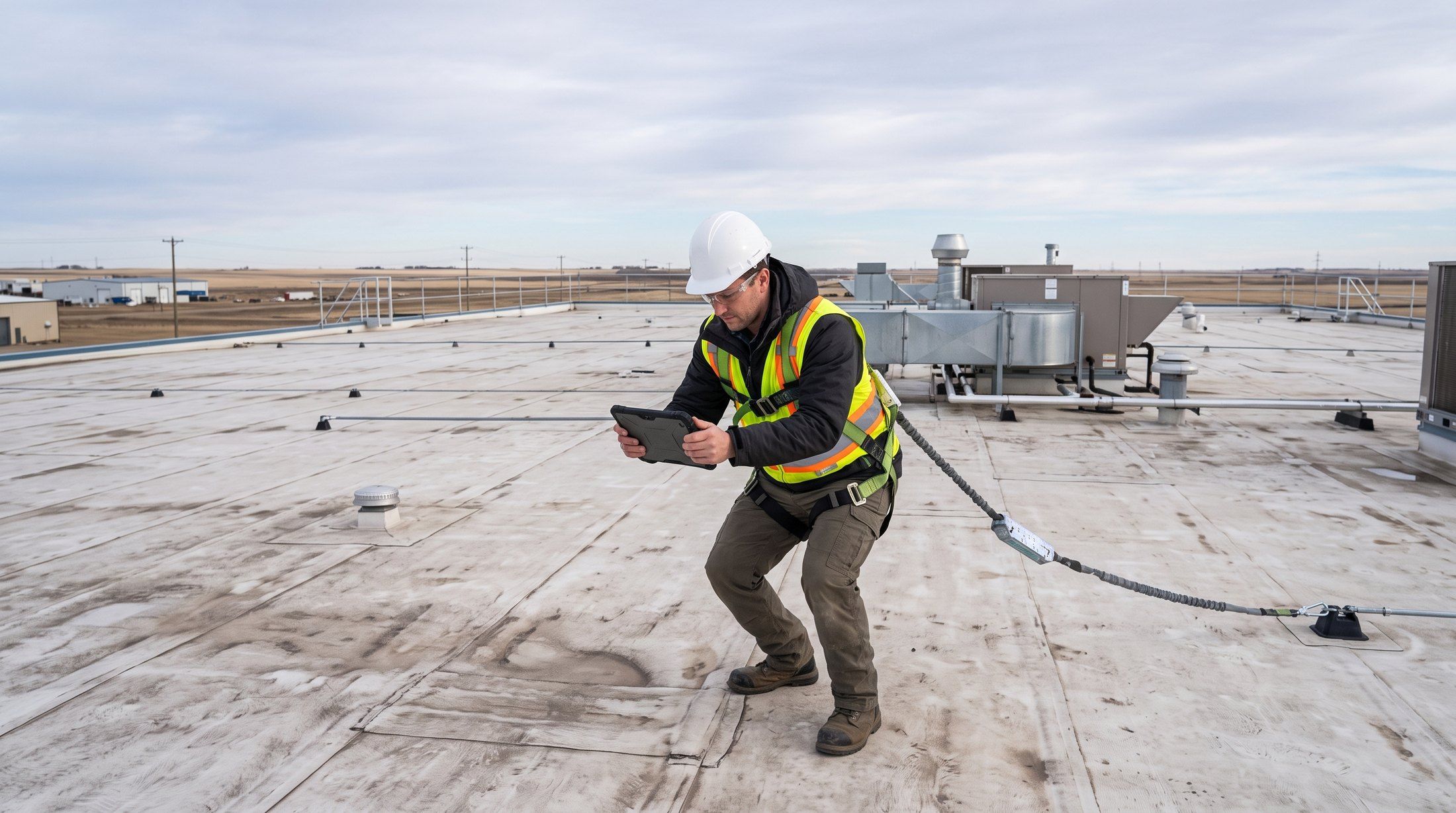
Capacitance readings on a grid confirm and refine what the infrared shows, and work where infrared cannot.
Small samples show the actual layers and moisture, then are patched watertight.
Wet areas outlined with square metres, ready to price and to keep on file.
On a sunny day, the roof absorbs heat. After sunset, dry insulation gives that heat up quickly, while wet insulation holds it longer. A thermal camera picks up those warmer areas, which outline where water has soaked in. Infrared covers large roofs quickly and gives a clear picture of how much is wet.
Conditions matter. The roof must be free of snow and standing water, the day before should be sunny, and wind should be light. In Edmonton that limits surveys to the period between spring melt and the first snow. Heavy gravel ballast, some inverted roofs and certain insulation types give weaker infrared results, which is where moisture meters and cores take over.
Wet insulation loses much of its insulating value, adds weight to the structure and, over time, can corrode a steel deck or rot a wood one. It also stays wet for years under an intact membrane, because there is nowhere for the water to go. Finding it lets you remove it before it causes more damage.
In Edmonton, wet insulation has one more cost. Water in the roof freezes in winter, and the repeated freeze-thaw breaks down insulation boards and pushes up on the membrane above. A small wet area left alone through two or three winters is usually much larger by the time it shows.
A recover, installing a new roof over the existing one, is only appropriate where the existing insulation and deck are dry. A moisture survey is the step that answers that question. If the wet area is limited, it can be cut out and replaced, and the rest of the roof recovered, often at a lower cost than a full tear-off. If large areas are wet, the survey gives you the evidence that a tear-off is the right investment. Manufacturers often require a survey before they will warranty a recover.
A survey shows where the roof is wet. Finding the exact opening takes a closer look. We work outward from the wettest readings toward the nearest seams, flashings, penetrations and drains, which is where most openings are. Where a leak is still hard to find, controlled water testing (flooding one small area at a time while someone watches below) can confirm the source.
On ballasted, inverted and vegetated roofs, where the membrane cannot be seen, electronic leak detection can locate breaches by passing a low-voltage current across the wet membrane surface. We can arrange electronic leak detection where a roof calls for it.
Process
Leak locations, past repairs, roof age and drawings help us plan the survey and the conditions it needs.
Infrared scans are done in the evening after a clear, sunny day, on a dry roof with light wind.
Suspect areas are checked with a moisture meter and confirmed with core cuts, which are sealed the same day.
Wet areas are outlined on a roof plan with their size and the likely source of each leak.
You get a clear recommendation: targeted repairs, a recover with wet areas removed, or a full replacement.
Questions
Not reliably on a snow-covered roof. In winter we use other methods, such as tracing from the interior and targeted moisture meter readings where the roof can be cleared, then schedule an infrared survey for spring.
No. Each core is a small sample that we patch with compatible membrane the same day. Cores are a standard part of a survey and the only way to confirm what is inside the roof.
Infrared covers large areas quickly. Most single buildings can be scanned in one evening, depending on size, access and conditions.
Yes. A survey tells you whether a recover is possible and how much wet material must be removed, which can change the cost of a re-roof considerably. It also gives you a baseline record.
On an older roof, yes. Water can sit in insulation long before it shows inside. A survey every few years, as part of maintenance, finds those areas while repairs are still small.
A marked roof plan with wet areas outlined and measured, thermal and visual photos, core results and a written recommendation with costs. It is a document you can hand to an owner, a consultant or the next contractor.
Keep reading
Service
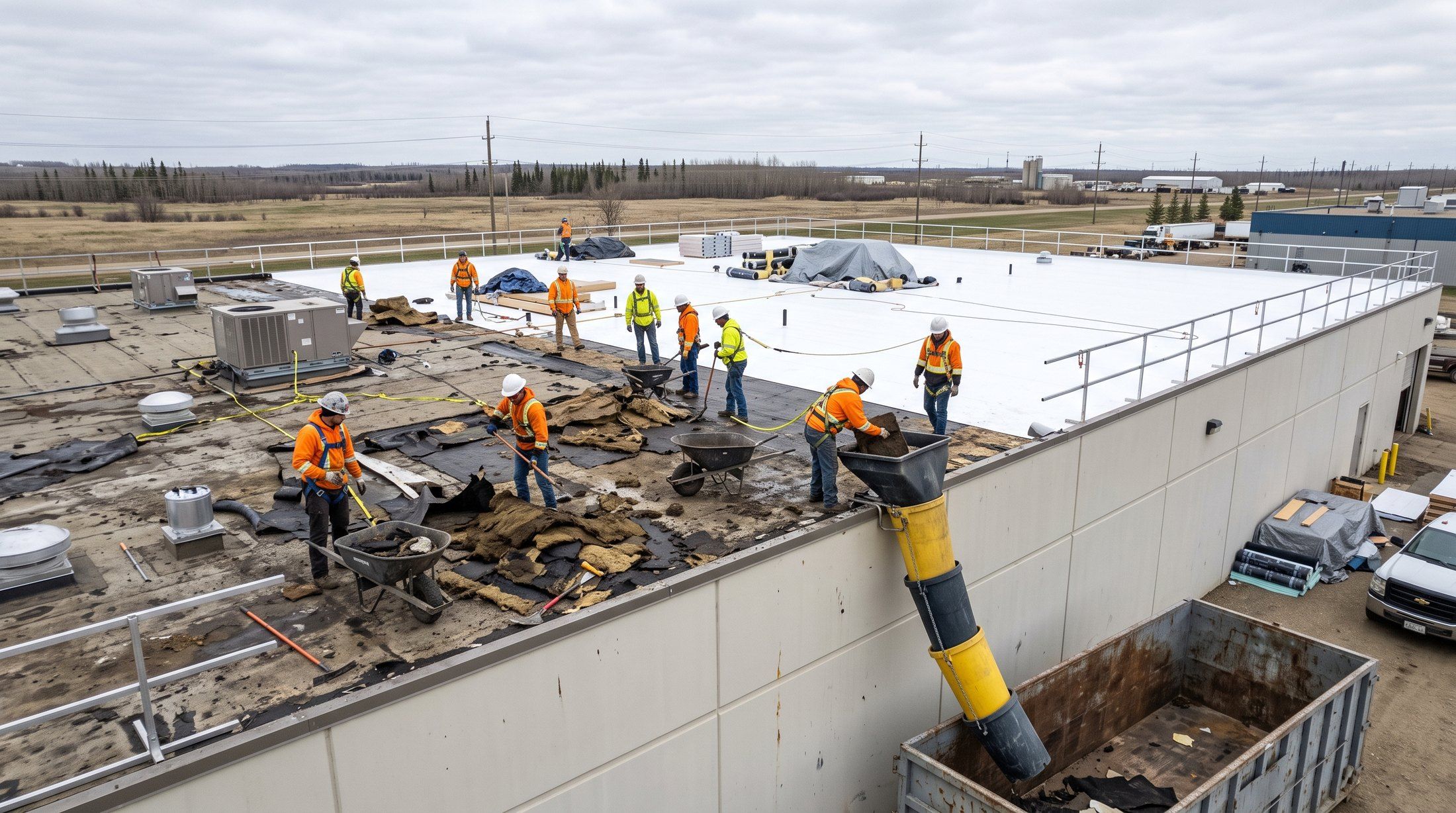
Full tear-off or recover over a dry roof, chosen on survey evidence and scheduled around your operations.
Service
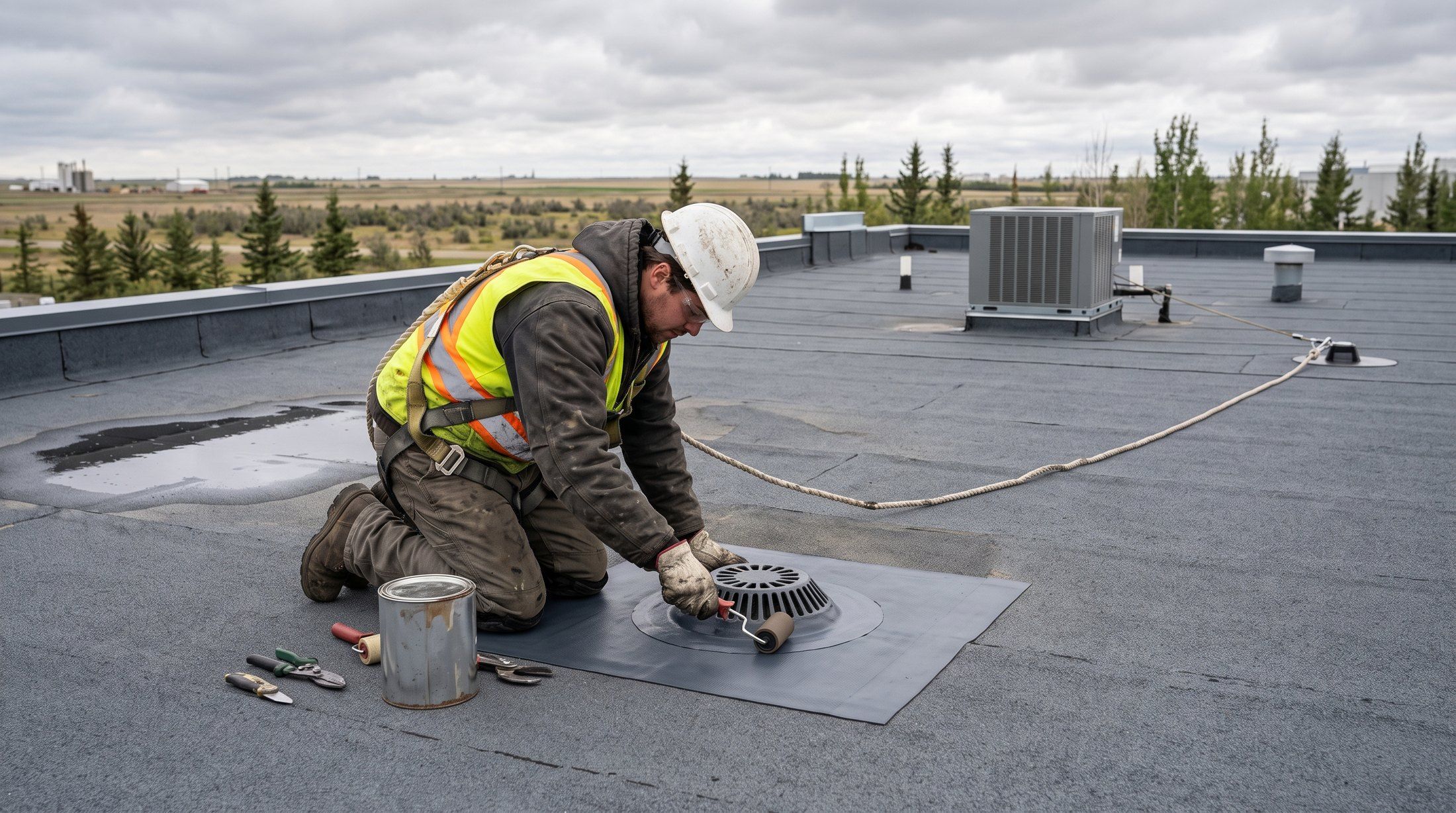
Permanent repairs on every common commercial membrane, traced to the source and documented with photos.
Service
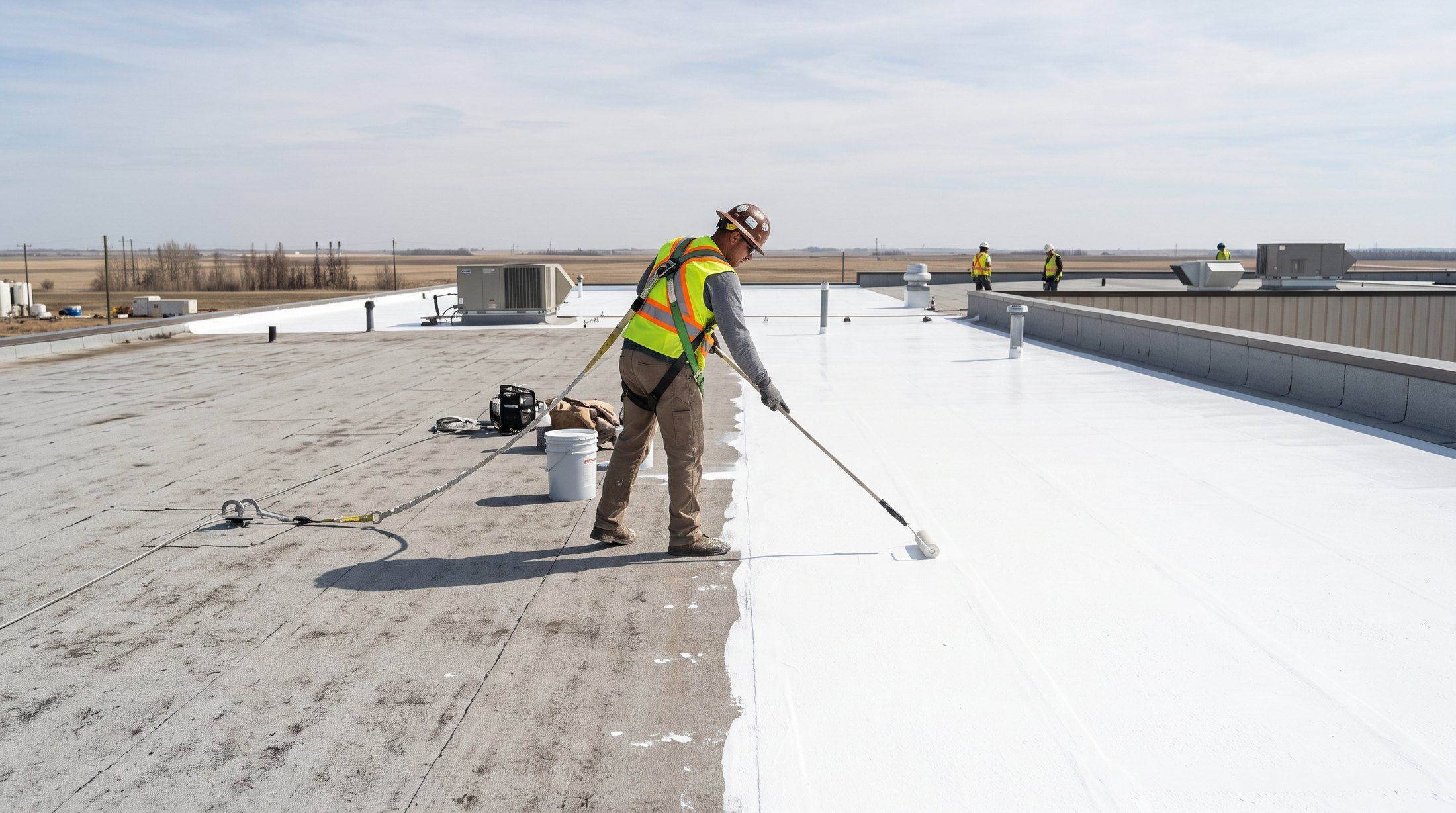
Restoration coatings for sound, aging roofs, recommended only after a moisture survey says they will work.
Send us drawings, a spec or just an address. You get a clear scope, a written warranty and a roofer who answers the phone in a storm.