Chemical-resistant systems
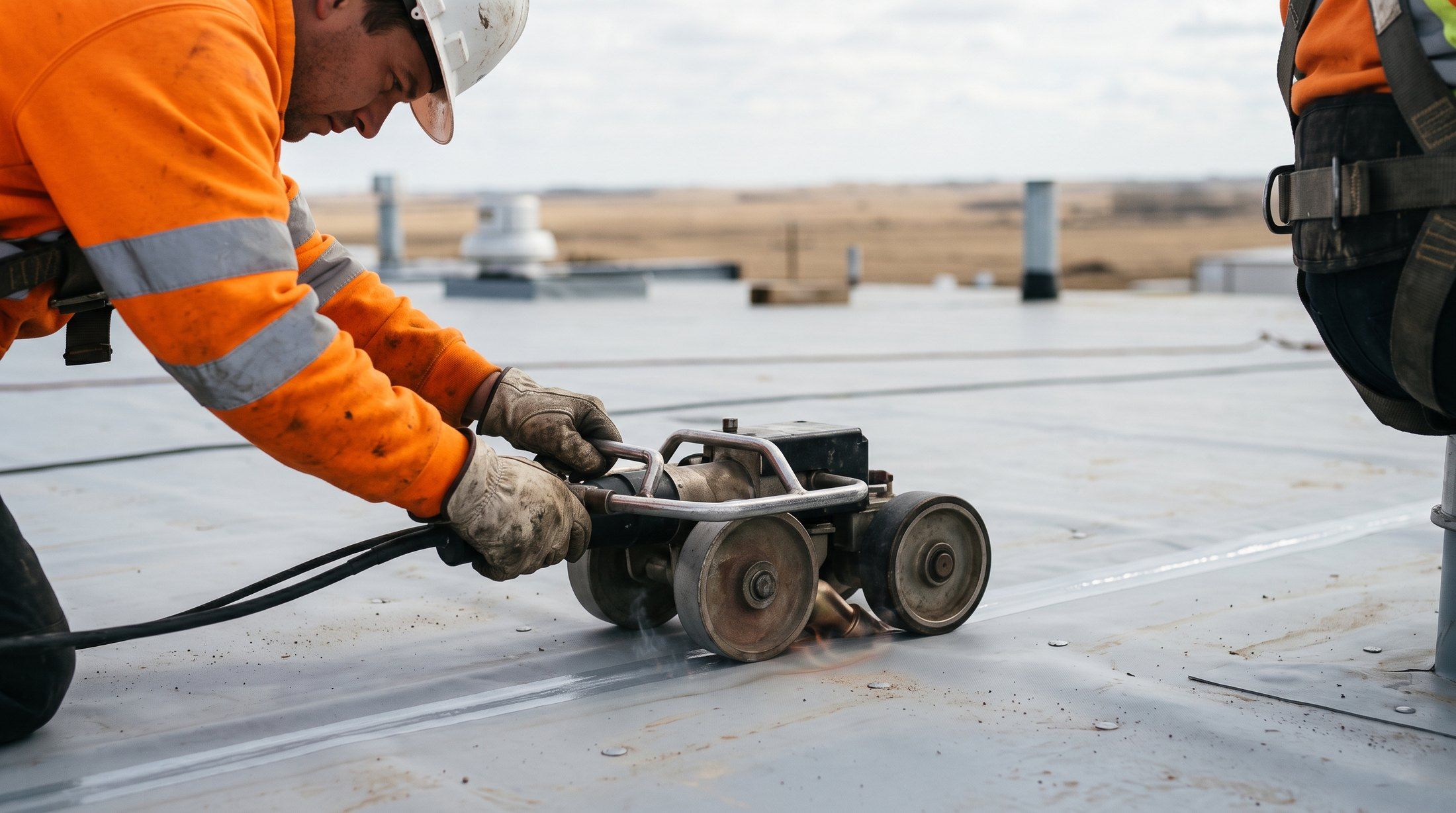
Membranes checked against your exhaust profile before we recommend one.
Industry: manufacturing
Exhaust, chemicals, foot traffic and a production line that can't stop. Plant roofs need a plan built for all of it.
The roof behind the operation
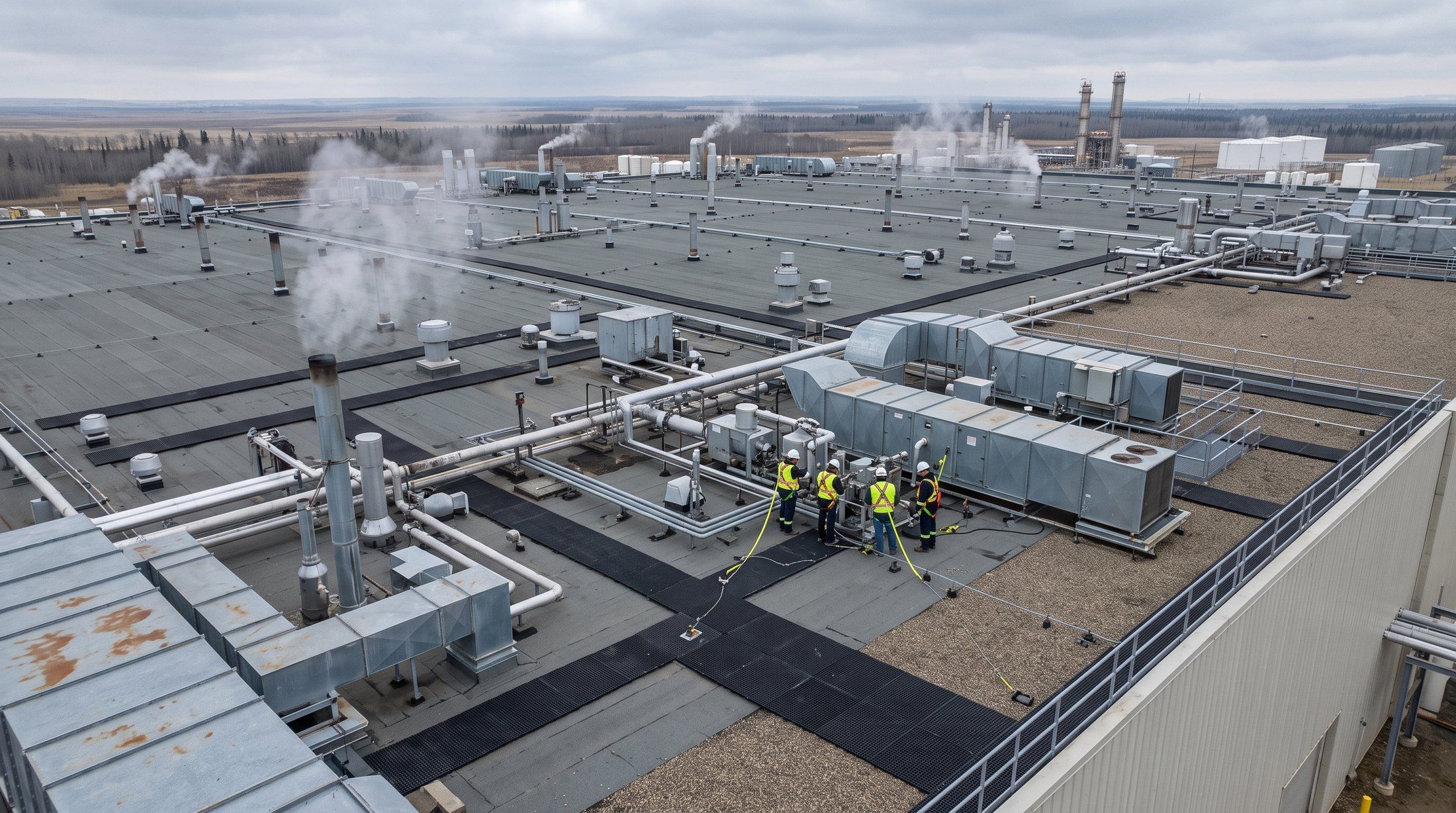
Manufacturing plant roofing has to handle things a warehouse roof never sees. Exhaust from process equipment settles on the membrane. Oils, solvents and fine dust collect around fans. Maintenance staff cross the roof daily to service makeup air units and dust collectors. And the only real chance to work over the production floor may be a planned shutdown that lasts a week or two.
Rain Roofing plans plant roofs around those conditions. We look at what comes out of the stacks, who walks the roof and when, and when the line can stop, then choose a system and a schedule that fit.
Membranes checked against your exhaust profile before we recommend one.
Material on site and crews booked so work over the line fits the window.
Walkway pads, protection boards and proper penetration details.
Leaks on a plant roof are rarely random. They cluster where the building's process meets the roof.
Chemical resistance is the first question. We ask for your exhaust and process information and check it against the manufacturer's resistance data before recommending anything.
Most of a plant roof can be done while production runs. We work zone by zone, close each area in at the end of the shift, and coordinate with your maintenance team on lockout for any rooftop equipment that has to be lifted or disconnected.
Areas directly over sensitive processes, clean rooms or electrical rooms are usually best done during a planned shutdown. We like to be part of shutdown planning early, so material is on site, crews are booked and the work fits the window. Night and weekend shifts are available when the schedule calls for them.
Air intakes matter during torch-on or adhesive work. We map makeup air units and fresh-air intakes and agree with your team which ones to shut down or protect while odour-producing work is nearby.
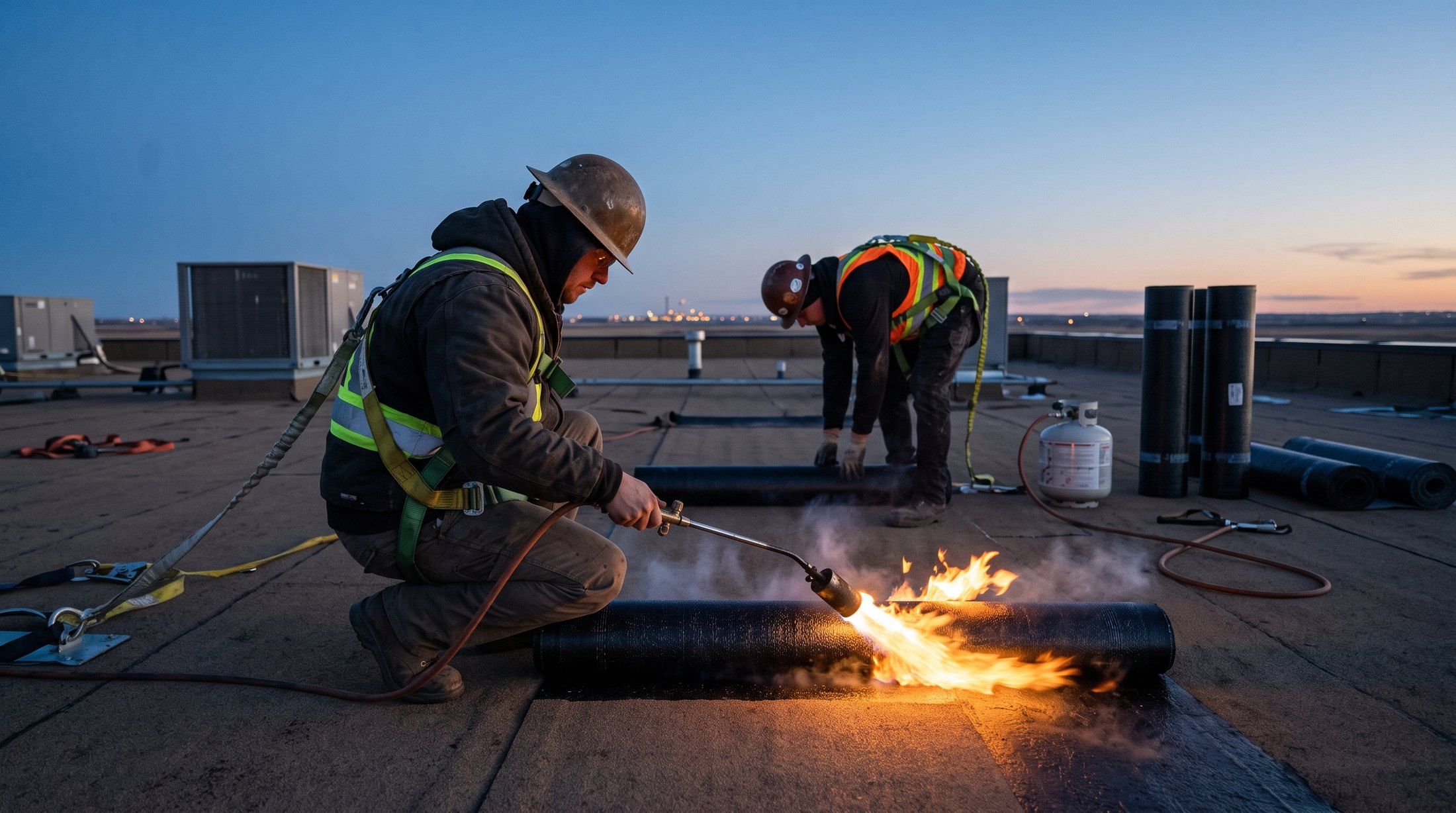
Plants have their own rules, and we follow them. Our crews complete your site orientation, work under your permit system and follow written hot work procedures for torch-applied systems, including a fire watch after the torch is off.
Rain is COR-certified through the Alberta Construction Safety Association and carries WCB-Alberta coverage and liability insurance with a hot-work endorsement. We send safety documents, product data and safety data sheets ahead of time, and a closeout package with photos, warranty documents and a roof plan at the end.
Questions
It depends on what is in it. PVC handles many oils and greases well, while some asphalt-based and rubber membranes do not. Send us your exhaust or process details and we will check them against manufacturer resistance data before recommending a system.
On most of the roof, yes. We phase the work and keep each area watertight at the end of every shift. Areas over sensitive processes are usually scheduled into a planned shutdown.
We map every intake before the job starts and agree with your maintenance team which units to shut down or protect. Where torch work isn't suitable, cold-applied or heat-welded systems are options.
Not if they are flashed properly. Many plant leaks come from old pitch pockets and improvised flashings. We replace them with proper pipe boots or pockets and, where it makes sense, consolidate supports onto equipment rails.
Yes. A spring and fall inspection program suits most plants, with extra checks in the exhaust zones. You get a written report with photos after each visit.
Keep reading
Industries we serve
How we plan flat roof work around warehouses, plants, industrial sites, institutions and retail properties.
Flat roof system
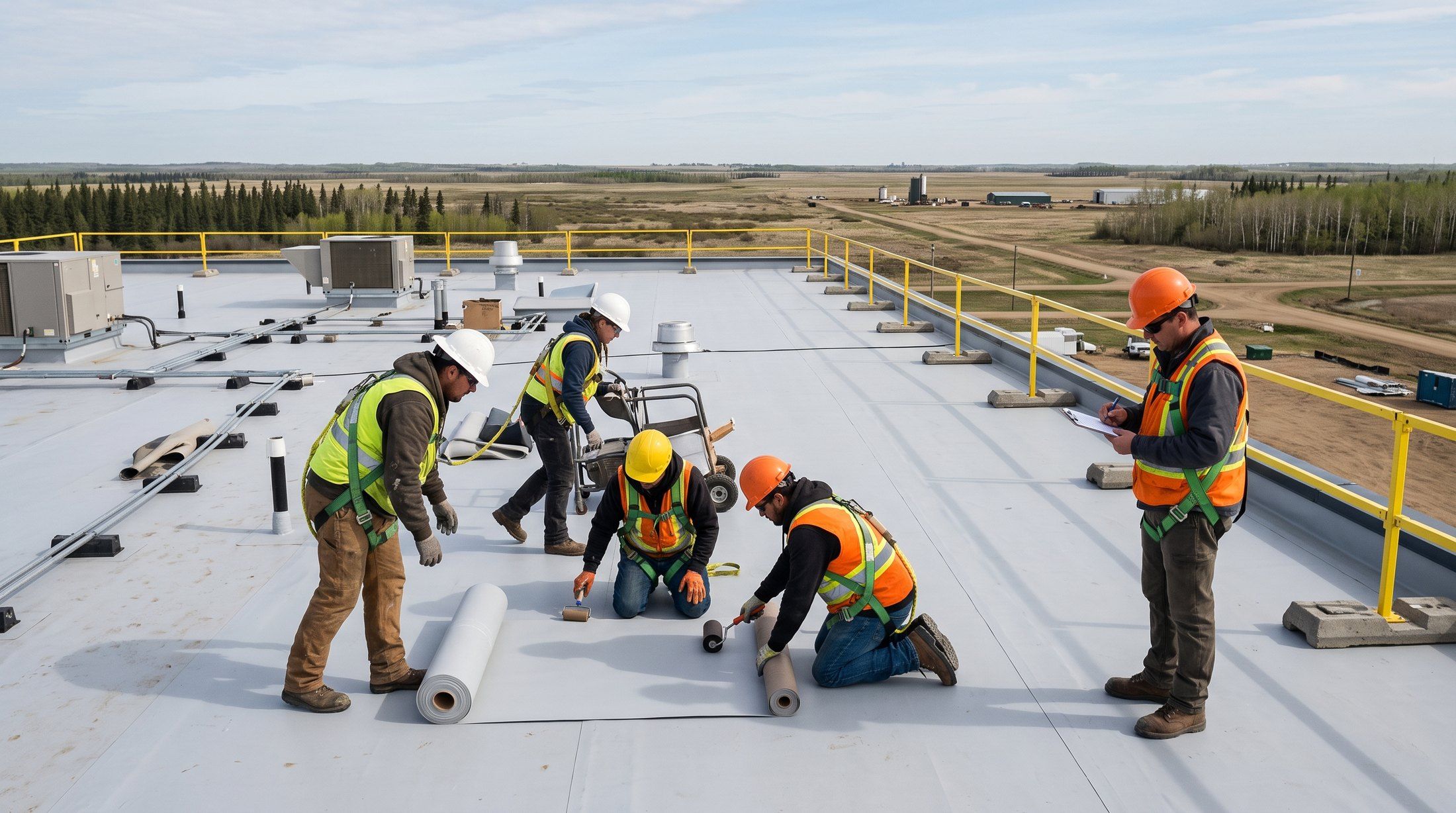
Heat-welded single-ply membrane for roofs exposed to grease, oils and chemical exhaust.
Flat roof system
Two-ply modified bitumen, the proven Alberta standard for hail, cold and rooftop traffic.
Send us drawings, a spec or just an address. You get a clear scope, a written warranty and a roofer who answers the phone in a storm.