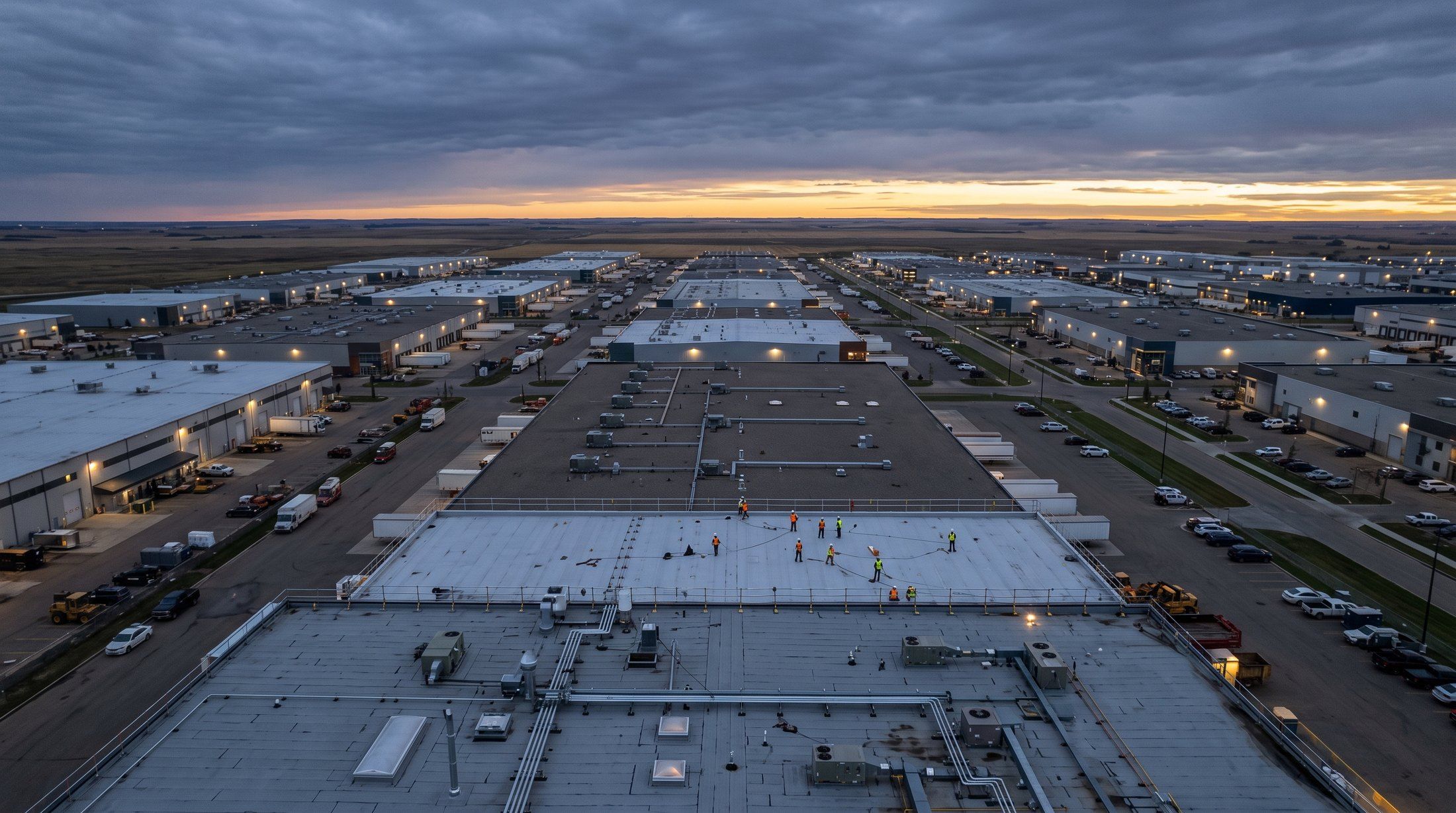
Both industrial sides of the city
Northwest districts along Hwy 16 and the southeast parks.
Service area: Edmonton
Edmonton is home ground. From Mistatim to Davies, we know the buildings and the weather they take.
Local roofing
Commercial roofing in Edmonton is shaped by a long winter and a short building season. Roofs sit under snow for months, go through freeze-thaw cycles every spring and fall, and then take whatever summer hail brings. Rain Roofing is an Edmonton commercial and industrial flat roofing contractor, and the city is home ground.
Most of our Edmonton work sits in two parts of the city: the northwest industrial districts and the southeast industrial parks. We also work on offices, retail, institutional buildings and other commercial roofs across the city.
Northwest districts along Hwy 16 and the southeast parks.
24/7 response with crews on site within 4 hours anywhere in the city.
SBS, TPO, EPDM, PVC, built-up and inverted roofs.
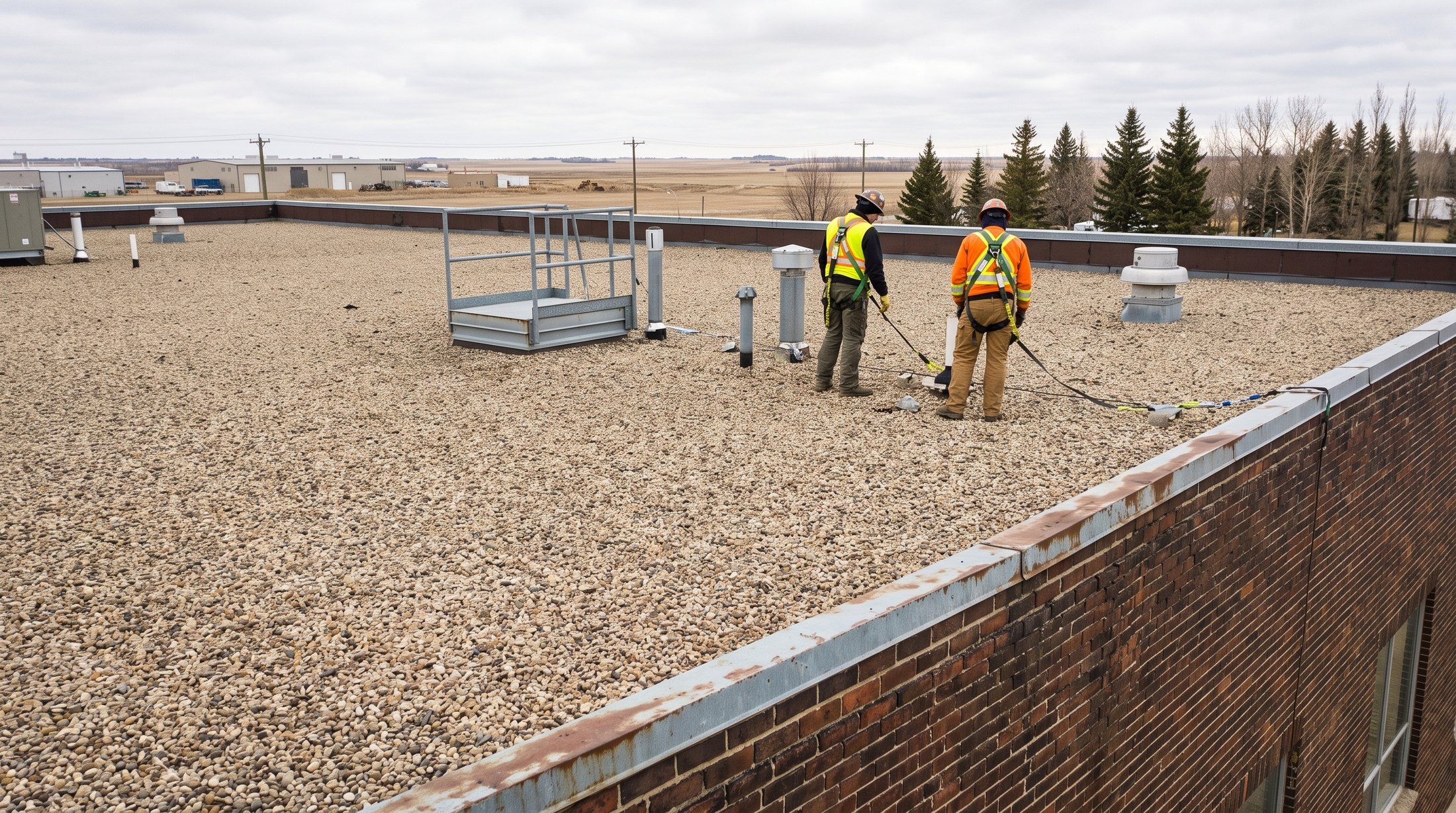
Northwest Edmonton holds around 60 million square feet of industrial space, across areas like Mistatim and Winterburn and along the Yellowhead (Hwy 16) corridor. The building stock runs from older shops and warehouses with built-up gravel roofs to newer tilt-up distribution centres with single-ply membranes.
Older buildings here are often due for replacement, and many already carry more than one roof layer, which limits whether a recover is possible. Newer buildings mostly need maintenance: drain clearing, sealant and flashing checks, and repairs after rooftop equipment work.
In the southeast, Strathcona Industrial Park and the Davies area mix manufacturing, fabrication, service shops and warehousing. These roofs see more process exhaust, more rooftop equipment and more maintenance traffic than a typical warehouse, so membrane choice and walkway protection matter as much as the system itself. PVC near exhaust and SBS 2-ply elsewhere is a common combination.
Edmonton's weather is hard on low-slope roofs in a few specific ways, and most leaks we see trace back to one of them:
In the city, the calls we get most are leak repairs in spring, inspections and maintenance programs ahead of winter, full replacements on older industrial buildings, and drainage corrections where a roof ponds year after year. After a hailstorm, hail damage assessment and insurance documentation move to the top of the list.
Central office and mixed-use buildings bring a different constraint: access. Tight lanes, limited room for a crane and the need for city permits to occupy a street or sidewalk mean those jobs are planned around logistics as much as the roof itself.
Our 24/7 emergency line covers all of Edmonton, with crews on site within 4 hours for active leaks. Non-emergency service calls are usually booked within two business days, and maintenance clients get priority scheduling.
Questions
Yes. Offices, retail plazas, schools and other commercial buildings anywhere in the city. Flat and low-slope roofs are our main work.
Usually not. Building code limits how many roof layers can be added, and a third layer hides problems in the deck. A building in that state normally needs a full tear-off.
Late spring through early fall is the main season, and the summer books up early. Some systems can go down in colder weather with the right precautions, but planning a winter before you need the work gives you the best choice of dates.
We assess the roof, document the damage with photos and a written report, and work with your adjuster on scope. The claim itself stays between you and your insurer.
Keep reading
Service areas
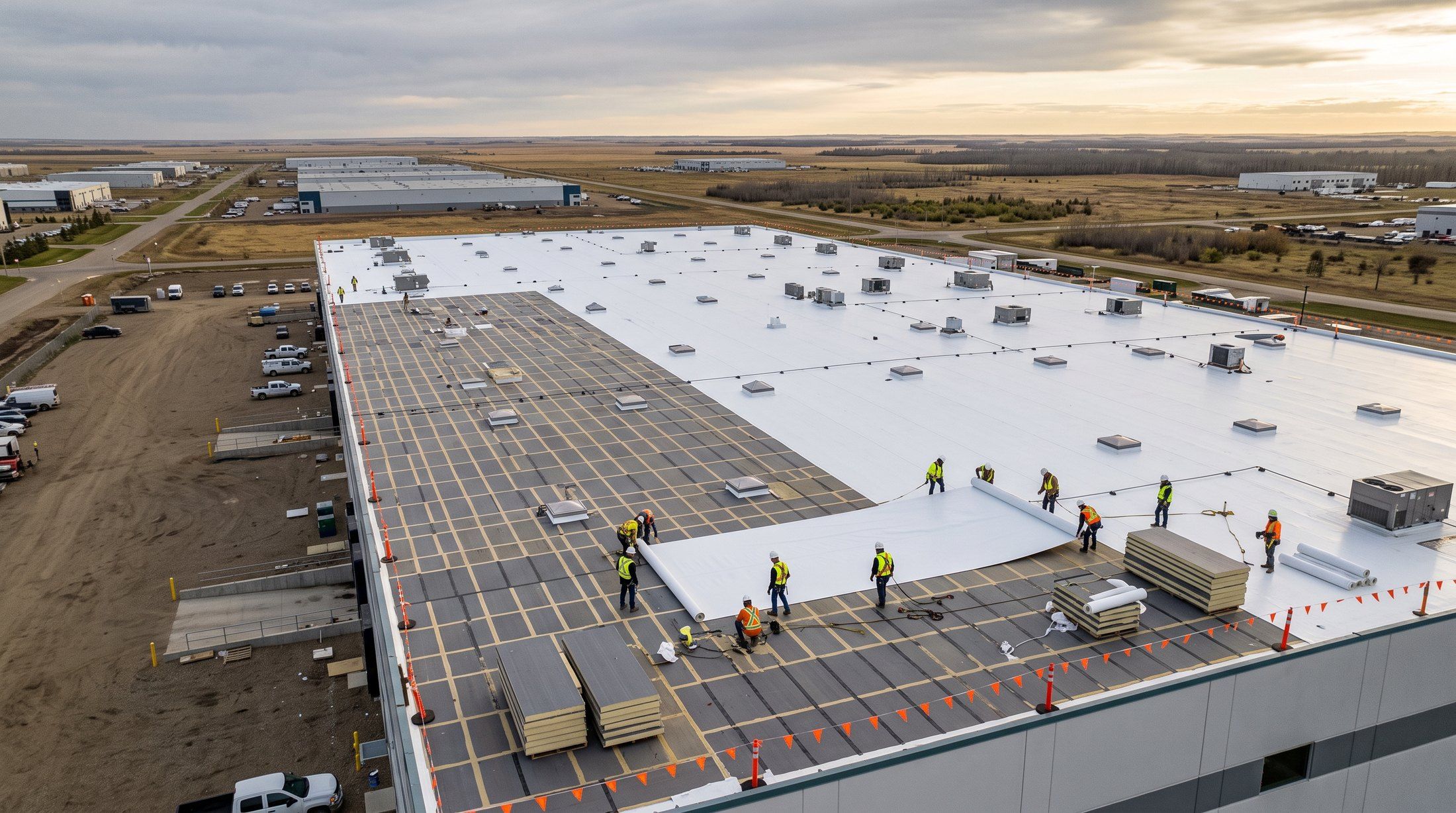
Where we work: Edmonton and the surrounding industrial and commercial areas.
Service
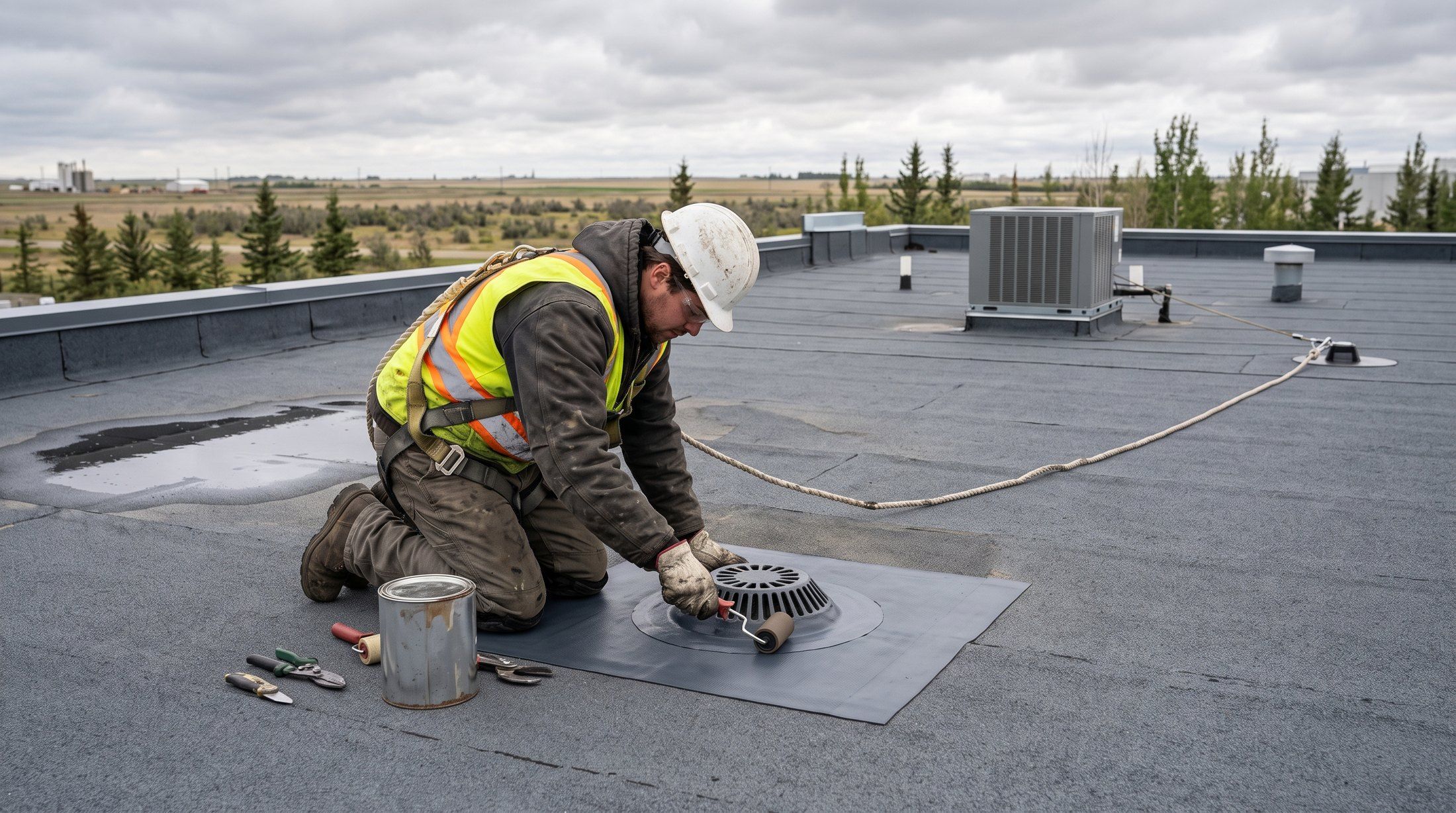
Permanent repairs on every common commercial membrane, traced to the source and documented with photos.
Service
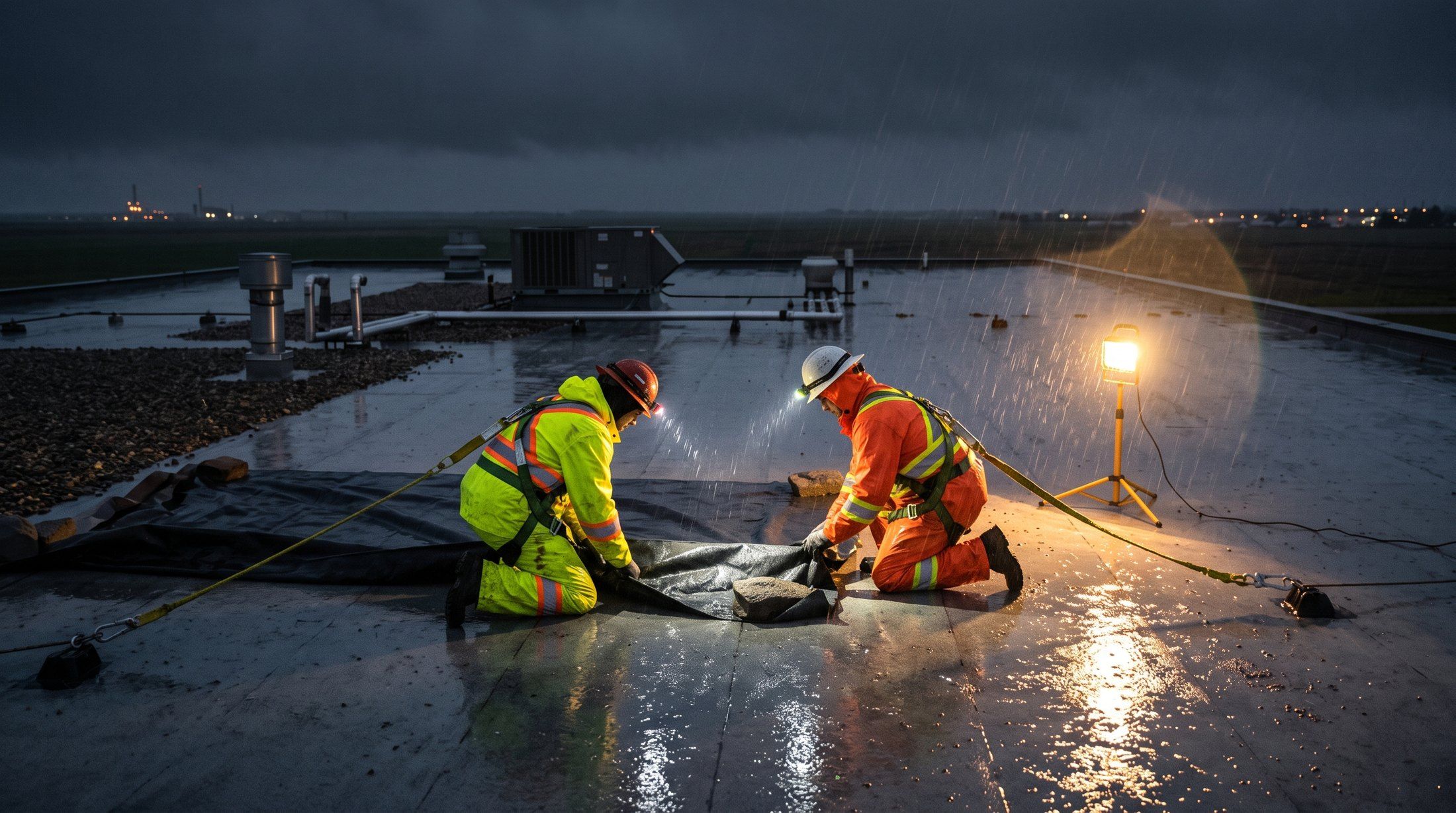
A 24/7 emergency line, a crew on site within 4 hours and a permanent repair that follows.
Send us drawings, a spec or just an address. You get a clear scope, a written warranty and a roofer who answers the phone in a storm.