Flexible in deep cold
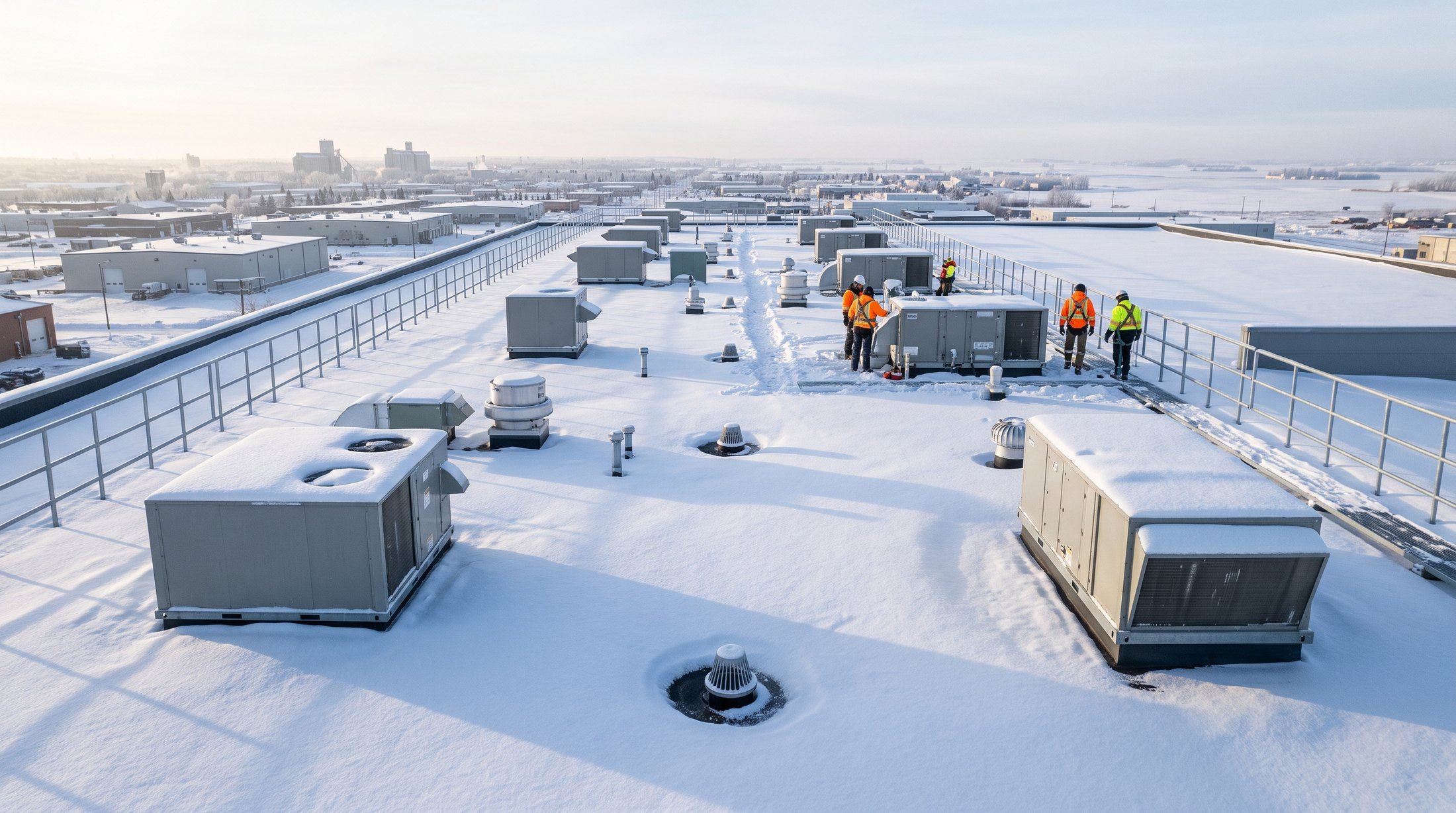
EPDM keeps its stretch through Edmonton's coldest stretches, so it moves with the building.
Flat roof system
Synthetic rubber in large sheets with few seams. It stays flexible in deep cold and has decades of commercial history behind it.
Overview
EPDM roofing has protected commercial buildings in cold climates for decades. EPDM (ethylene propylene diene monomer) is a synthetic rubber that comes in very large sheets, so a roof can be covered with relatively few seams. In Edmonton, its main strength is simple: it stays flexible in the coldest weather, long after other materials stiffen.
It has two clear limits. Its seams are taped and adhered rather than welded, so seam work has to be done carefully, and it does not tolerate oils, grease or hydrocarbons. On the right building, it is one of the longest-lasting membranes available. Rain Roofing installs EPDM from Carlisle and Johns Manville.
EPDM keeps its stretch through Edmonton's coldest stretches, so it moves with the building.
Large sheets mean less seam length to fail than most other low-slope systems.
Well-installed EPDM regularly passes 30 years with basic maintenance.
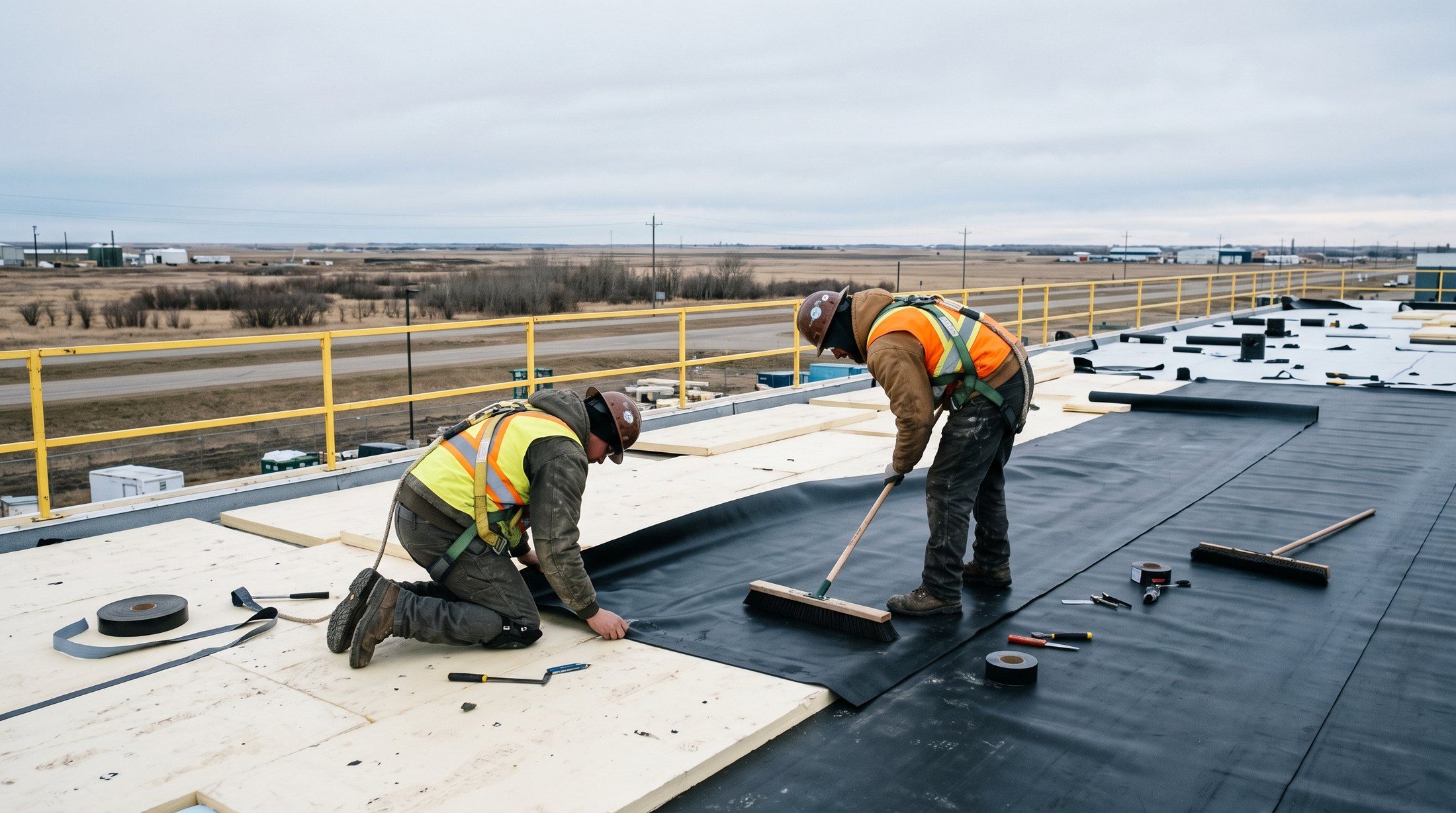
EPDM comes in 45, 60 and 90 mil thicknesses, reinforced or unreinforced, and in black or white. It can be attached three ways: fully adhered (the most common on commercial re-roofs), mechanically fastened, or loose-laid under stone ballast where the structure can carry the weight.
Freeze-thaw and deep cold crack brittle materials at laps and flashings. EPDM rubber stays pliable far below the temperatures Edmonton sees, which is why it has a long record in northern climates. It also flexes under hail rather than splitting, especially at 60 or 90 mil over a cover board.
The catch is the install season. Bonding adhesives and seam tapes have minimum application temperatures, so fully adhered EPDM is a spring-to-fall job. Ballasted and fastened systems are less sensitive. Black EPDM absorbs sun, which helps clear snow a little sooner in spring.
EPDM is a strong choice for schools, offices, institutional buildings and simple roofs where a long life at a reasonable cost matters more than install speed. It also works well as a re-roof where the owner wants fewer seams.
Avoid it where oils, grease or hydrocarbons reach the roof. Restaurant exhaust, food processing and many Industrial Heartland process vents will swell and soften rubber. PVC is the right membrane there. Roofs with constant foot traffic are also better served by 2-ply SBS.
Seams and perimeters are where EPDM needs attention. A spring and fall inspection should check seam edges for lifting, flashings at curbs and walls, and the membrane around drains. Older EPDM can shrink slightly over time and pull at the edges, so perimeter flashings are worth a close look on roofs past 15 years. Keep drains clear and walkway pads in place.
Carlisle and Johns Manville offer EPDM system warranties of up to 25 to 30 years, with the longest terms tied to thicker membranes and specific attachment methods. A contractor workmanship warranty, 10 years from Rain Roofing, covers the install itself. Where ARCA membership applies, an ARCA warranty can add a third layer.
Read the exclusions as closely as the term. EPDM warranties commonly exclude damage from oils and chemicals, and most require the owner to keep drains clear and report leaks promptly. We walk you through those conditions at handover and give you a maintenance checklist that keeps the warranty valid.
EPDM is very repairable. Punctures and open seams take a primed, taped patch, and a sound roof can go many more years after repairs.
Inside the assembly
Every layer has a job. Skip one, or install it carelessly, and the roof fails early. This is the assembly we build and warranty.
Process
We check the deck, drains and rooftop exhaust, and confirm there is no oil or grease exposure before recommending EPDM.
A vapour retarder, insulation and cover board go down, fastened or adhered, with tapered insulation where water needs help reaching drains.
EPDM sheets are unrolled and left to relax before bonding, so they lie flat and do not pull at the edges later.
The membrane is fully adhered with bonding adhesive, mechanically fastened, or ballasted with stone, depending on the building and warranty.
Laps are cleaned, primed and joined with seam tape, then rolled. Corners and penetrations get cured and uncured EPDM flashings.
Every seam is checked, perimeters are secured, and the roof is inspected for the manufacturer warranty.
Warranty
Our workmanship, an independent ARCA certificate, and the manufacturer's system warranty, each backed by a different party.
Questions
Yes. Its cold flexibility is the main reason to choose it here. Just schedule fully adhered installs for spring to fall, when adhesives and tapes can cure properly.
Older EPDM can shrink slightly over the years, which stresses perimeter flashings. Letting sheets relax before bonding and securing perimeters properly prevents most of it. On existing roofs, it is usually repairable.
No. Oils, animal fats and hydrocarbons swell and soften EPDM. If your roof sees kitchen, food processing or petroleum exhaust, we will recommend PVC or SBS instead.
Black is standard, costs less and helps shed snow in spring. White reflects summer heat, but the energy savings are small in Edmonton. Most owners here choose black.
Usually. If the membrane is still flexible and the insulation is dry, targeted seam and flashing repairs can buy many more years. We check with cores before recommending either path.
Both are single-ply. EPDM has the longer cold-climate record and stays more flexible in deep cold; TPO has welded seams and installs faster in cool weather. On a simple roof with clean exhaust, either works, so price, schedule and warranty usually decide.
Keep reading
Flat roof systems
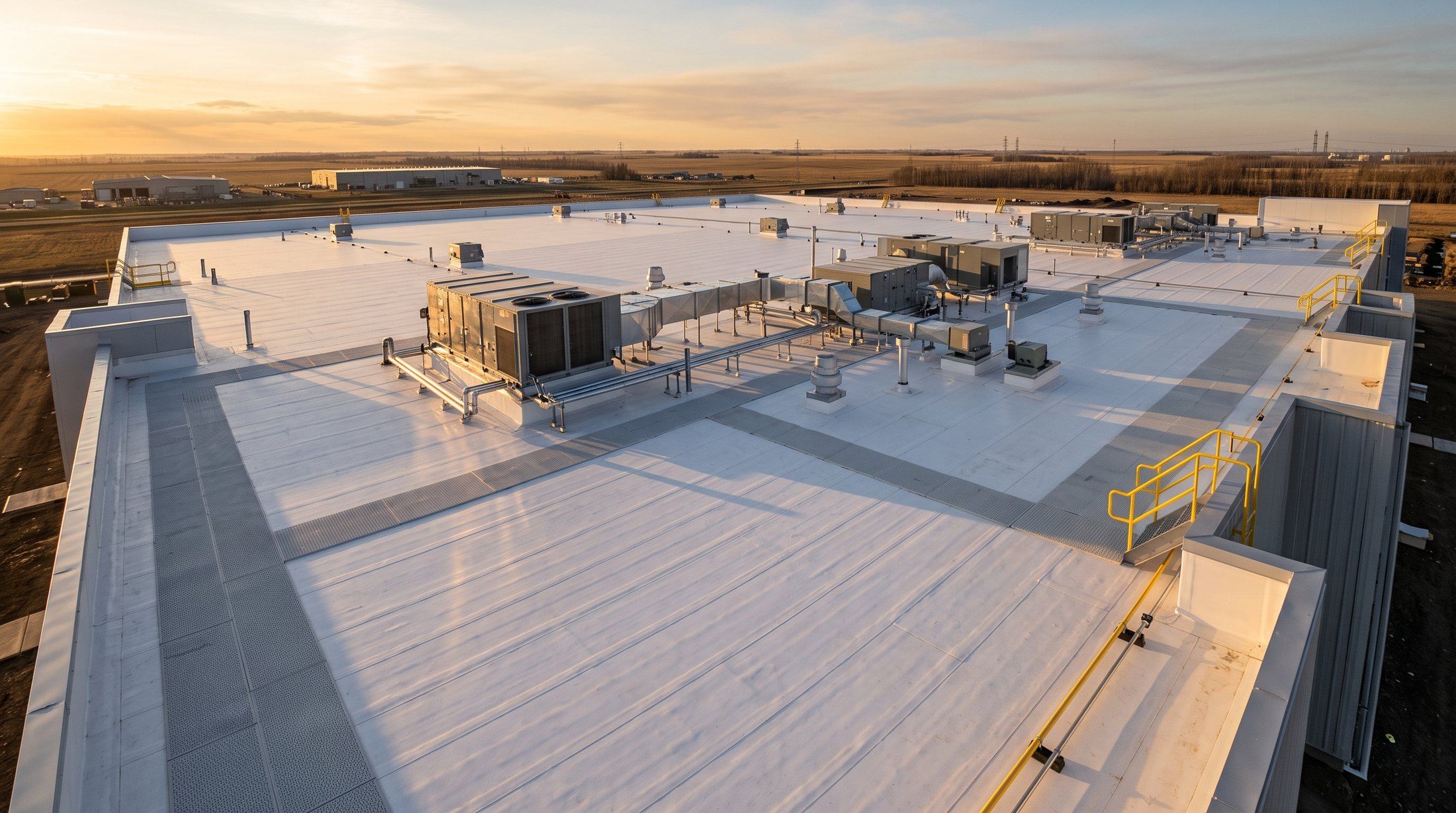
Compare every commercial flat roof system and see which one suits your building.
Service
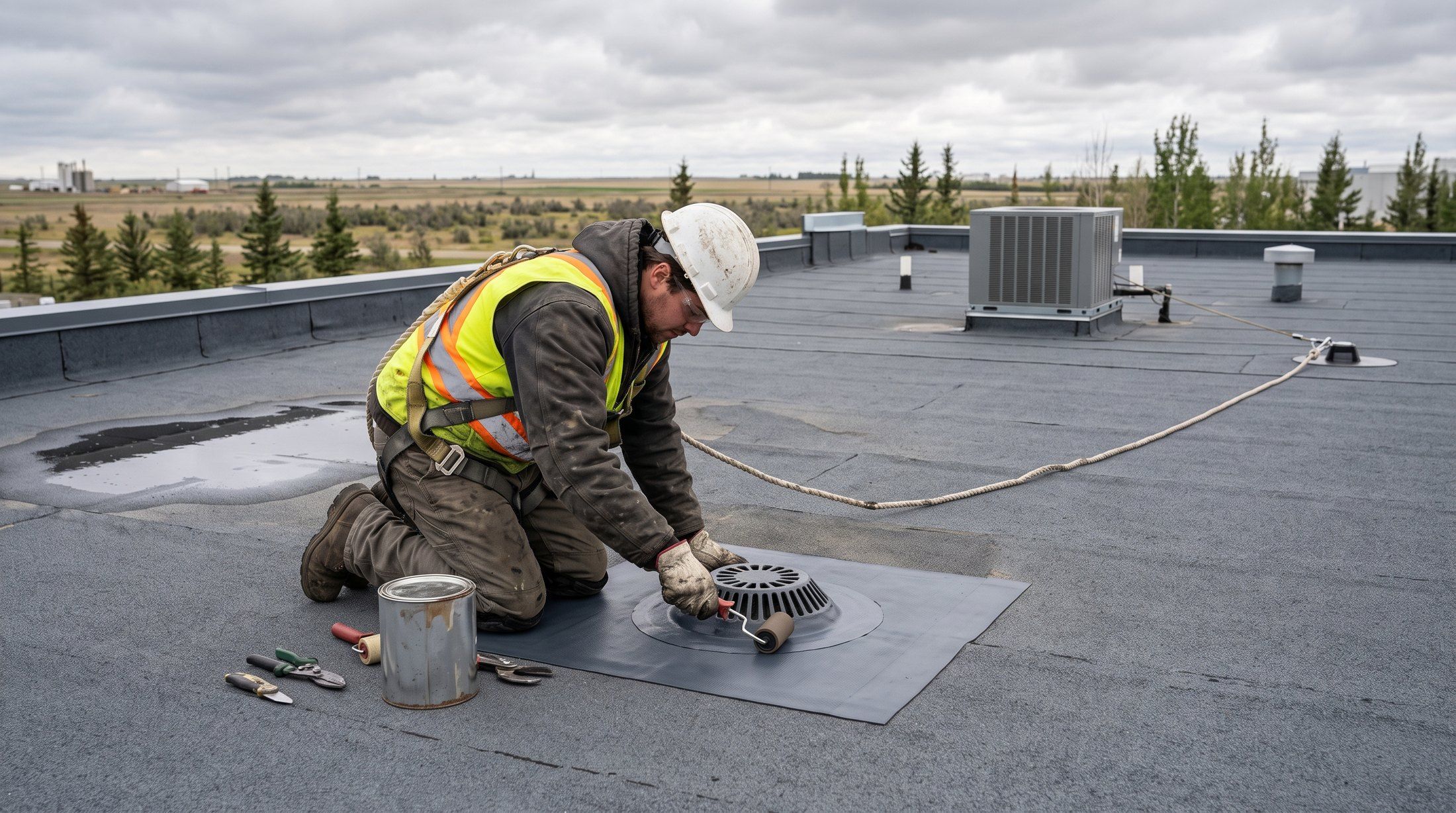
Permanent repairs on every common commercial membrane, traced to the source and documented with photos.
Service
Spring and fall inspections, minor repairs on the spot and a photo report for every visit.
Send us drawings, a spec or just an address. You get a clear scope, a written warranty and a roofer who answers the phone in a storm.