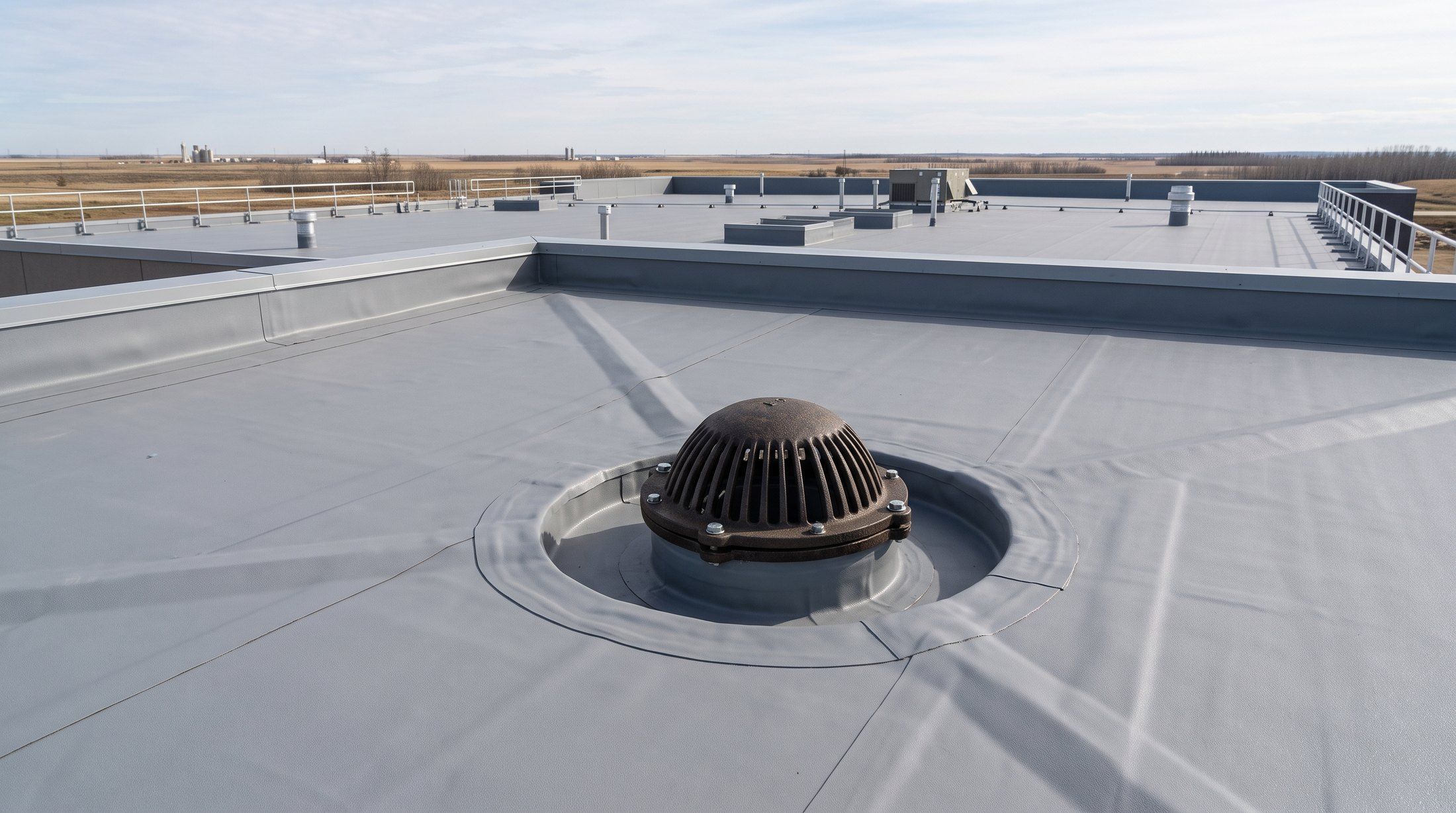
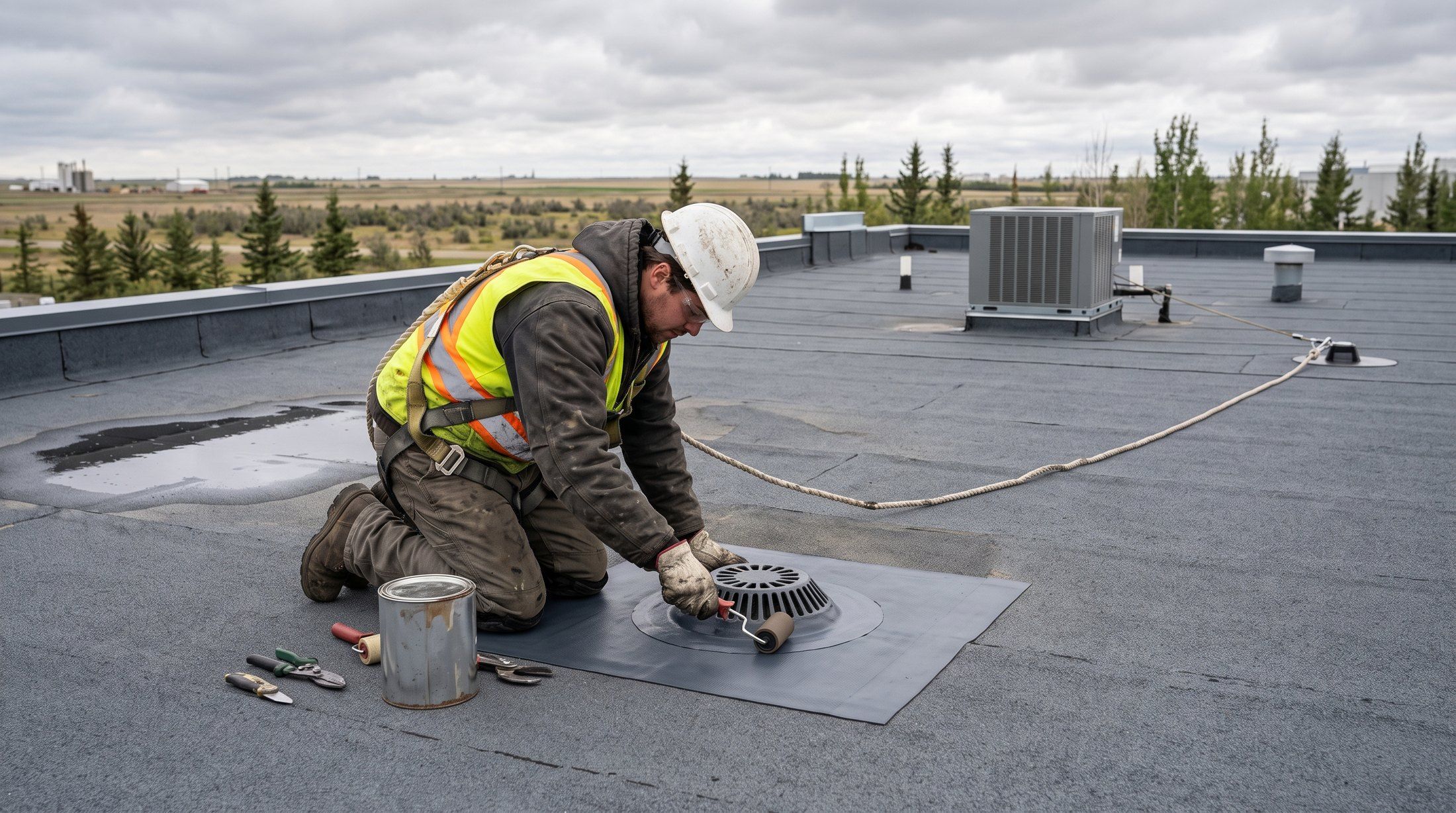
Cause before cure
We survey slopes and drain elevations to find out whether the problem is blockage, deflection or design.
Service
Standing water shortens the life of any flat roof. We find out why it is ponding and correct it, from a cleared drain to a full tapered insulation retrofit.
Overview
Roof drainage repair in Edmonton matters more than in milder places, because standing water on a flat roof does not just sit there. It freezes and thaws dozens of times a year, works its way into seams and flashings, adds load to the structure and keeps the membrane wet far longer than it was designed for. Many manufacturer warranties also exclude damage caused by ponding.
A common rule of thumb in the industry treats water still on the roof 48 hours after rain as ponding. We find out what is causing it, then correct it with the simplest fix that will actually work, and we back that work with a written warranty.
We survey slopes and drain elevations to find out whether the problem is blockage, deflection or design.
Drain clearing, drain replacement and sumps, new drains, scuppers, overflow scuppers, crickets and tapered insulation.
Drain details that resist ice, and options for heated drains where freezing keeps causing backups.
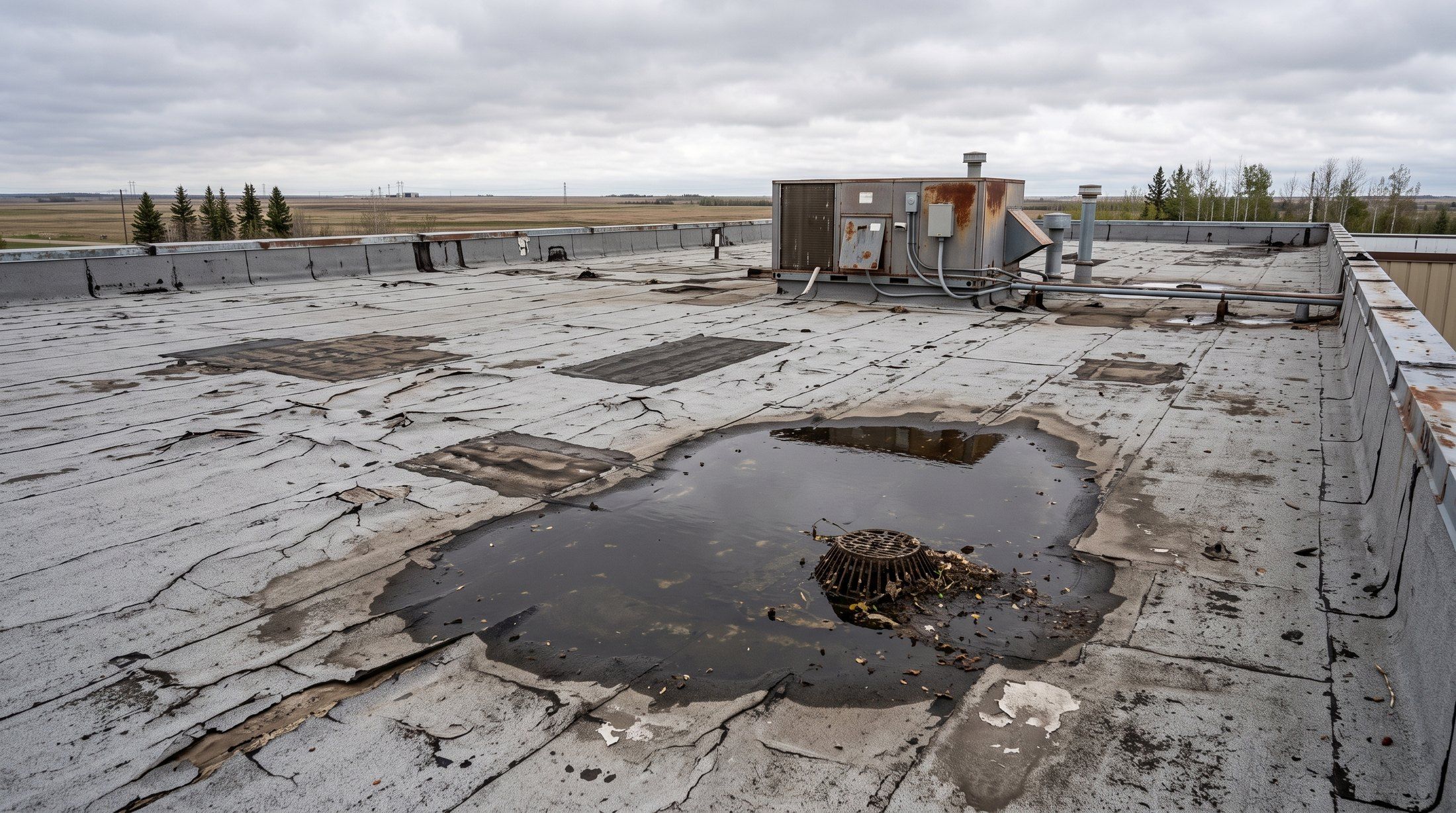
Most ponding has one of a handful of causes. Drains and strainers get blocked with leaves, gravel and grit. Drains are sometimes set higher than the roof around them, or the membrane has built up around them after repairs. Steel decks deflect between joists, especially under years of snow load. Some roofs were simply built with too little slope or too few drains for their size.
Sometimes a drain needs nothing more than clearing and a new strainer. Where drains sit high, we can lower them or install a sump that slopes the surrounding area toward the drain. Where water collects behind curbs or between drains, crickets (small sloped saddles of tapered insulation) redirect it. Where the whole roof lacks slope, a tapered insulation retrofit builds it in, ideally as part of a re-roof.
Scuppers through the parapet provide a path off the roof, and overflow scuppers give water somewhere to go if the primary drains are blocked. Any change that affects how much water the roof can hold should be reviewed with a structural engineer.
In an Edmonton winter, the drain is often the coldest point on the roof. Snow melts on a sunny afternoon or during a mid-winter thaw, runs to a frozen drain and backs up under flashings and seams. Clearing ice by hand helps in the short term. Longer-term fixes include insulating drain bodies and interior piping, correcting slope so water reaches drains before it freezes, and heat-traced drains or heated drain assemblies installed with an electrician.
Not every roof drains at the membrane surface. On inverted roofs, where insulation and ballast sit above the membrane, water drains beneath the insulation, so a clogged drain or a low spot can go unnoticed for years. We lift ballast and insulation around drains to inspect them properly. On older built-up roofs, decades of patching can leave drains in a hollow ringed by built-up layers, and the fix is often cutting back to the original surface and rebuilding the drain area with a proper sump.
Whatever the roof, we record drain locations and conditions on your roof plan. Drainage problems are much easier to manage when the next inspection can compare against the last.
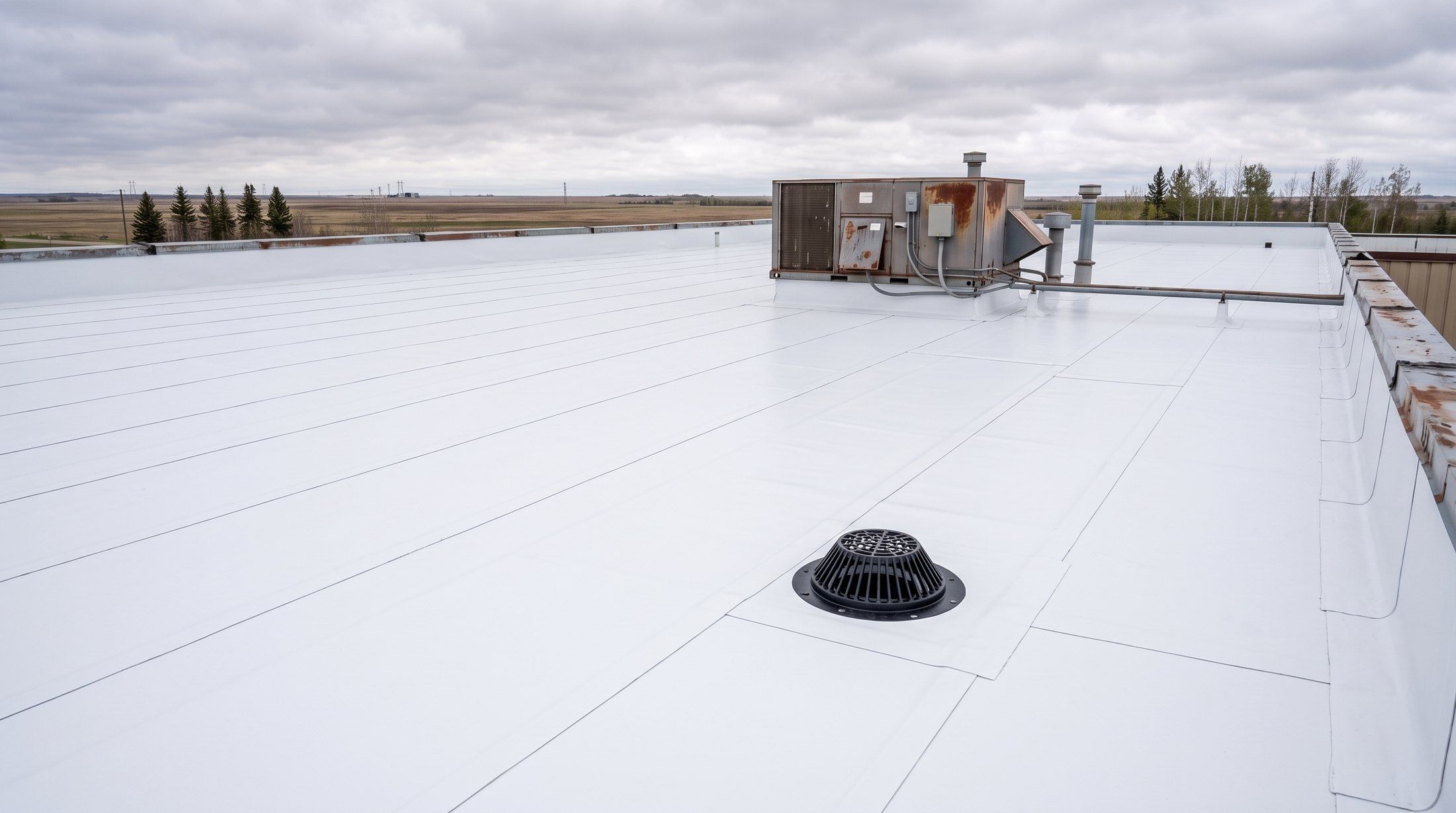
The difference
Blisters, open seams and a pond around a blocked drain, replaced with a sloped, sealed, warrantied roof.
Process
We photograph and measure ponding areas, check drain and scupper elevations and note where ice builds in winter.
Blocked strainers, drains set high, a deflecting deck, missing crickets or too few drains each need a different fix.
You get options from simplest to most complete, with prices, and an engineer's review where structure or loading is a concern.
We install the agreed work and tie it into your existing membrane with compatible materials so the warranty position is protected.
We check the result after the next rain or melt and record it in your building's history file.
Questions
As a rule of thumb, water still on the roof 48 hours after rain is a problem worth fixing. Any ponding deep or wide enough to cause visible sagging needs an engineer's assessment right away.
Often, yes. Lowering or adding drains, installing crickets and adding tapered insulation in local areas can be done on an existing roof. A full tapered retrofit is most economical during a re-roof.
We look at why water reaches the drain cold: interior piping heat, drain insulation and slope all play a part. Heated drain options are available, installed with an electrician. Keeping strainers clear in the fall also reduces winter backups.
Many manufacturer warranties exclude damage caused by ponding water, though terms vary. Check your warranty documents, or send them to us and we will review the drainage terms with you.
If your roof relies on interior drains and has parapets, overflow scuppers or secondary drains give water a way off the roof when the primary drains are blocked by ice or debris. Requirements depend on the building and the design, so we review them with you and, where needed, your engineer.
Keep reading
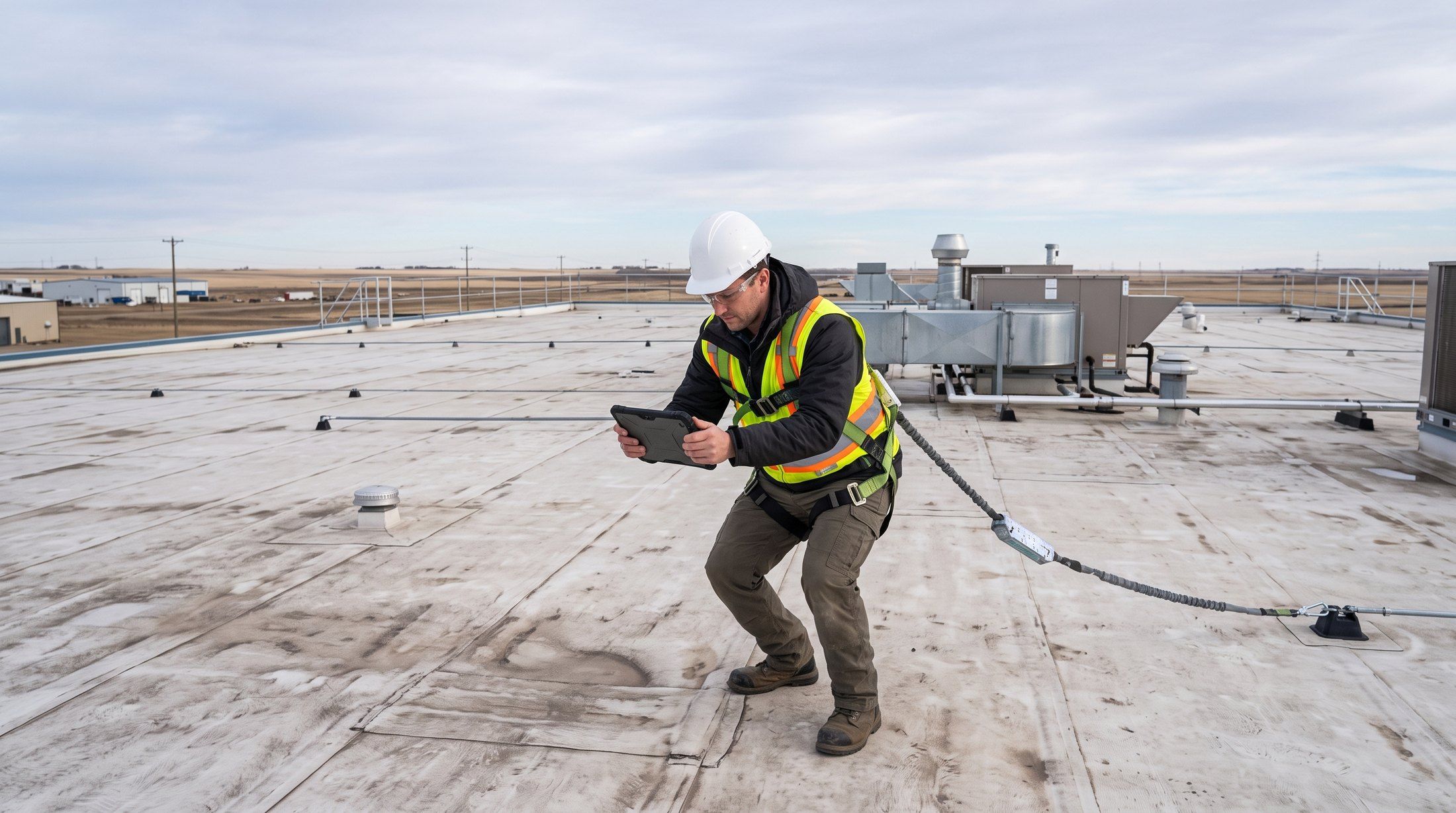
Service
Spring and fall inspections, minor repairs on the spot and a photo report for every visit.
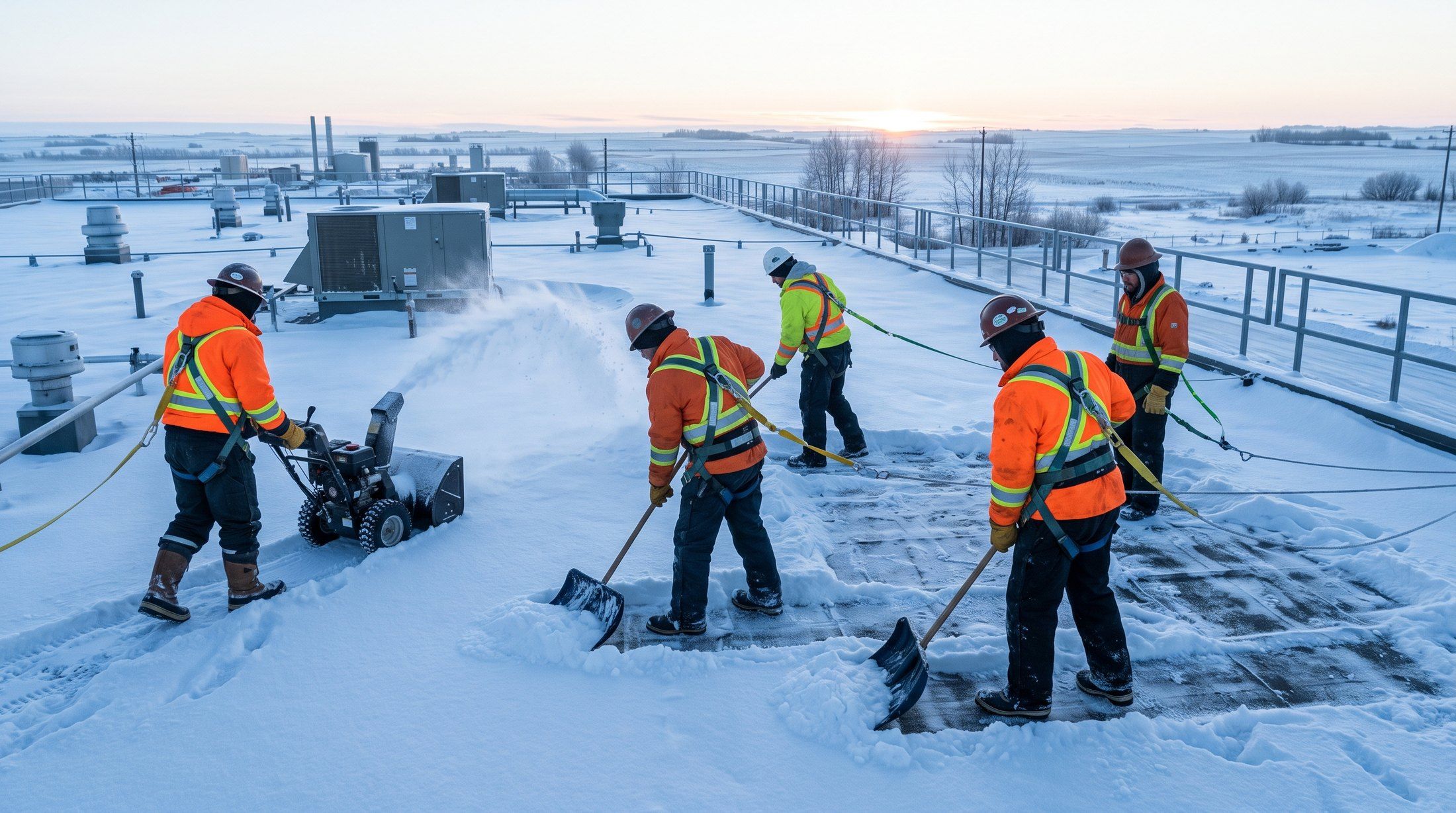
Service
Roof snow removal by trained roofing crews who protect the membrane and clear drains before the next thaw.
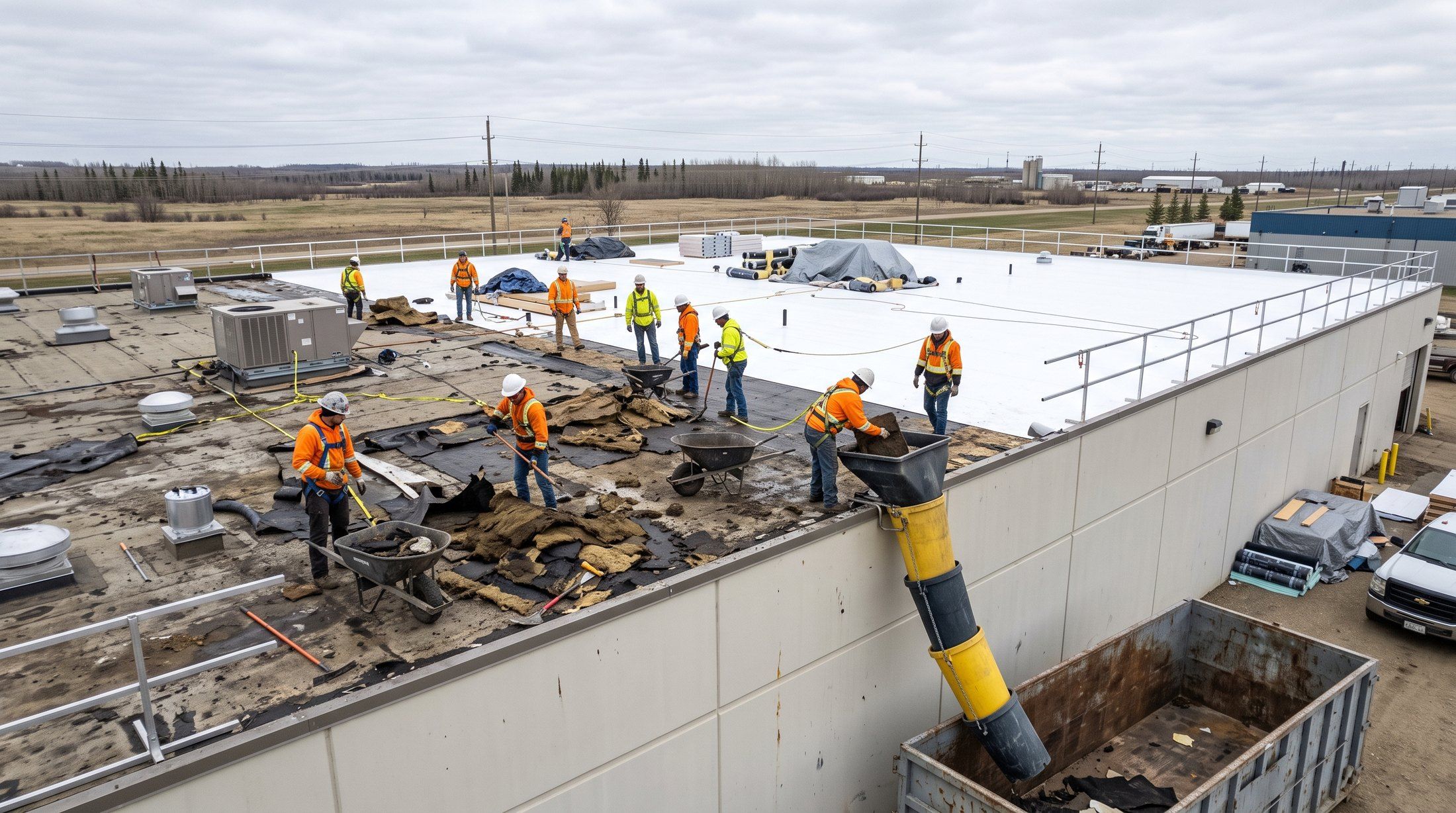
Service
Full tear-off or recover over a dry roof, chosen on survey evidence and scheduled around your operations.
Send us drawings, a spec or just an address. You get a clear scope, a written warranty and a roofer who answers the phone in a storm.