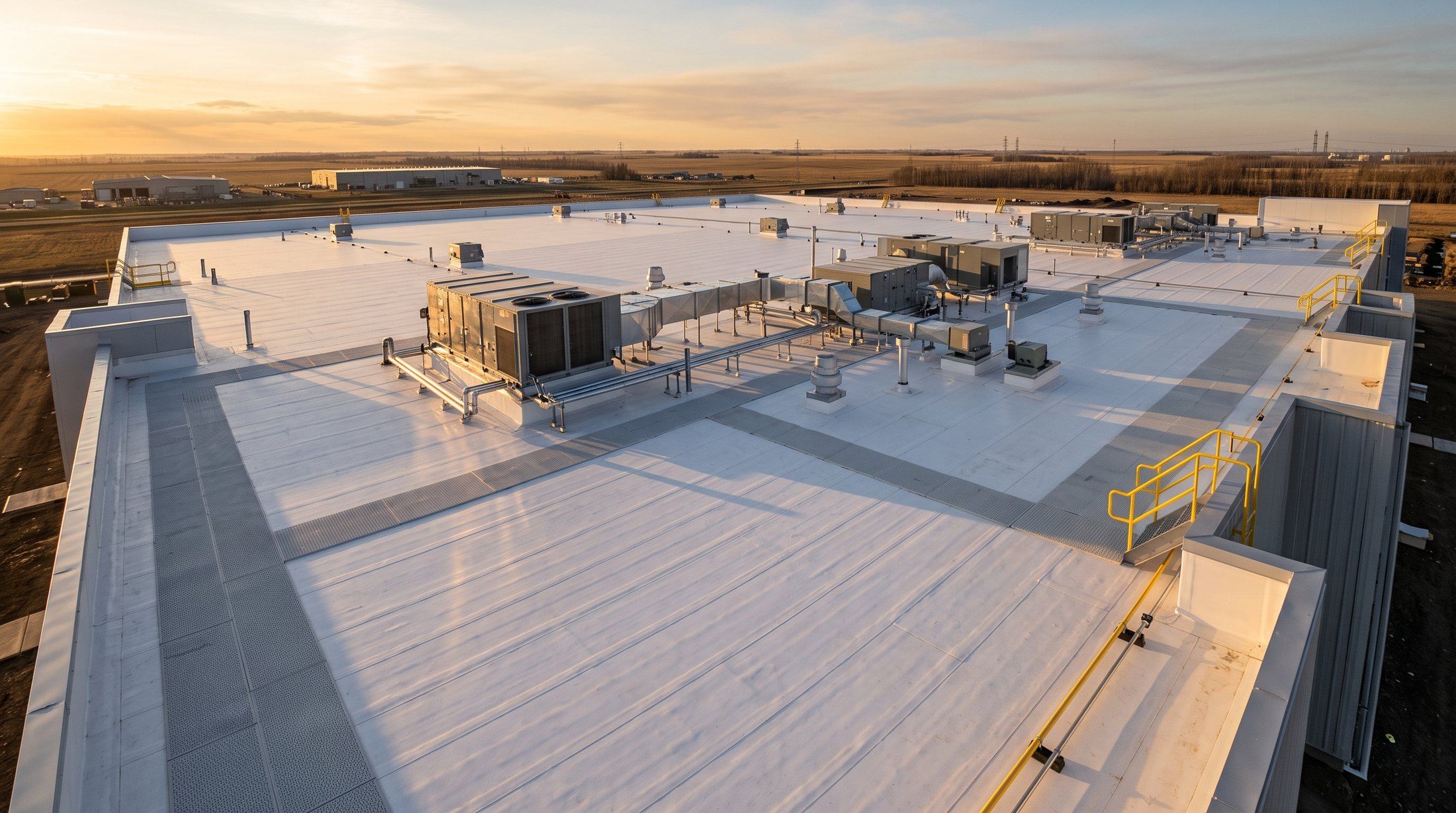
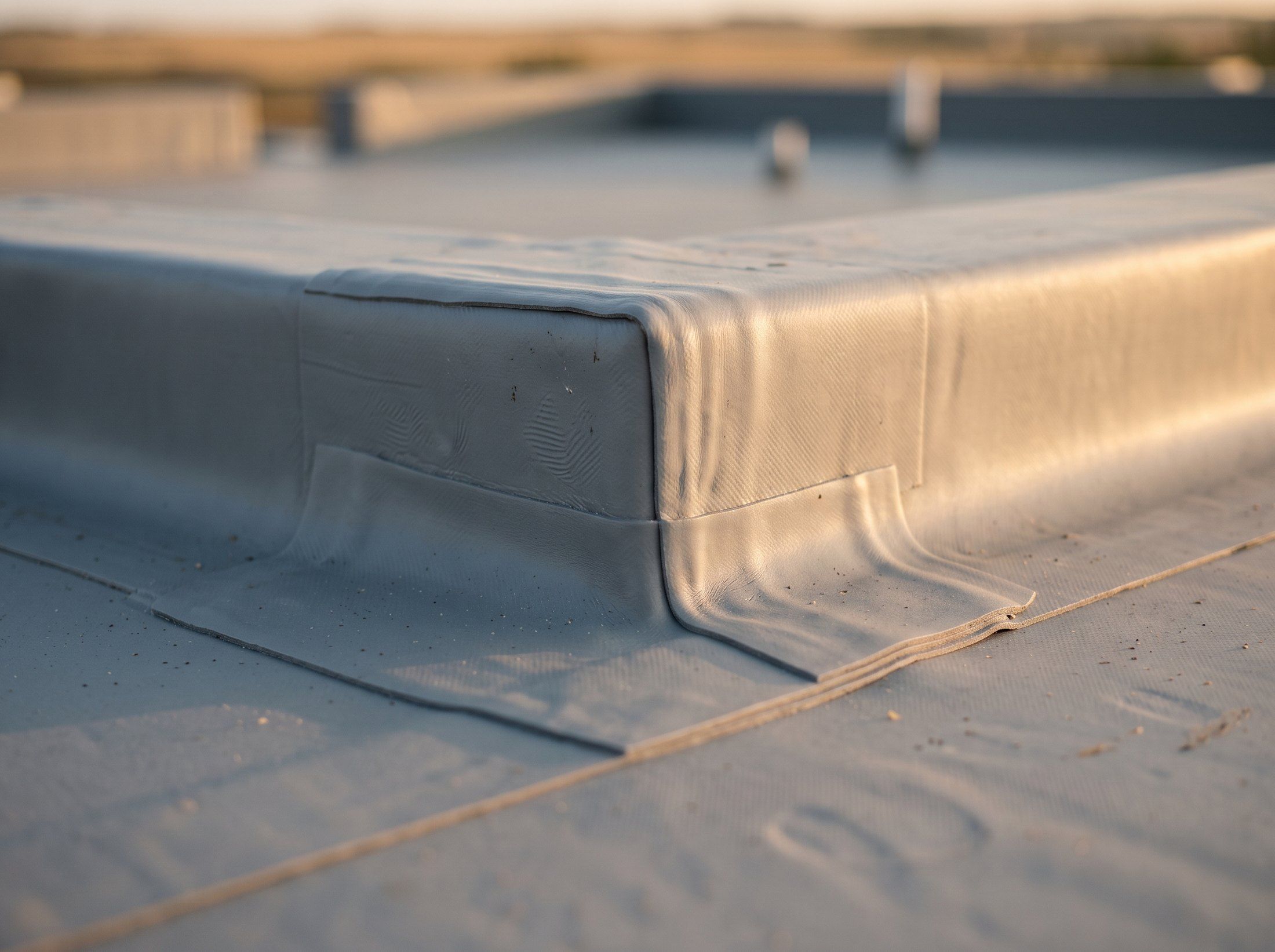
Every system, no favourites
We work with all six major low-slope systems, so the recommendation follows your building, not our stock.
Flat roof systems
Six low-slope systems, one hard climate. Here is how to match the membrane to your building, your budget and an Edmonton winter.
Overview
Commercial flat roofing in Edmonton has to survive conditions a mild-climate roof never sees: months of snow load, repeated freeze-thaw at every seam and drain, a spring melt that finds any low spot, and summer hail. The system you choose is the biggest decision on a re-roof or new build, and it sets your maintenance budget for the next 20 to 30 years.
There is no single best membrane. The right choice depends on your deck, your rooftop equipment and foot traffic, what comes out of your exhaust fans, how long you plan to own the building, and the warranty your owner or lender expects. Below is a plain comparison of each system, including where it is not the right fit.
We work with all six major low-slope systems, so the recommendation follows your building, not our stock.
Every spec starts with snow load, drainage, freeze-thaw and hail, then works back to the membrane.
Manufacturer, workmanship and ARCA coverage spelled out before you sign, not after.
Inspections, maintenance and repairs for as long as the roof is on the building.
Explore
Compare every commercial flat roof system and see which one suits your building.
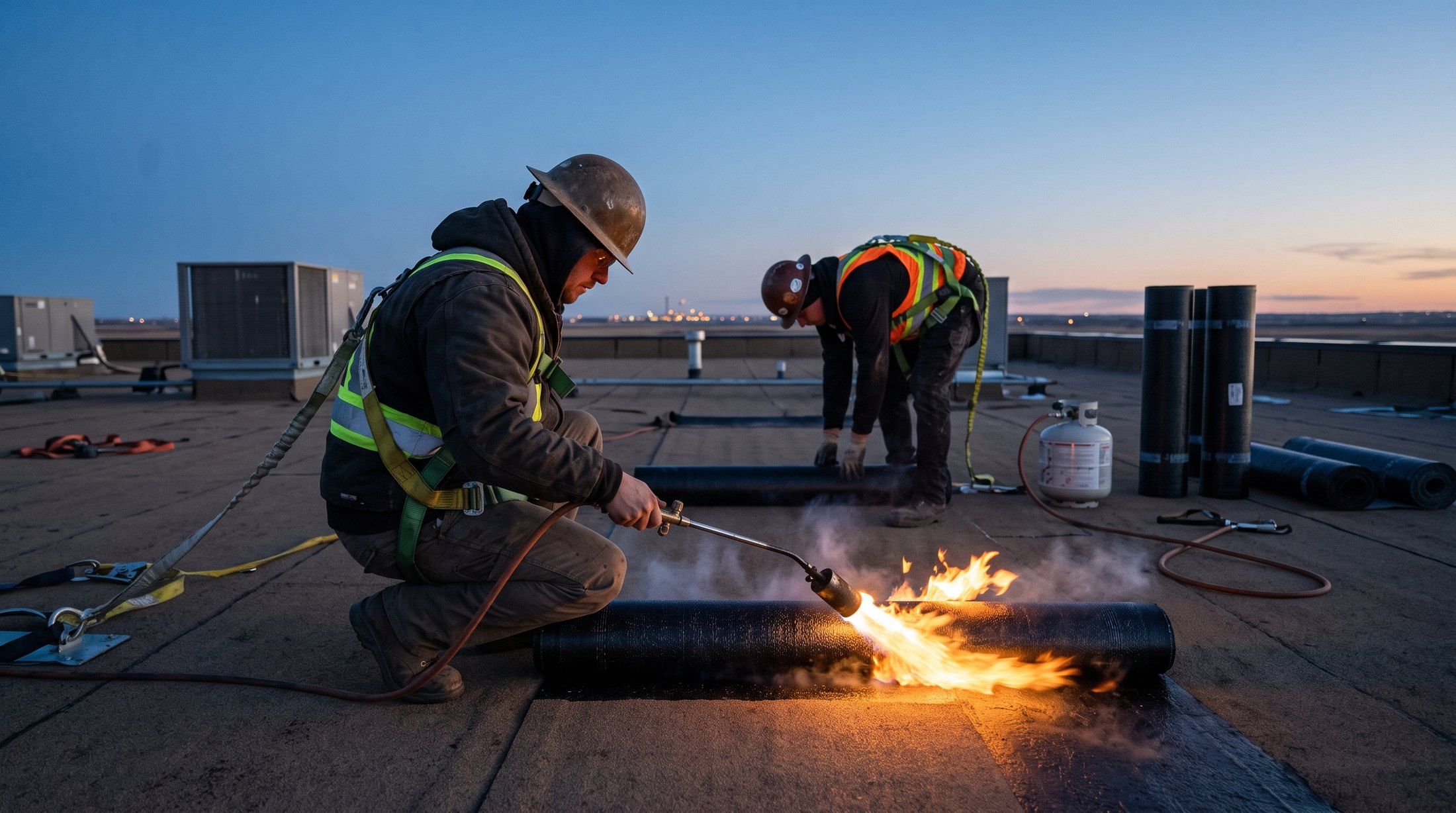
Flat roof system
Two-ply modified bitumen, the proven Alberta standard for hail, cold and rooftop traffic.
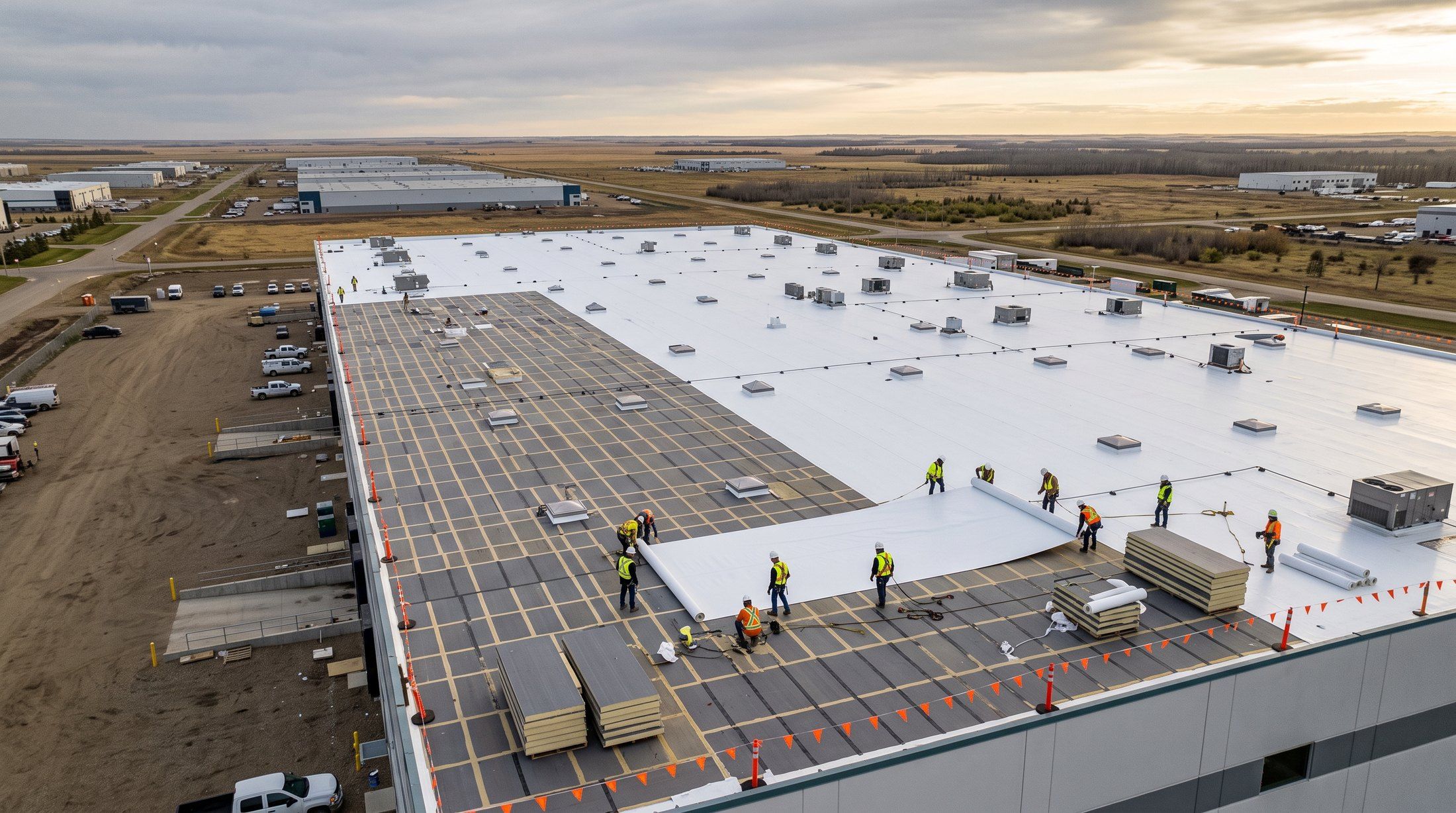
Flat roof system
Heat-welded single-ply membrane built for large, open warehouse and distribution roofs.
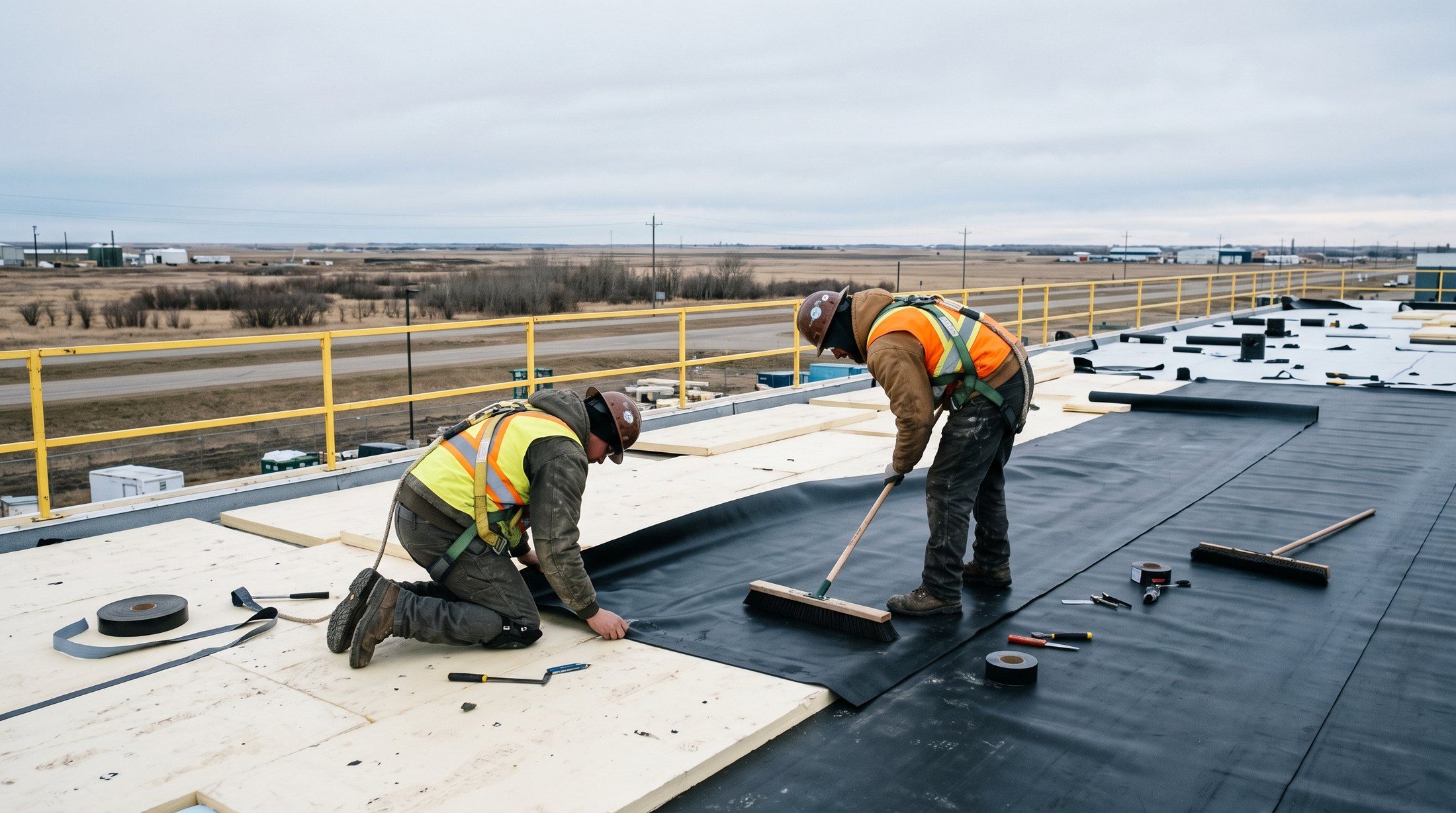
Flat roof system
Synthetic rubber membrane that stays flexible in deep cold, with few seams and a long record.
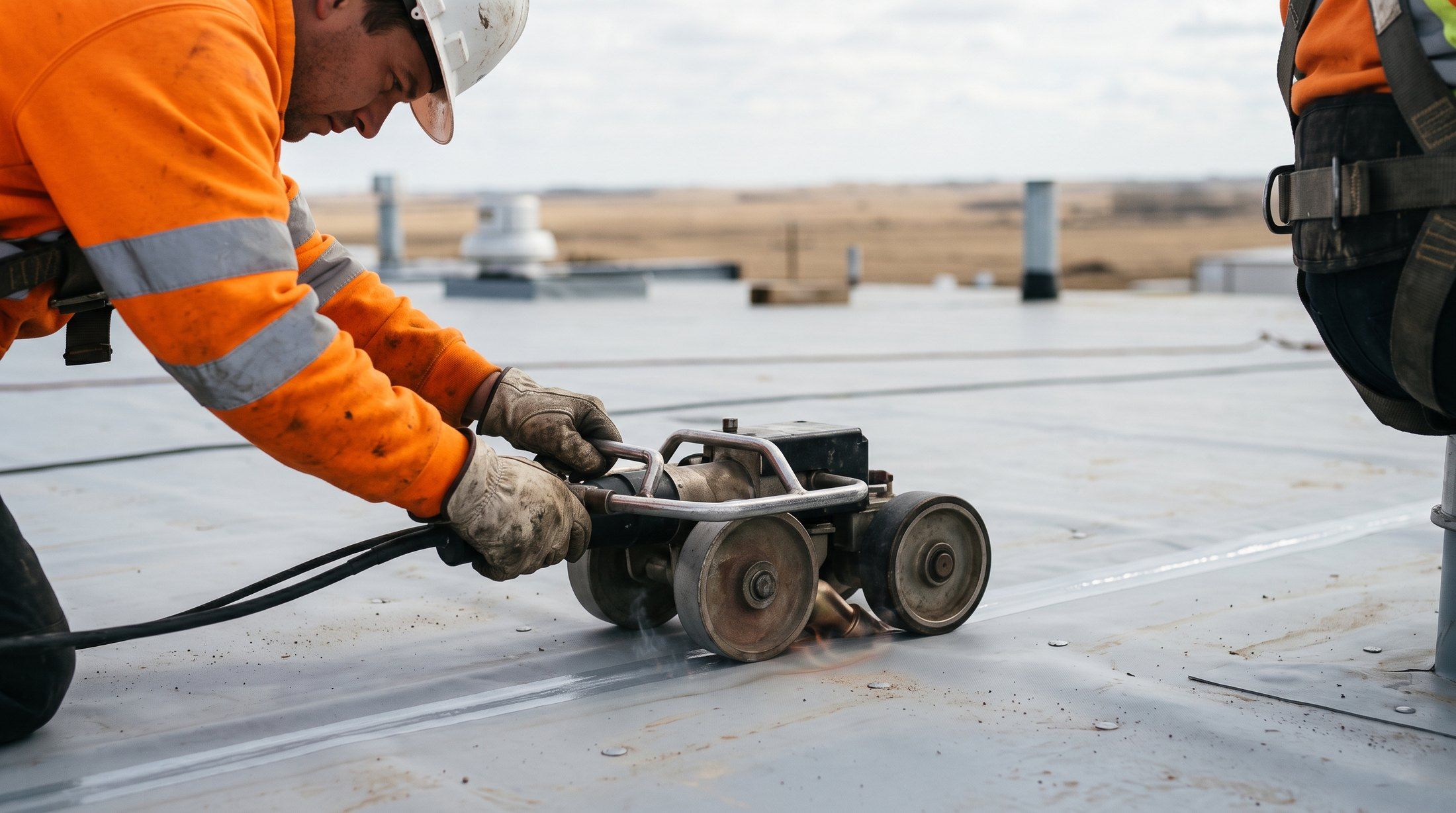
Flat roof system
Heat-welded single-ply membrane for roofs exposed to grease, oils and chemical exhaust.
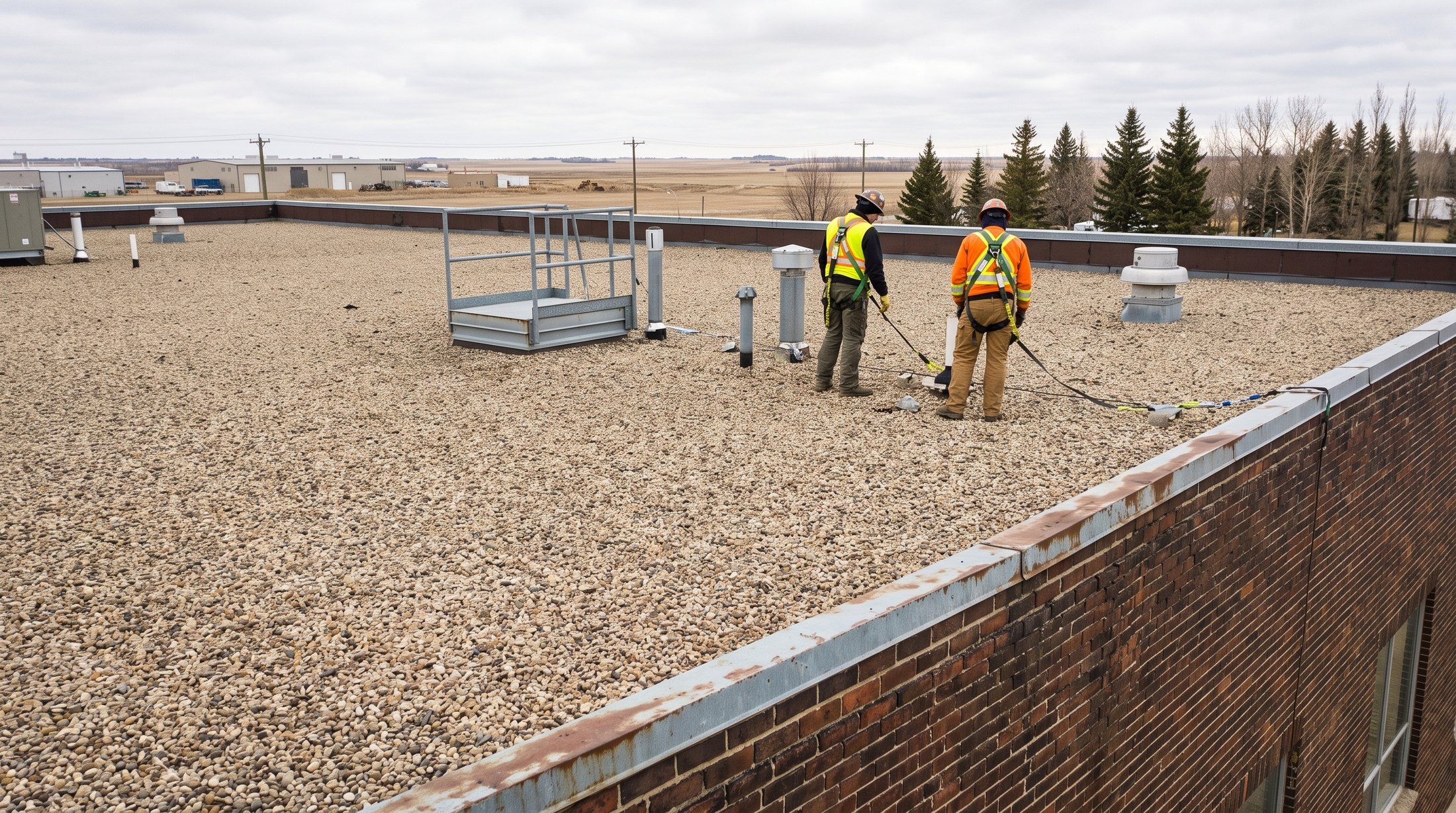
Flat roof system
Repair, maintenance and replacement for the tar and gravel roofs on older Edmonton buildings.
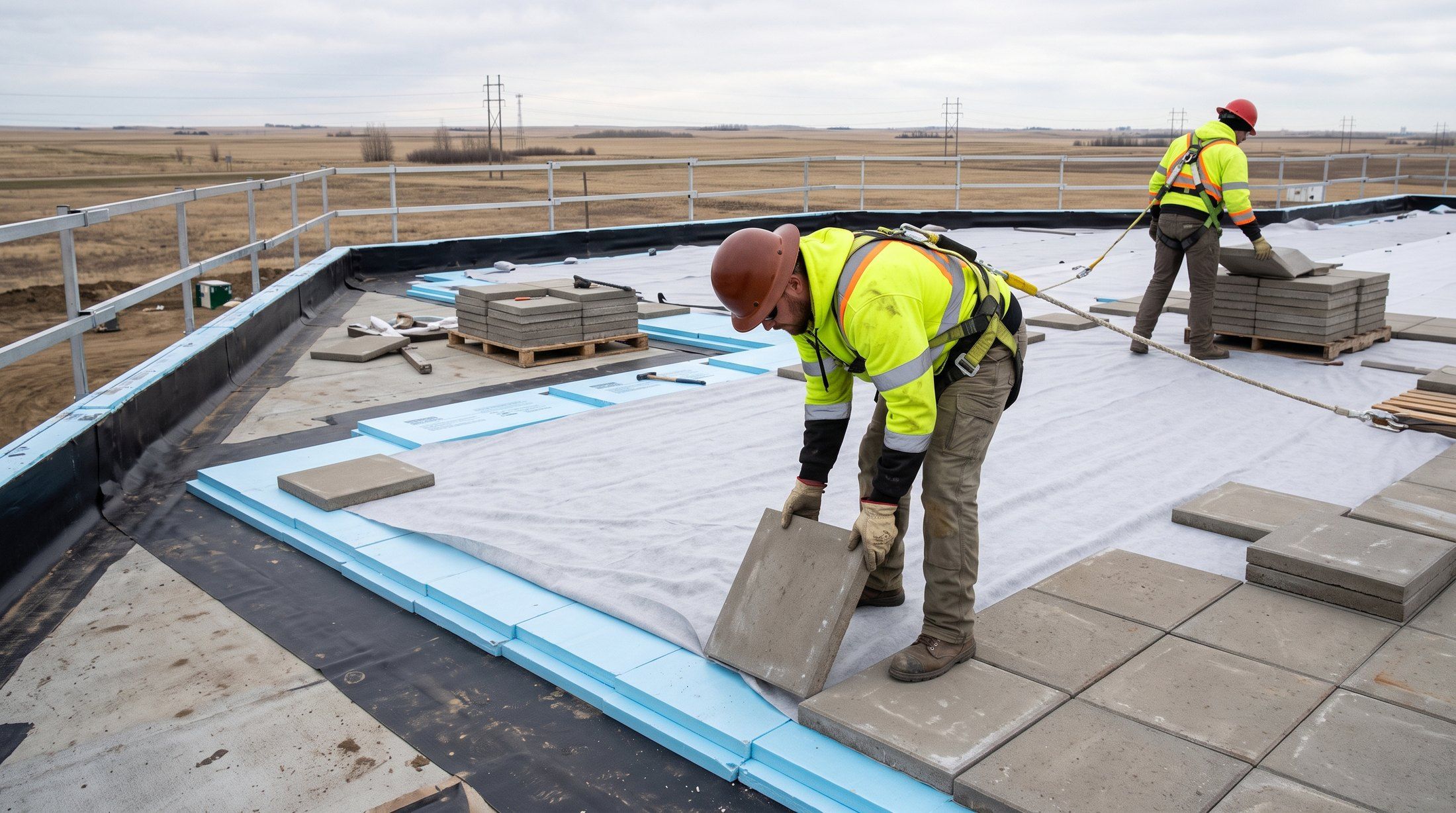
Flat roof system
Protected membrane roofs for concrete decks, plazas and parkades, with the membrane shielded from weather.
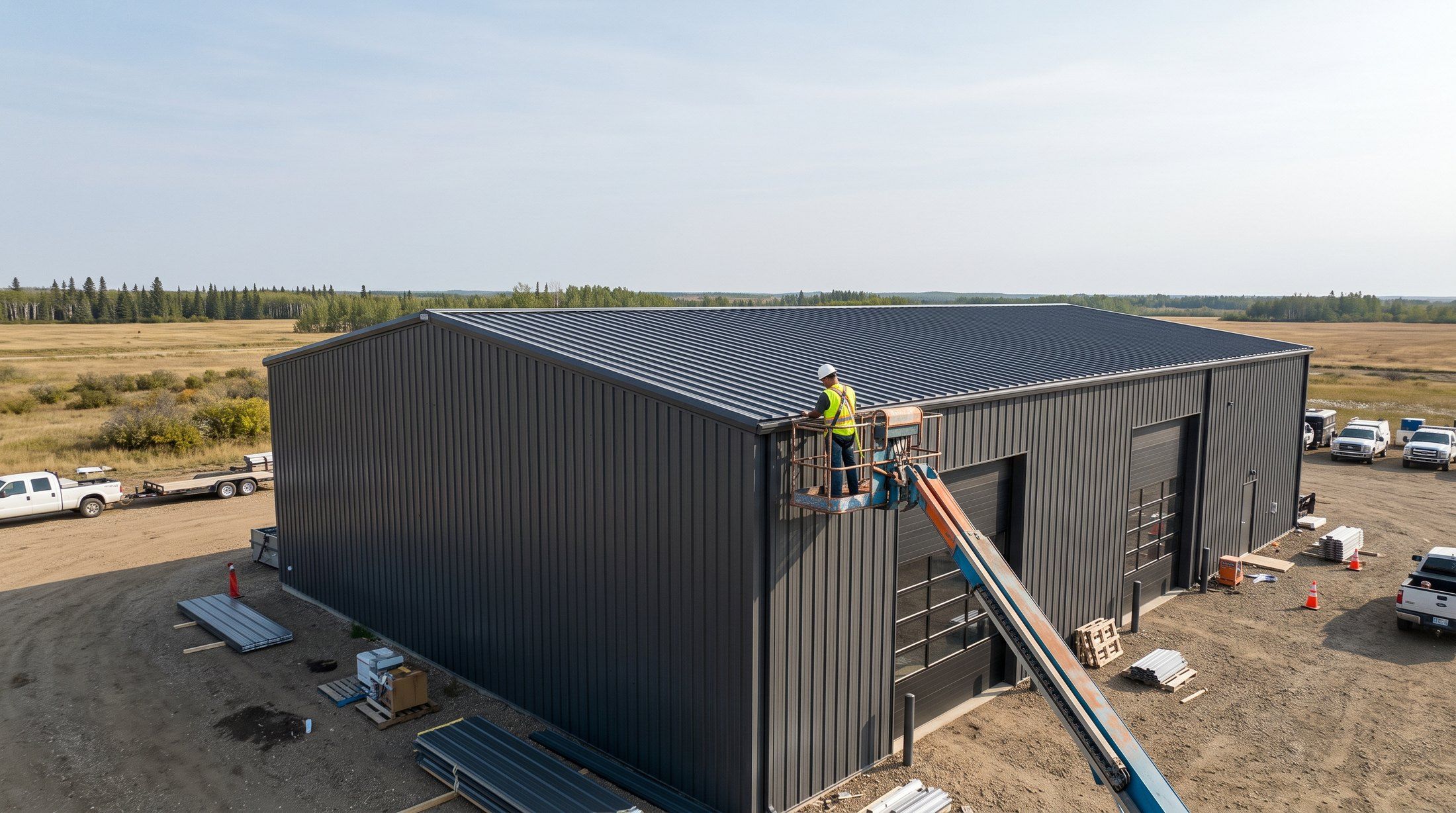
Metal roofing and cladding
Standing seam metal roofs and wall cladding for sloped roofs, canopies and industrial envelopes.
Start with the building, not the brochure. These six questions narrow the field quickly, and we answer them on site with core cuts and a drainage check before recommending anything.
SBS modified bitumen in two plies is the regional workhorse. It stays flexible in the cold, shrugs off foot traffic and holds up well to hail. Built-up tar and gravel roofs are still common on older Edmonton buildings, but most owners now repair them or replace them with SBS rather than install new.
Single-ply sheets go down faster with fewer seams, which keeps costs down on large, simple roofs. TPO suits big distribution buildings. EPDM rubber stays flexible in deep cold but does not tolerate oil or grease. PVC costs more and is the right call where kitchen, food or chemical exhaust lands on the roof.
Inverted (protected membrane) roofs put the insulation on top of the waterproofing, which shields it from hail, UV and freeze-thaw. They suit concrete decks, plazas and parkades, but the ballast is heavy. Standing seam metal is a sloped-roof and wall system; it pairs well with flat roofs on canopies, mansards and cladding.
A commercial roof can carry three layers of warranty: the manufacturer's material or no-dollar-limit (NDL) system warranty, the contractor's workmanship warranty, and an ARCA third-party warranty of 5, 10 or 15 years. Rain Roofing issues a 10-year workmanship warranty and is an ARCA member. The cheapest roof per square foot is rarely the cheapest over 25 years.
Anatomy of a flat roof
Every layer has a job. Skip one, or install it carelessly, and the roof fails early. This is the assembly we build and warranty.
Systems we install from
Soprema, IKO, Carlisle, GAF, Holcim, Johns Manville, Sika Sarnafil, Firestone
Questions
Two-ply SBS modified bitumen. It has the longest local track record, handles cold and hail well, and most Alberta manufacturers and roofers know it inside out.
Sometimes. A recover works when the deck and insulation are dry. We confirm that with core cuts or a moisture survey first; if the insulation is wet, it has to come off.
Inverted roofs and well-maintained EPDM or PVC often pass 30 years. In practice, drainage and maintenance affect service life as much as the membrane does.
Book a roof assessment. We inspect the roof, take cores, check drains and rooftop equipment, and send a written recommendation with options within five business days.
Send us drawings, a spec or just an address. You get a clear scope, a written warranty and a roofer who answers the phone in a storm.