Decades of service
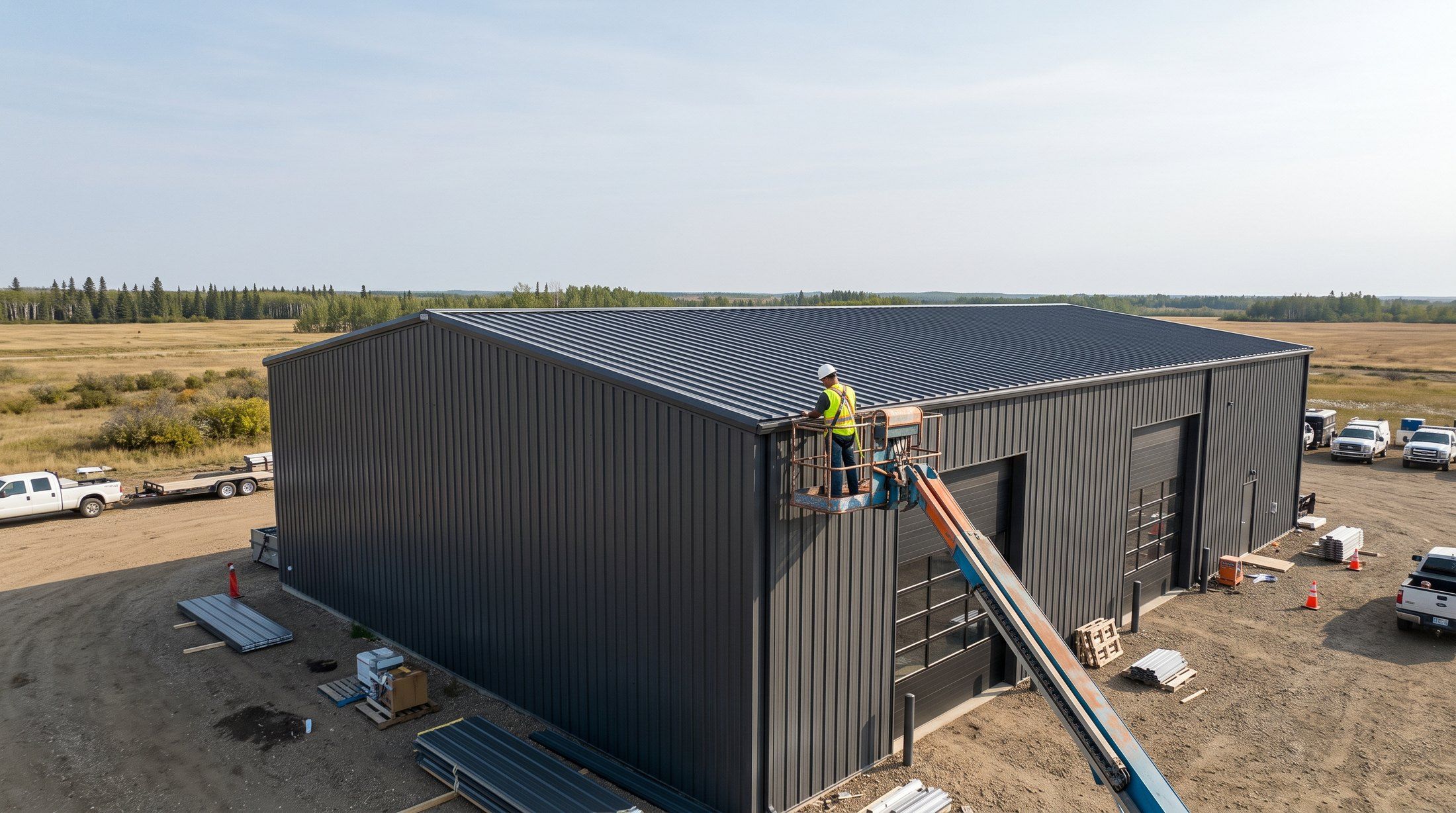
Steel standing seam roofs commonly last 40 years or more with little maintenance.
Metal roofing and cladding
Standing seam roofs and metal wall panels for sloped roofs, canopies and building envelopes. Long-lived, low-maintenance, and built to move with the weather.
Overview
Commercial metal roofing in Edmonton covers sloped roofs, mansards, canopies and pre-engineered buildings, while metal wall cladding wraps the envelope of plants, warehouses and institutional buildings. Standing seam panels are joined at raised seams and held with concealed clips, so there are no exposed fasteners on the roof and the panels can expand and contract freely.
Metal is not a flat roof system. It needs slope to shed water, and on most low-slope commercial roofs a membrane is still the right answer. Where a building has both, using one contractor for the membrane, the metal and the tie-ins between them removes the gap where leaks usually start. Rain Roofing installs standing seam roofing and metal cladding with in-house crews.
Steel standing seam roofs commonly last 40 years or more with little maintenance.
Concealed clips remove thousands of potential leak points from the roof surface.
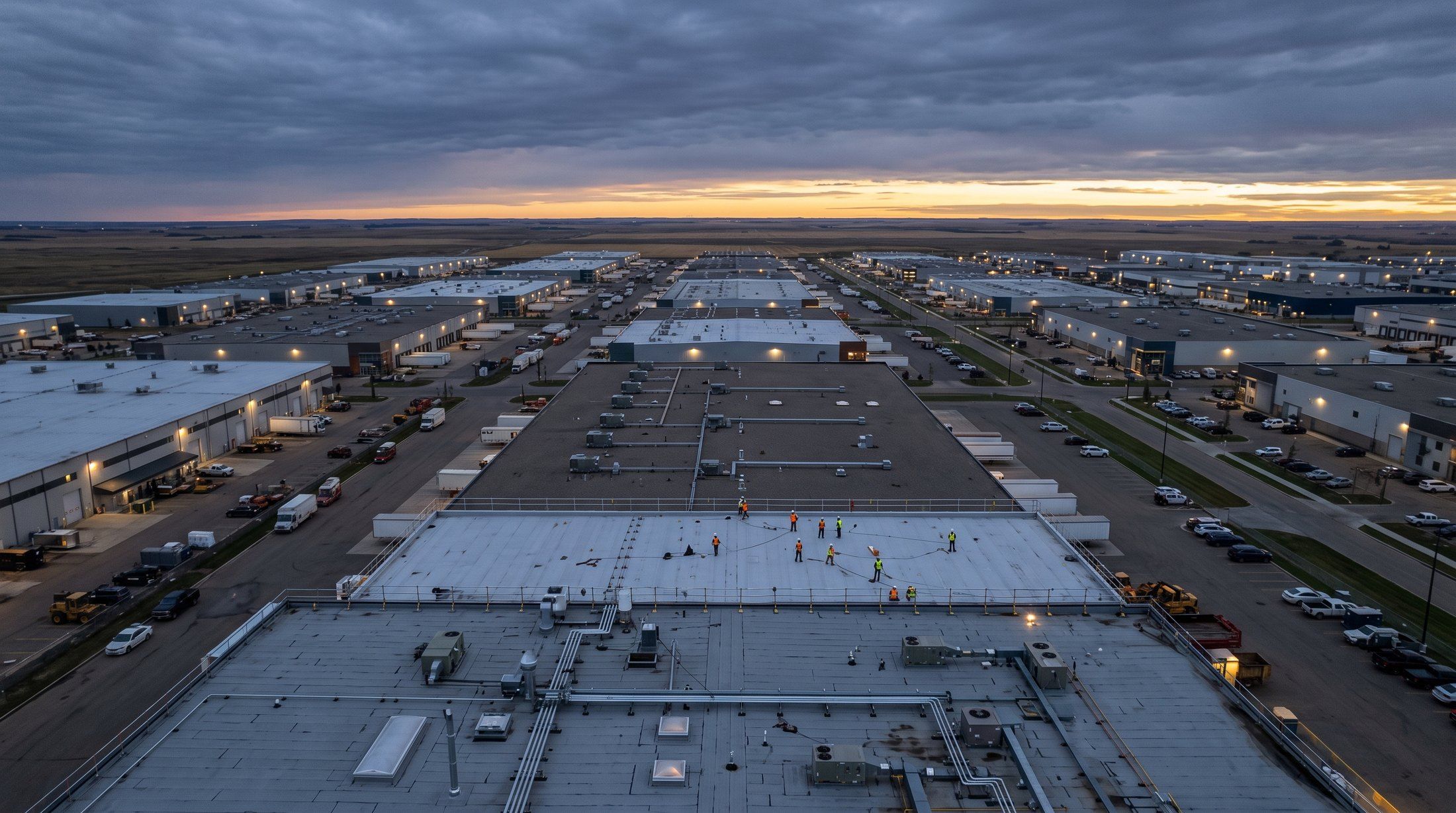
Membrane, metal and the tie-ins between them handled by one crew, so nothing falls between trades.
Standing seam panels run from eave to ridge, joined at raised seams that sit above the water line. Clips hidden under the seams hold the panels while letting them slide as they expand and contract. Most commercial panels are 24-gauge steel with a PVDF or SMP paint finish; aluminum is used where corrosion is a concern.
Mechanically seamed panels, folded closed with a power seamer, suit lower slopes (some are rated down to 1/4 in 12). Snap-lock panels are faster to install but need more slope.
Metal cladding protects the walls and sets the look of the building. Common options include exposed-fastener profiles for industrial buildings, concealed-fastener panels for a cleaner face, insulated metal panels that combine cladding and insulation in one unit, and rainscreen systems with a drained cavity behind the panels.
On older buildings, overcladding (installing new panels over the existing wall with added insulation) can renew the envelope without removing the original wall.
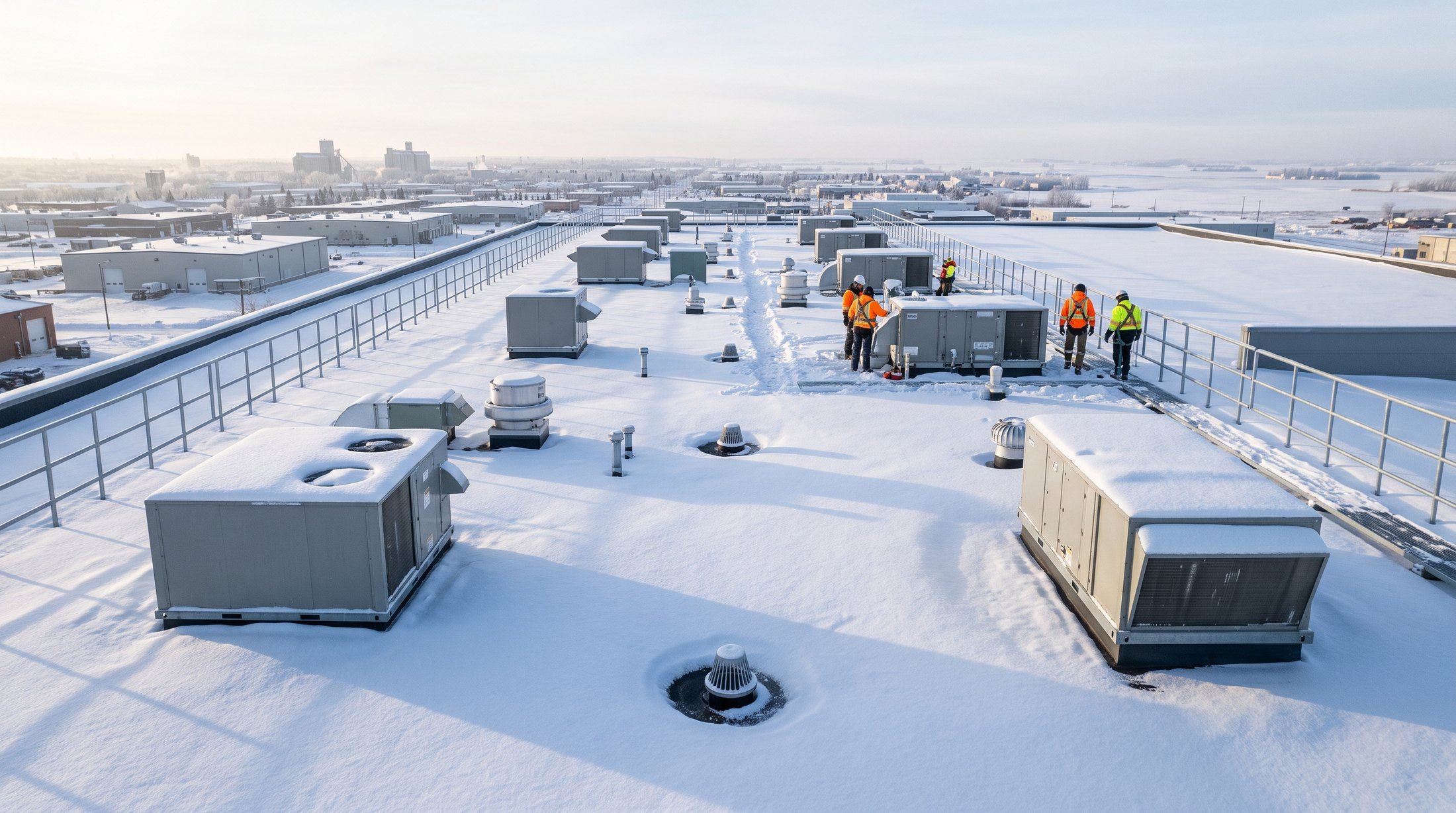
Metal handles cold well, but Edmonton winters shape the design. Panels move noticeably between a January night and a July afternoon, so clips and fixed points must allow for it. Snow slides off metal in sheets, so snow guards are essential over doors, walkways, parking and lower roofs. Warm interior air reaching cold panels causes condensation, which vapour control and underlayment manage.
Hail can dent metal, especially thinner gauges, but a dented standing seam roof usually stays watertight. Check whether your finish warranty excludes cosmetic hail damage.
Metal is the right choice for sloped roofs, mansards, canopies, pre-engineered steel buildings and wall cladding on plants and warehouses. It suits owners planning to hold a building for decades.
It is not a substitute for a membrane on a flat or nearly flat roof. Ponding water and ice will find their way past seams that were never designed to sit in water. Most commercial buildings in Edmonton need both: a membrane on the main roof and metal on the walls, parapets and sloped features.
The joint between the two is where trouble starts. A metal mansard draining onto a membrane roof, or cladding meeting a parapet flashing, needs a detail both trades agree on. Handling both under one contract puts that detail in one set of hands.
Metal needs little maintenance, but not none. Annual inspections should check sealants at flashings and penetrations, snow guards, fasteners on wall panels, and any scratches that expose bare steel. Keep gutters and eaves clear of ice build-up.
Panel manufacturers offer paint finish warranties of up to 30 to 40 years on PVDF finishes, covering chalking and fade, and some offer weathertightness warranties on qualifying roofs. Rain Roofing adds a 10-year workmanship warranty.
Most metal roof and wall problems are local and repairable.
Process
We measure the building, confirm slopes and details, and produce shop drawings before any panels are formed.
The deck or sub-girts are checked, then a high-temperature underlayment and vapour control are installed to manage condensation.
Concealed clips are fastened at set spacing, and panels are set into them, with fixed and floating points planned for thermal movement.
Seams are snapped or mechanically seamed with a power seamer, depending on the panel profile and the slope.
Ridge, eave, rake and wall flashings close the system, and snow guards go in over entrances, walkways and lower roofs.
Seams, fasteners, flashings and tie-ins to adjoining membrane roofs are inspected, and touch-up is done on any scratched finish.
Questions
Not on a truly flat roof. Standing seam needs slope, and some mechanically seamed panels go as low as 1/4 in 12. For flat roofs, a membrane system is the right choice, with metal on the parapets, walls and sloped areas.
It can, which is why snow guards are part of every design here. We place them over entrances, walkways, parking and lower roofs to hold snow until it melts in place.
Large hail can dent metal, mostly cosmetically. Heavier gauges resist it better, and a dented standing seam roof usually remains watertight. We document hail damage for insurance claims.
Often, yes. Overcladding adds new panels, and usually insulation, over the existing wall. We check the existing structure and attachments first to confirm it can carry the new system.
Steel cladding with a good PVDF finish commonly lasts 40 years or more. Aluminum panels or heavier protective coatings are an option near corrosive exhaust in industrial settings.
On a roof, usually. Exposed fasteners and their rubber washers loosen and wear with thermal movement, and every one is a potential leak. Standing seam costs more up front but removes those leak points. On walls, exposed-fastener panels are often a sensible budget choice.
Keep reading
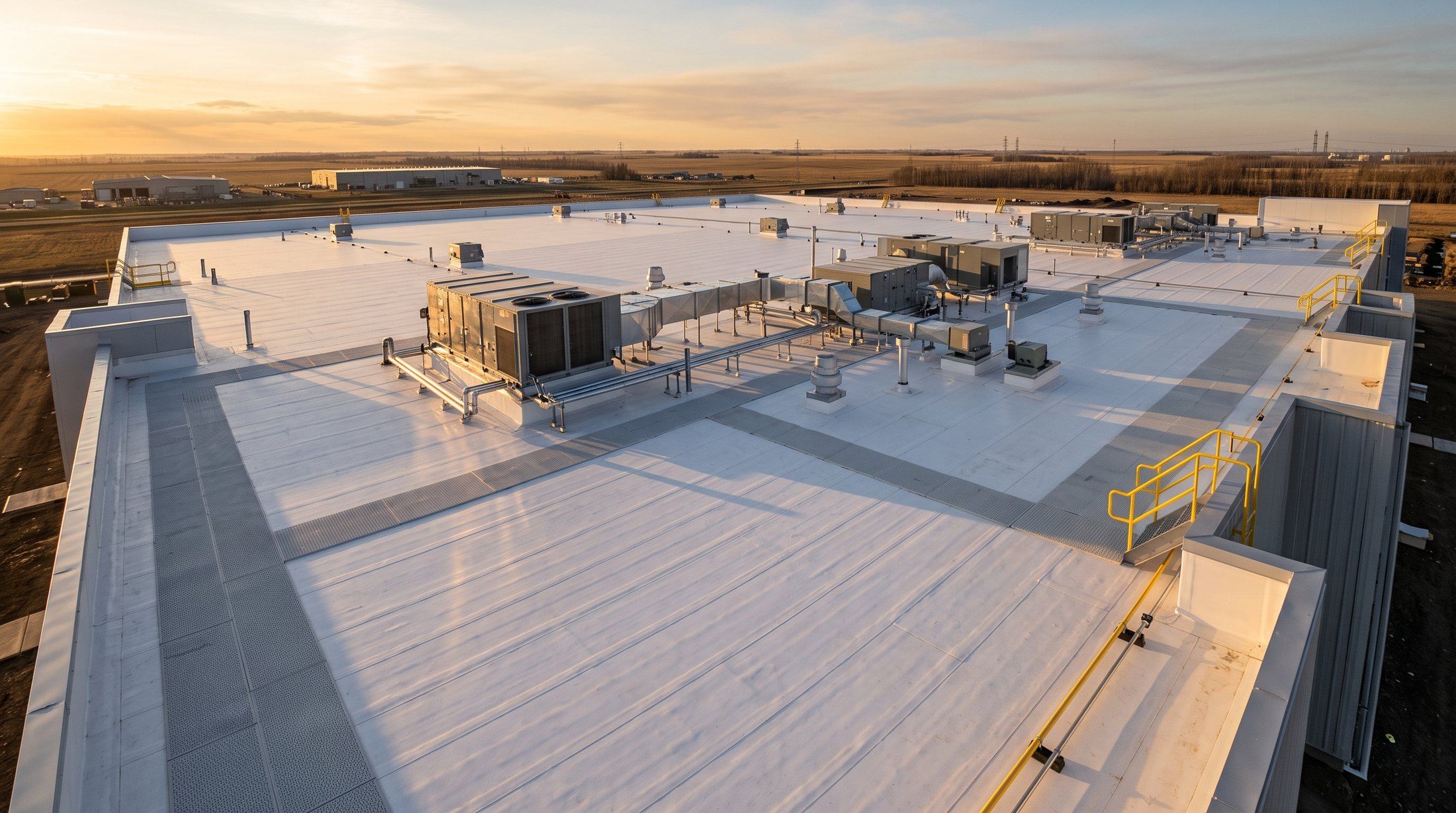
Flat roof systems
Compare every commercial flat roof system and see which one suits your building.
Service
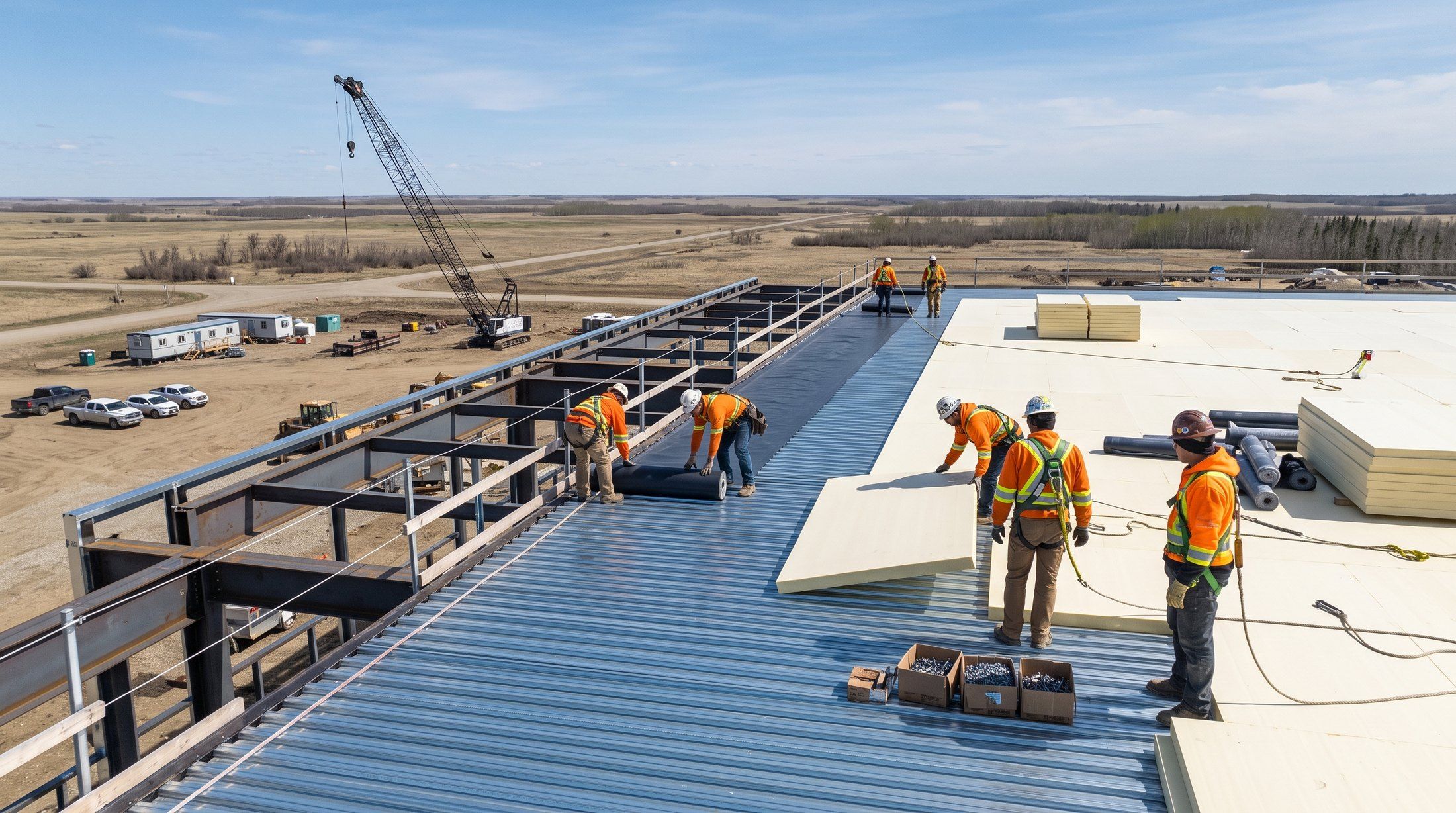
Roofing subcontract work for GCs and owners, with complete submittals and crews that hold the schedule.
Industry: manufacturing
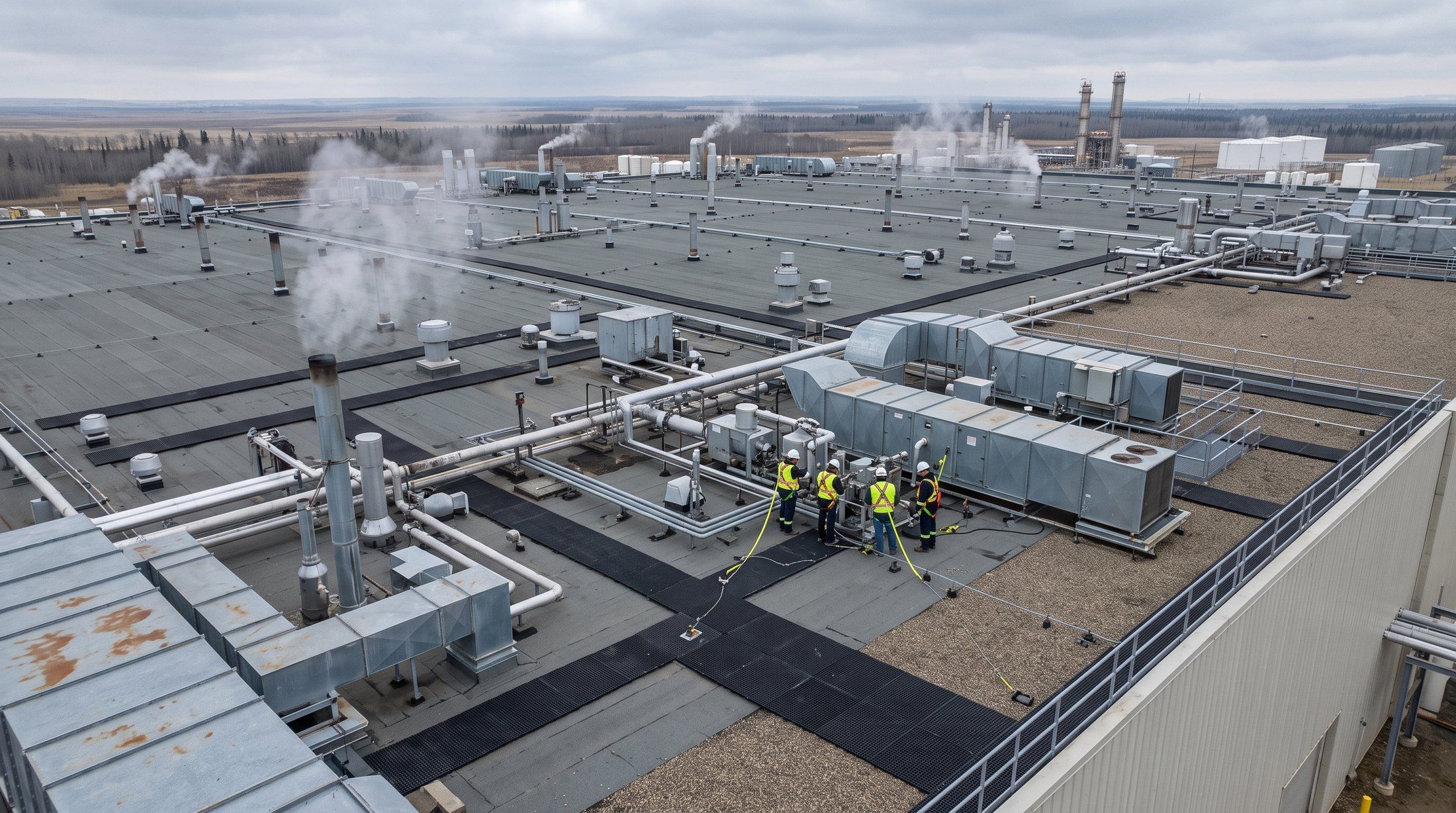
Plant roofs built for exhaust, chemical exposure and daily maintenance traffic, scheduled around production.
Send us drawings, a spec or just an address. You get a clear scope, a written warranty and a roofer who answers the phone in a storm.