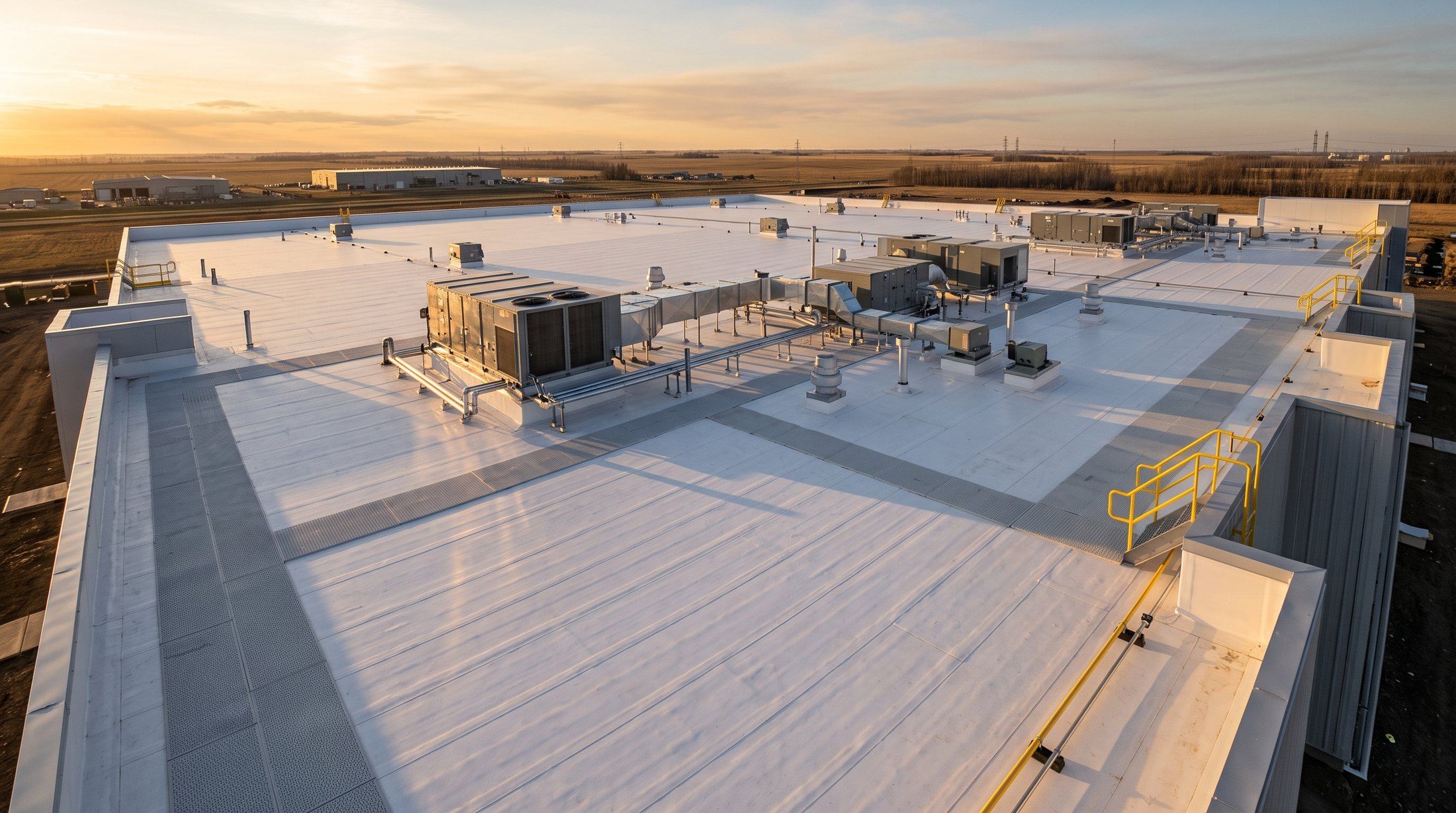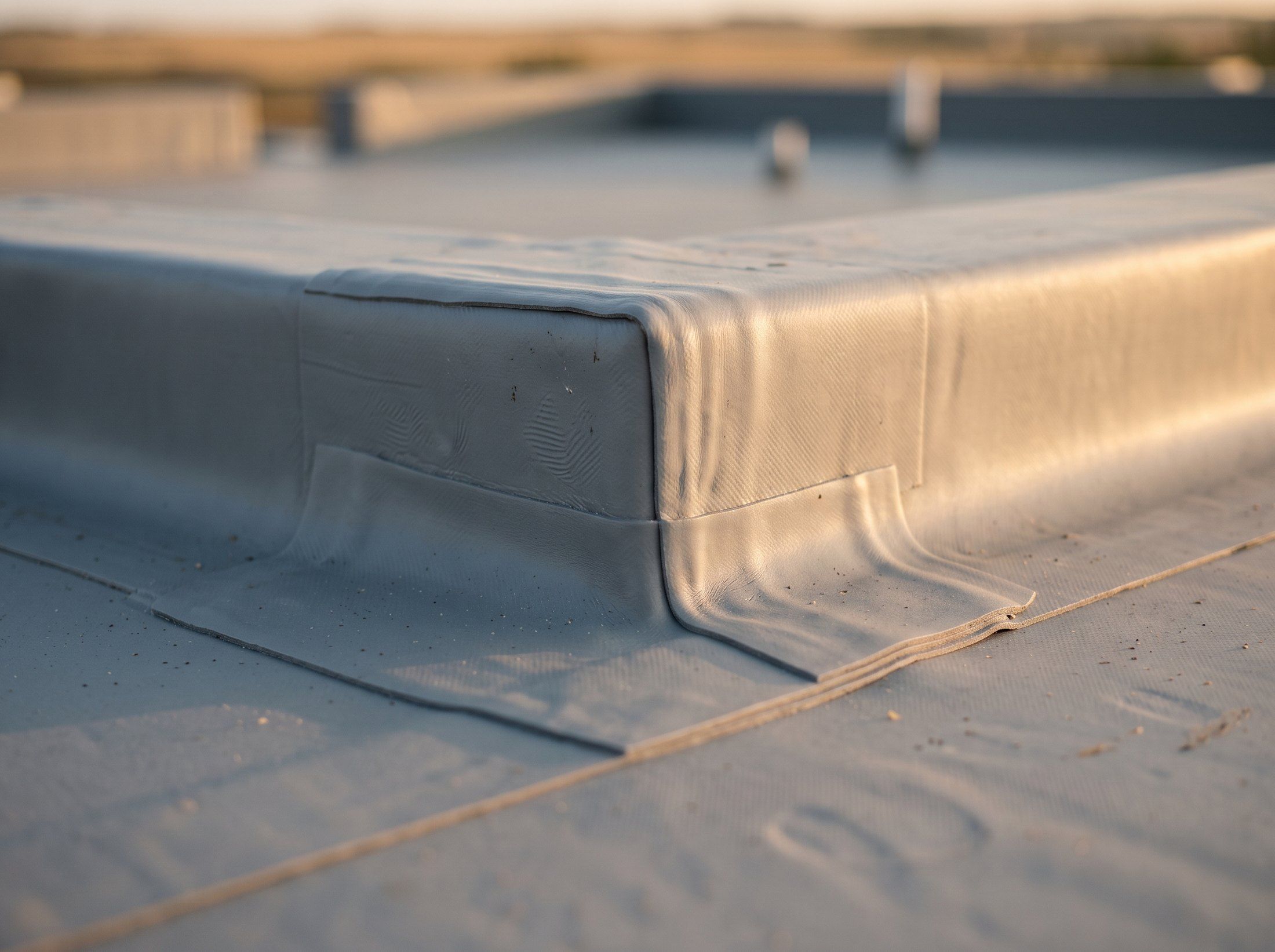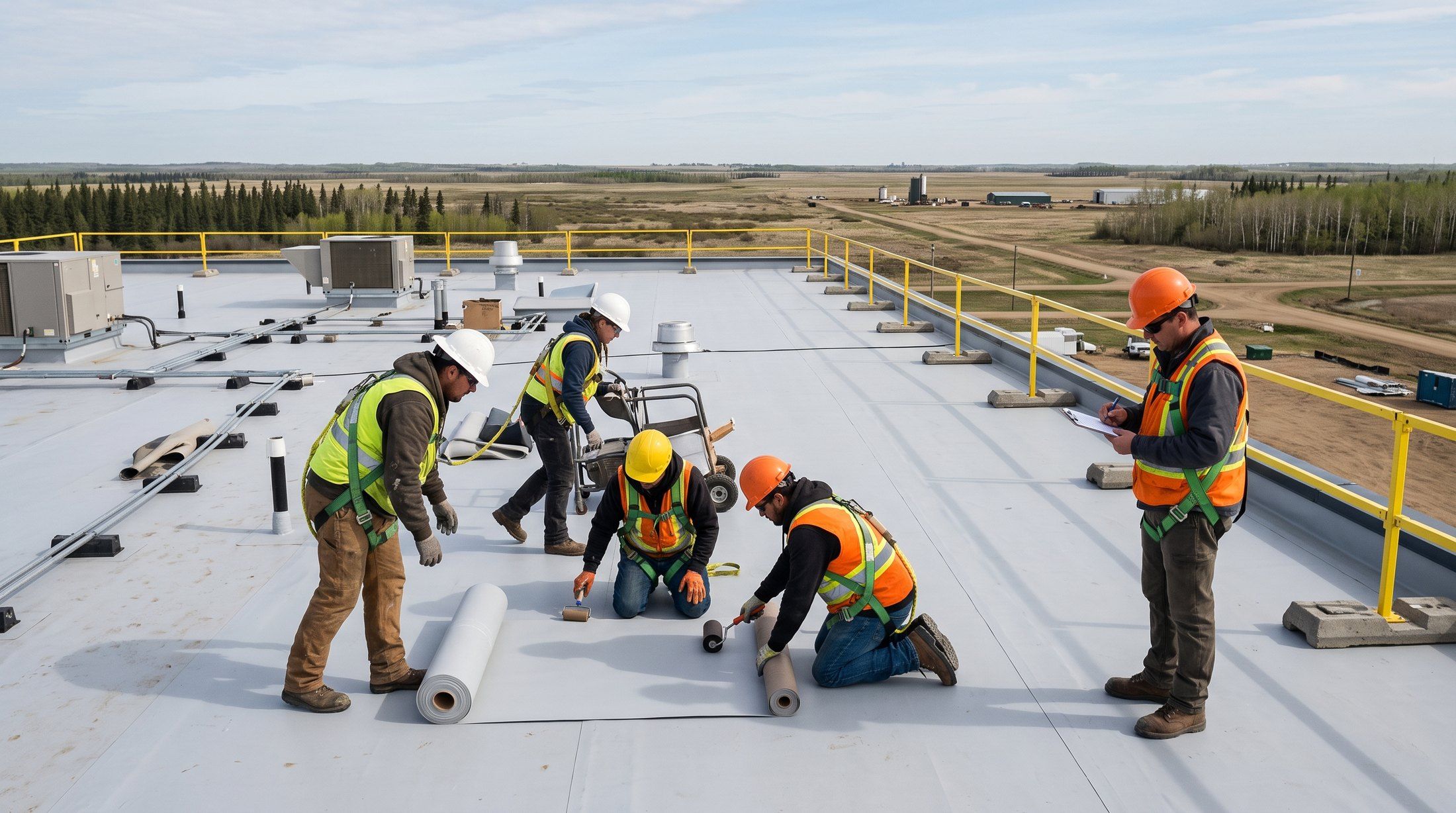
Planned around operations
Docks, production lines, classes and tenants keep running while we work in phases.
Industries we serve
Every building type fails in its own way. We plan the roof around what happens underneath it.
Overview
A distribution warehouse loses its roof slowly, across acres of membrane nobody walks. A plant loses it around the exhaust stacks. A school loses it in the one week of the year nobody is in the building to notice. Industrial roofing in Edmonton has to start with the building, its schedule and the people inside it, not just the membrane on top.
Rain Roofing works on five main building types. Each page below covers the risks that show up on that kind of roof, the systems that usually fit, how we schedule work so the building keeps running, and the safety paperwork owners in that sector expect.
Docks, production lines, classes and tenants keep running while we work in phases.
COR-certified, with ISNetworld, Avetta and ComplyWorks registrations kept current.
Photos, roof plans, product data and warranty papers at closeout on every job.
Explore
How we plan flat roof work around warehouses, plants, industrial sites, institutions and retail properties.
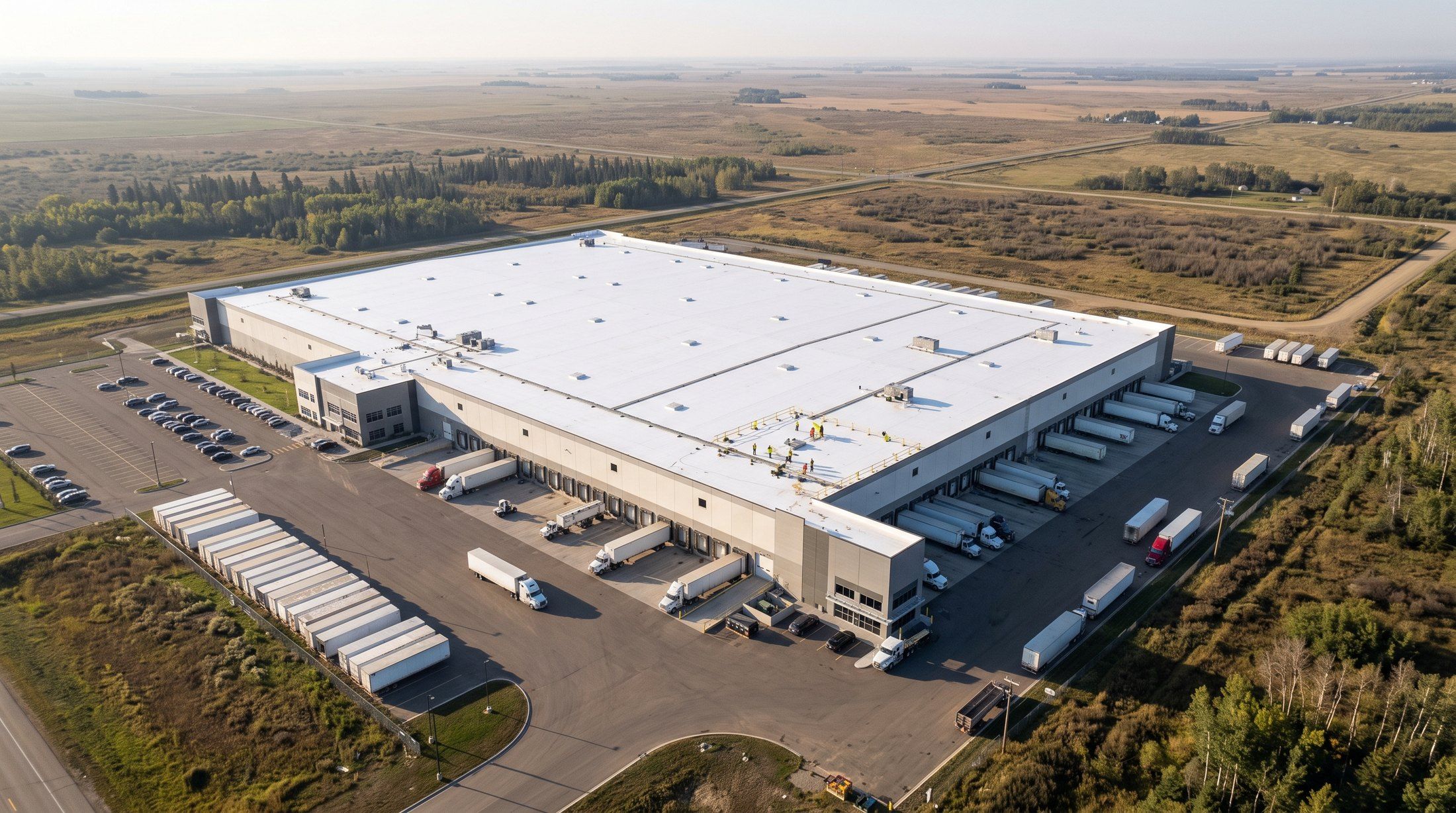
Industry: warehousing and logistics
Large-area flat roofing for distribution centres, phased around dock schedules and racked inventory.
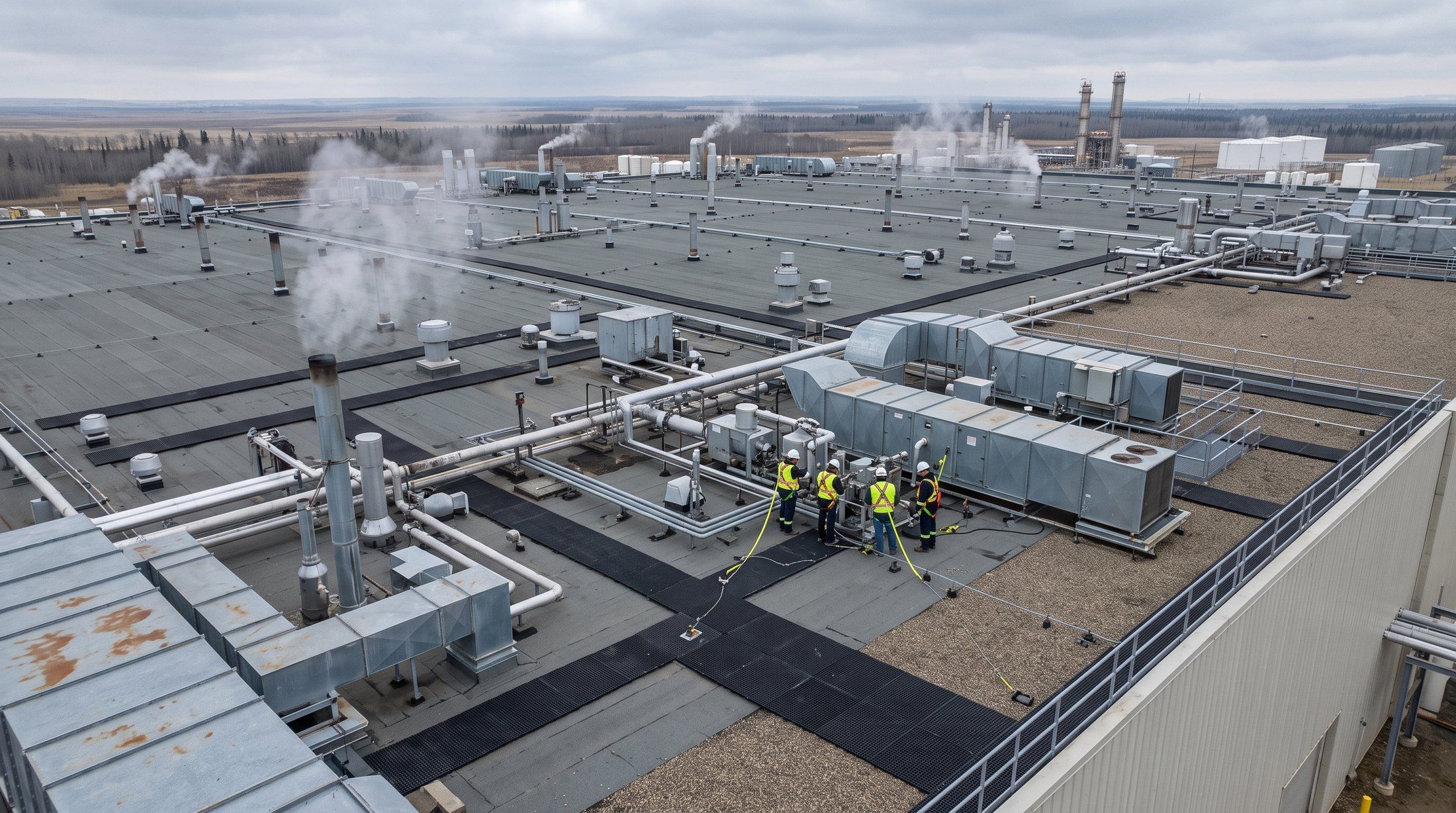
Industry: manufacturing
Plant roofs built for exhaust, chemical exposure and daily maintenance traffic, scheduled around production.
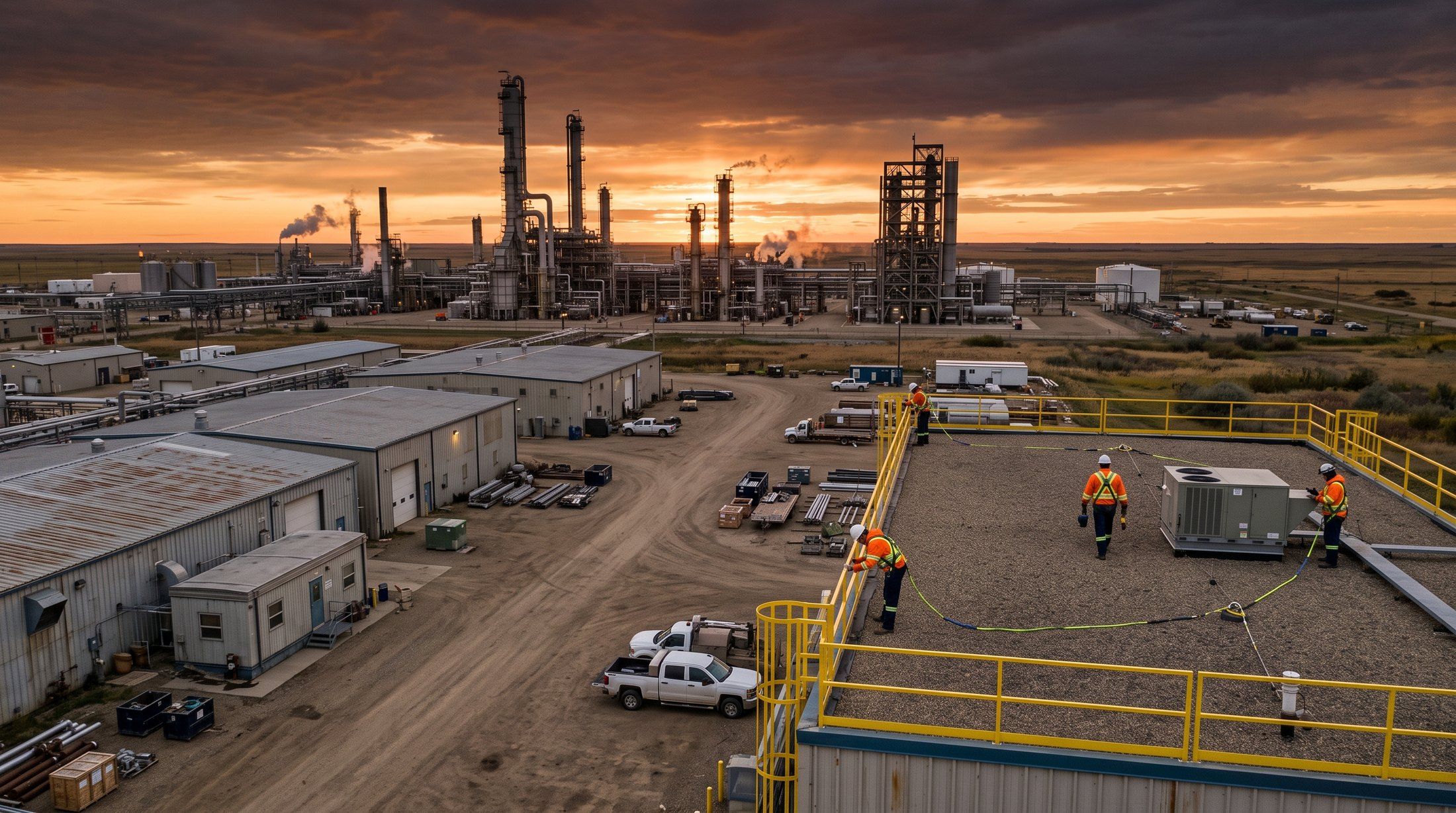
Industry: oil, gas and petrochemical
Roofs for support buildings at Heartland and Nisku industrial sites, with prequalification and permits in order.
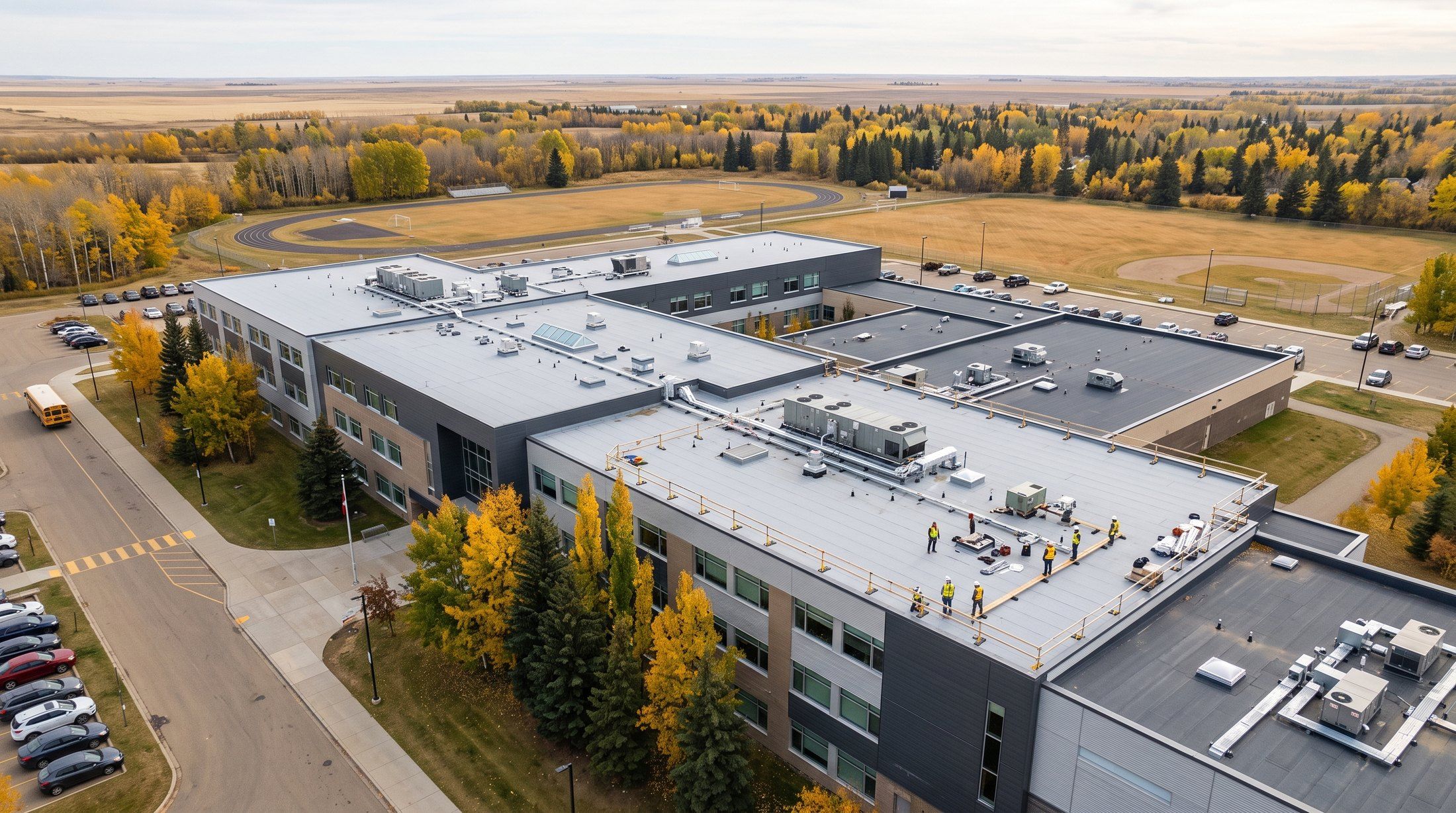
Industry: institutional
Roofing for schools, healthcare and municipal buildings, planned around occupants, tenders and summer windows.
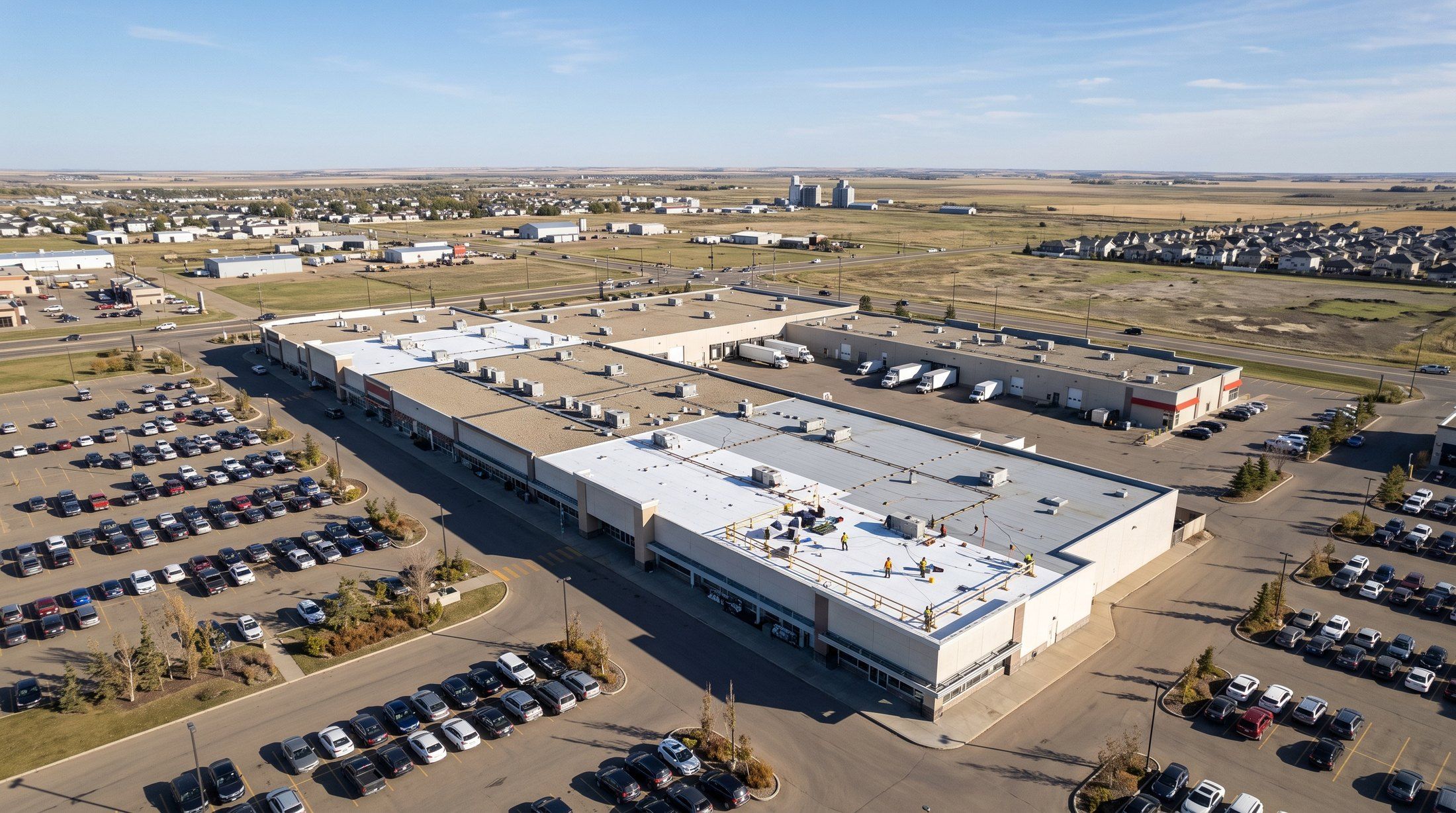
Industry: retail and commercial
Plaza, office and multi-tenant roofing, scheduled around tenants and store hours.
The membrane might be the same on a warehouse and a school. The way the job is planned is not. Access, working hours, who signs off on safety and what can't get wet all change with the building, and those details decide whether a re-roof goes smoothly.
Whatever the building, the basics don't change. We inspect before we price, explain the options in writing, and give you a fixed scope rather than a guess. Every crew works under a site-specific hazard assessment and fall protection plan, and every section is left watertight at the end of the shift.
At the end of the job you get a closeout package: photos, a roof plan, product data and warranty documents. Rain issues a 10-year workmanship warranty on full replacements, and we stand behind the roof for its whole life with ongoing maintenance and repair programs.
Questions
No. These are the building types we see most. If your building is a commercial or industrial flat roof in the Edmonton region, we can look at it.
Most of our work is on buildings that stay open. We phase the roof in zones, protect what is underneath, and close each zone in before the crew leaves.
Typically a COR letter, a WCB-Alberta clearance letter, insurance certificates, and site-specific hazard assessments. Industrial owners can also see our records through ISNetworld, Avetta or ComplyWorks.
There is no single answer by industry. SBS 2-ply suits most buildings in this climate, PVC suits exhaust and chemical exposure, and TPO suits large, simple roofs. We recommend a system after looking at your roof, your operations and your budget.
Send us drawings, a spec or just an address. You get a clear scope, a written warranty and a roofer who answers the phone in a storm.