What counts as ponding
Flat roofs are not truly flat. They are designed with a slight slope so water runs to drains or scuppers. Puddles right after a storm are normal. The common industry definition of ponding is water that is still on the roof 48 hours after the rain stops, in weather that would let it dry.
A few shallow puddles that disappear by the next afternoon are not a concern. Standing water that lasts for days, covers a large area, or keeps coming back in the same spot is a sign that something in the drainage is not working.
Why water ponds on Edmonton flat roofs
Ponding usually has one of a handful of causes, and most roofs with a ponding problem have more than one:
- Clogged drains and scuppers: leaves, gravel, debris left by other trades, or a strainer buried under silt.
- Frozen drains: in spring, snow melts during the day and the drain freezes at night, so meltwater spreads across the roof with nowhere to go.
- Too little slope: older roofs were often built nearly dead flat, with drains in the wrong places.
- Deck deflection: long spans sag over time, and the low point ends up between drains instead of at one.
- Crushed or wet insulation: foot traffic, hail or trapped moisture compresses the insulation and leaves a dip.
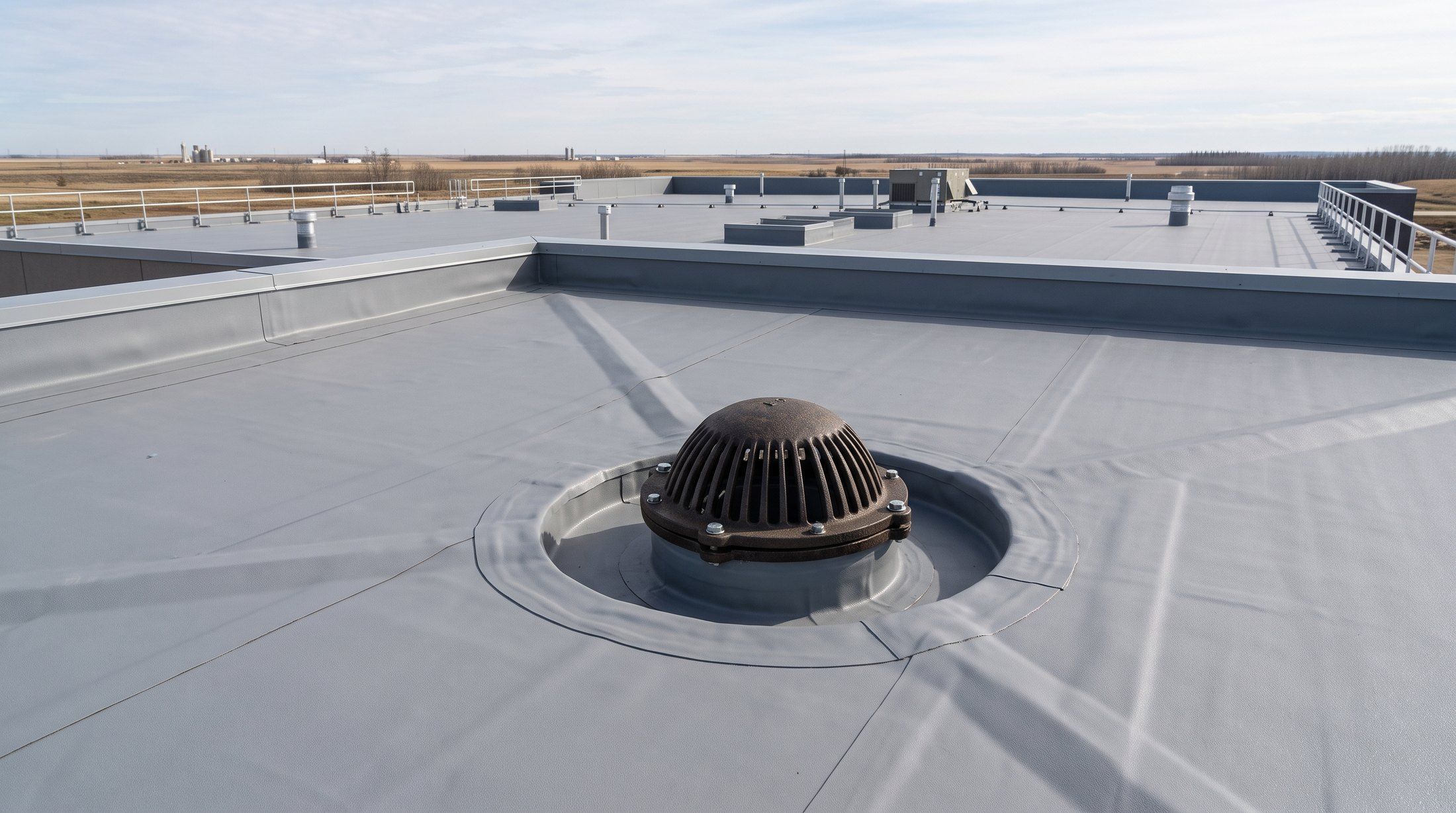
- Drains set too high: re-roofs that add insulation without lowering or extending the drain leave the drain above the surrounding membrane.
- New loads: rooftop units, solar racking or snow piles added after the roof was designed.
Why standing water matters
Membranes are waterproof, so a little standing water is not an instant leak. The damage builds over time. Water that sits for days speeds up membrane aging, collects dirt and organic matter, and in some cases supports algae or plant growth that works into seams.
In Edmonton the bigger problem is ice. Water that ponds in the fall or during a spring thaw freezes, expands, and pries at every seam, flashing and drain clamp it touches. A small gap in October can be an open leak by April.
Weight is the third issue. Water weighs about 5.2 pounds per square foot for every inch of depth. A pond collecting in a sagging bay makes the sag deeper, which collects more water. This progressive deflection is rare, but it is the one situation where ponding is a structural safety issue.
Finally, many manufacturer warranties exclude damage caused by ponding water. A drainage problem left alone can quietly undermine the warranty you are counting on.
Warning signs that need attention now
Call a roofer soon if you see any of these:
- Water still on the roof 48 hours after rain, especially if the area grows from season to season
- Ponding over or next to seams, flashings, curbs or penetrations
- Stains, drips or sagging ceiling tiles below a known pond
- Water deepest in the middle of a bay, away from any drain, which can point to deflection
- Ice sheets around drains in March and April
- Dark rings, algae or plant growth where water sits
What to do right now
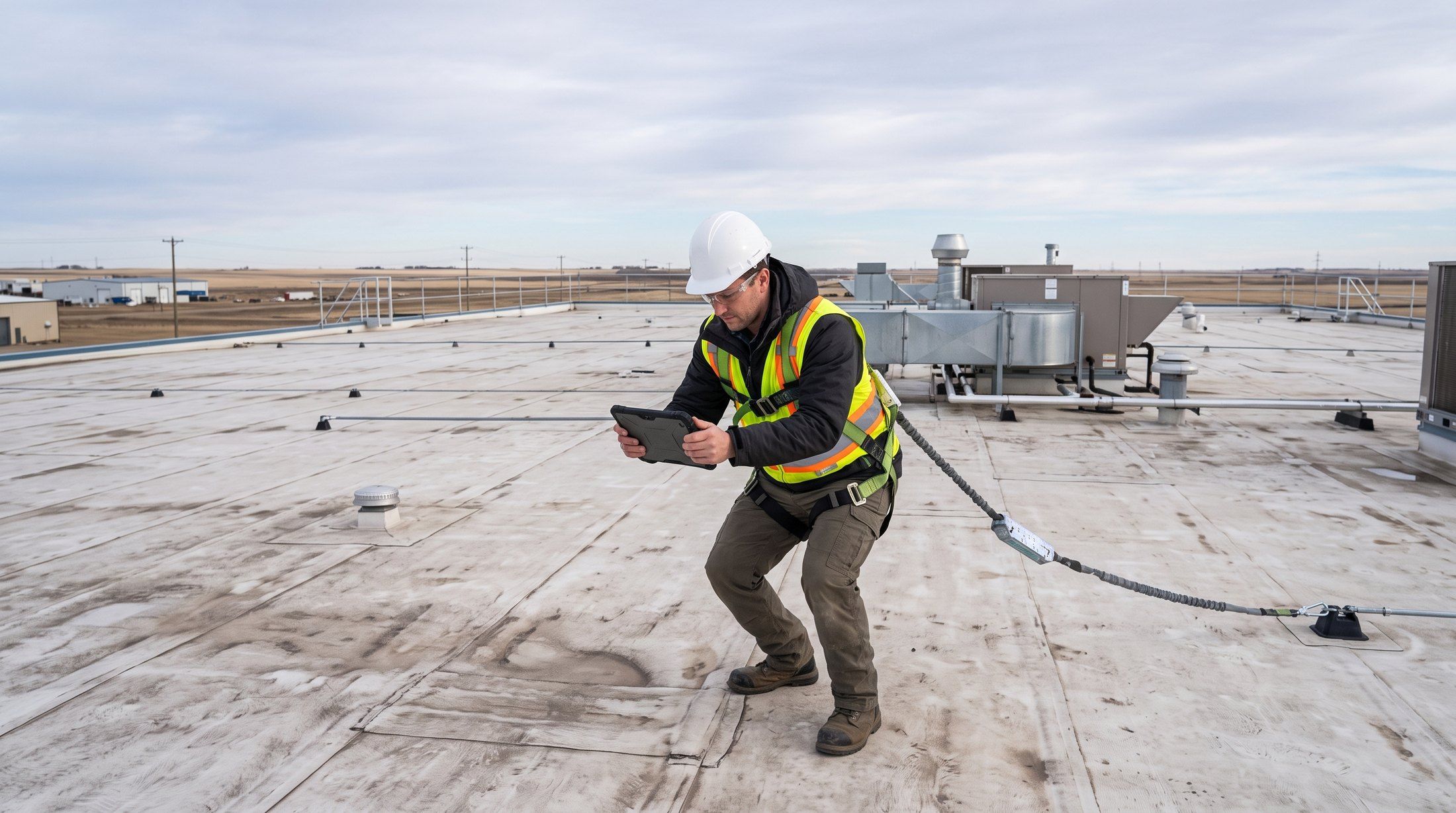
Only go on the roof if there is safe access and you are trained and equipped for fall protection. If not, leave it to the roofer.
- Clear debris from drain strainers and scuppers, then put the strainer back. A drain without a strainer clogs further down, where it is much harder to clear.
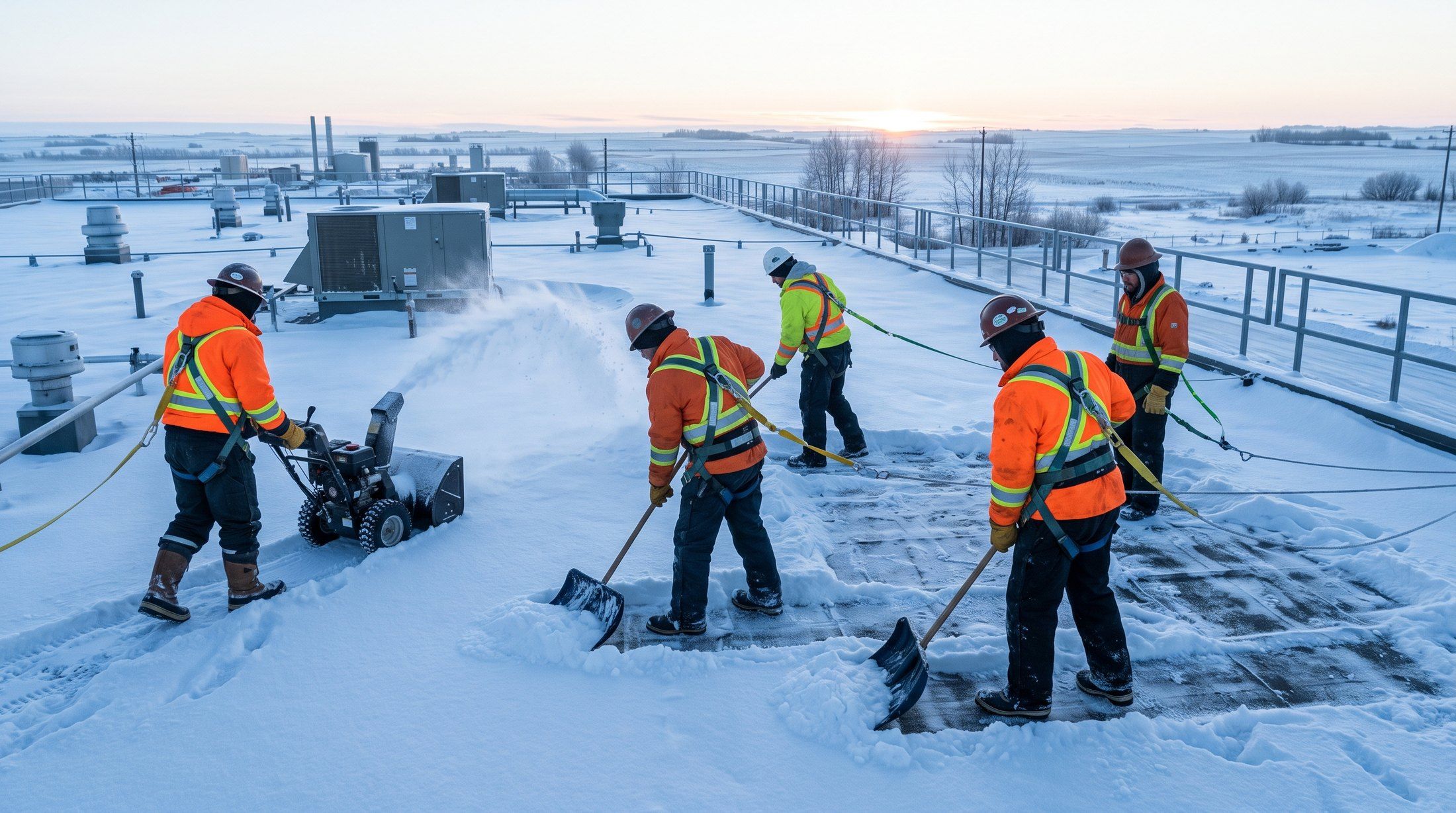
- Do not puncture the membrane to drain a pond, and do not chip ice with shovels or picks.
- Photograph the pond with something for scale, and note the date and how long since the last rain.
- Check the interior below the pond for stains, drips or bulging ceiling tiles.
- If a bay looks visibly sagging or the pond is deep and growing, keep people off the roof and the area below, and call for an inspection the same day.
How ponding gets fixed for good
The fix depends on the cause. Some roofs only need maintenance. Others need the drainage redesigned.
- Drain maintenance: clearing drains and scuppers in spring and fall, and after big storms.
- Lowered or added drains: resetting drain sumps to the true low points, or adding drains where water collects.
- Tapered insulation: insulation boards cut to a slope, added during a re-roof or over the problem area, to build in positive drainage.
- Crickets and saddles: small sloped areas that turn water around curbs and between drains.
- Overflow scuppers: a secondary path for water if the main drains are blocked.
- Heat trace: heating cable at drains that freeze each spring.
- Wet insulation replacement: cutting out and replacing saturated insulation found by an infrared or moisture survey.
- Structural review: where deflection is the cause, an engineer should assess the deck before any roofing is added.
Edmonton's ponding season
Most ponding problems here show up in March and April, not after summer rain. Weeks of snow melt slowly, drains freeze overnight, and meltwater sits on the roof through repeated freeze-thaw cycles. Clearing snow away from drains in late winter, checking drains after the first warm spell, and booking a spring inspection catch most of these problems before they become leaks.
Fall matters too. A fall inspection that clears drains of leaves and debris, and fixes seams near known ponds, sends the roof into winter with fewer weak spots.
Getting a drainage assessment
If the same pond comes back every spring, it will not fix itself. We can survey the roof, map where water collects and why, and give you options, from a maintenance fix to a full drainage correction, with the costs of each.